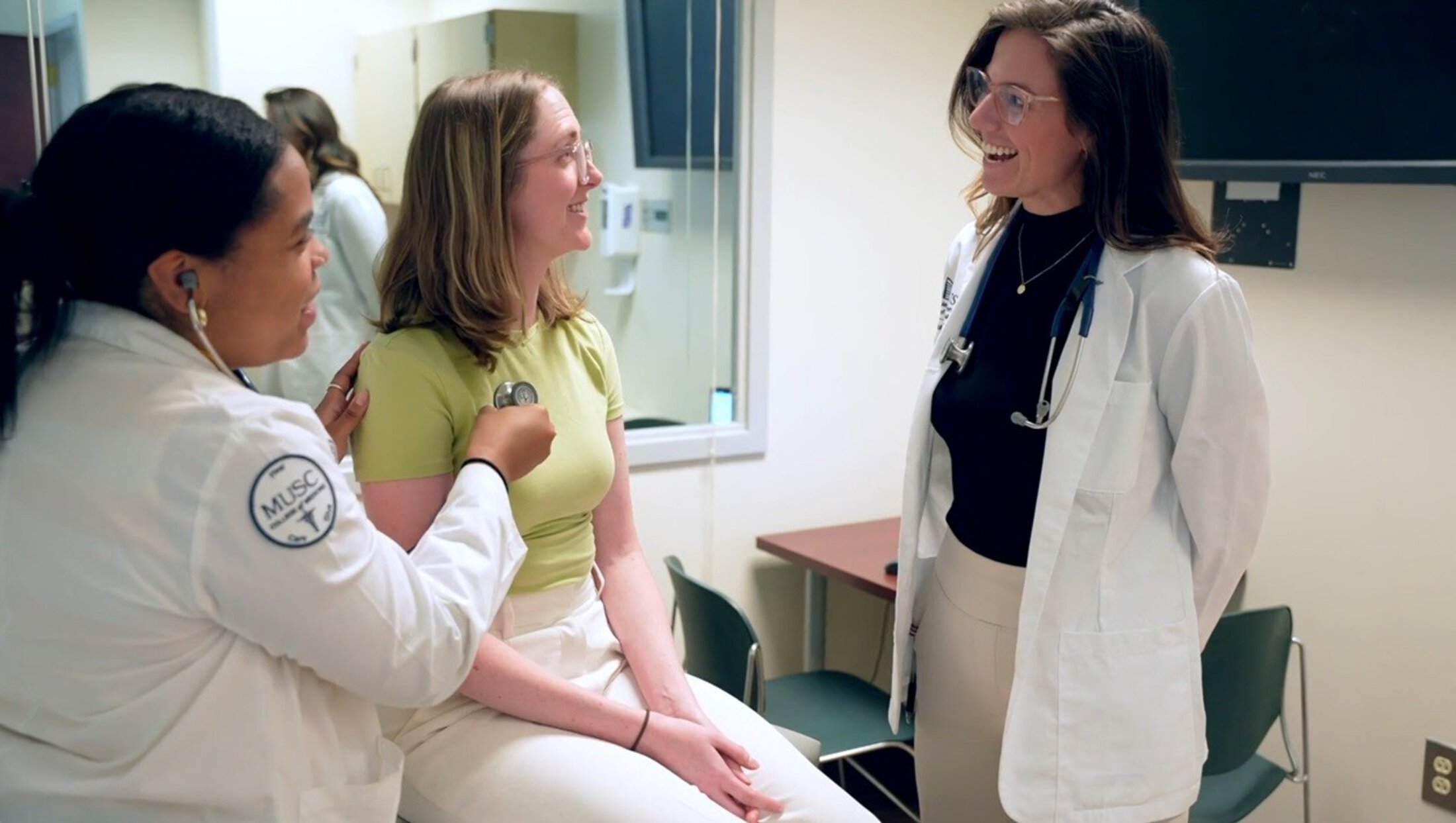
The MUSC College of Medicine is dedicated to the mission of educating physician leaders of tomorrow to deliver exceptional, patient-centered, compassionate care and to lead improvement efforts in health care. Effective learning is best fostered in an environment of mutual respect between teachers and learners. A culture that role models professionalism is necessary for cultivating in learners the attributes, values and behaviors required in excellent physicians: Altruism, Duty, Respect, Integrity, Encompassing, Collaboration, and Compassion.
The Promoting Professionalism and Mitigating Mistreatment Policy defines the shared responsibility for nurturing a positive learning environment and demonstrates the medical school’s commitment to excellence in teaching and professionalism here in Charleston and at our AnMed Health clinical campus.
Breaches in professional behavior and mistreatment of students threaten the learning environment and the institutional culture of professionalism, and will not be tolerated.
Student mistreatment is defined as behavior by any faculty member, fellow, resident, or staff that is discriminatory, unfair, arbitrary, or capricious in nature, including behavior inconsistent with the values of the institution, or behavior that unreasonably interferes with the learning process. Examples of student mistreatment include, but are not limited to the following:
- Verbally abusing, belittling, or humiliating a student
- Intentionally singling out a student for arbitrary treatment that could be perceived as punitive
- Excluding students without cause from reasonable learning opportunities
- Assigning duties as punishment rather than education
- Pressuring students to exceed established restrictions on work (duty) hours
- Exploiting students in any manner, e.g., performing personal errands
- Directing students to perform an unreasonable number of “routine hospital procedures”, i.e., “scut” on patients not assigned to them or where performing them interferes with a student’s attendance at educational activities, e.g., rounds, classes
- Pressuring a student to perform medical procedures for which the student is insufficiently trained which potentially compromises patient care; failing to provide appropriate supervision in alignment with the supervision policy.
- Threatening to or actually grading, promoting, or otherwise evaluating a student on any basis other than that student’s academic/clinical performance or competency
- Committing an act of physical abuse or violence of any kind, e.g., throwing objects, aggressive violation of personal space
- Making unwelcome sexual comments, jokes, or taunting remarks about a person’s protected status as defined in the institution’s anti-harassment policies.
- Treating students in an unfair, offensive, or discriminatory manner based on any of the protected categories defined in the institution’s nondiscrimination policies.
Reporting Mistreatment and Concerns about the Learning Environment
The medical school does not tolerate retaliation toward any individual who in good faith makes a report of mistreatment. Medical students who experience possible mistreatment or faculty, fellows, residents, staff, and students who observe possible mistreatment must report the incident. Don’t be a silent bystander. Speak up so we can address it!
Options for Reporting
- Email or speak directly with any of the following people who are all charged with monitoring and reporting concerns to the Learning Environment Review Committee (LERC):
- Associate Dean for Student Affairs and Student Wellness and/or the Associate Dean for Student Affairs and Professionalism
- Associate Dean for Preclerkship Education or the Associate Dean for Clinical Education
- Block, clerkship, or course directors
- Senior Associate Dean for Medical Education
- Medical students who experience discrimination or harassment or individuals who witness discrimination or harassment should report it in compliance with the MUSC Nondiscrimination, Anti-Harassment, and Equal Opportunity Policy and complaint procedures; individuals may directly contact the MUSC Title IX Coordinator to report concerns or seek assistance with understanding and accessing services and support.
The MUSC COM expects that teachers, fellows, residents, students and staff will adhere to all applicable college and university policies and procedures that establish standards for professionalism and conduct, as well as principles of professionalism and ethics generally accepted within the medical profession, including, but not limited to the following:
Promoting Professionalism and Mitigating Mistreatment Policy
Medical Student Clinical Supervision Policy
MUSC Treatment of Students Policy
MUSC Nondiscrimination, Anti-Harassment, and Equal Opportunity Policy and Complaint Procedures
American Medical Association (AMA) Principles of Medical Ethics
Medical Education Program Objectives (MEPOs) (PDF) - effective AY2026-27
MUSC Professionalism and Standards of Conduct for Students
MUSC Policy on Professionalism and Standards of Conduct for Student Organization
MUSC Honor Code
MUSC Code of Conduct
HIPAA Policy (Privacy Policy of Individually Identifiable Health Information)
Additional MUSC Policies for Students