Doctor of Medicine

book_2 Learning Mode: Residential

Program Overview

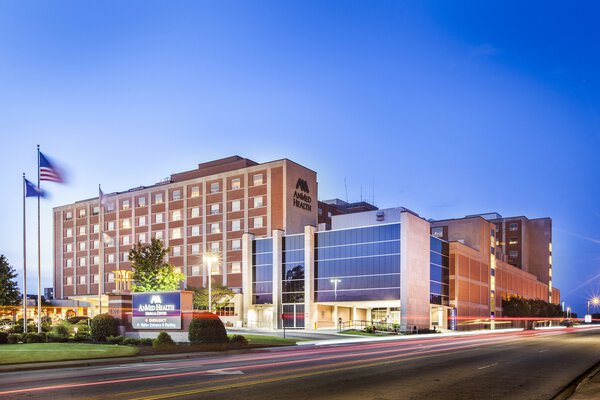
The College of Medicine admits approximately 180 students each year into the MD Degree Program. Students are awarded a Doctor of Medicine (MD) degree upon their completion of the college's academic and professionalism requirements. Two years of foundational pre-clerkship instruction, one-year of core clinical clerkship instruction, and one year of advanced clinical clerkships and clinical elective rotations comprise the four years of educational effort leading to the MD degree. An accelerated track offers a select number of eligible students the opportunity to complete their degree in three years and join one of the participating residency programs at MUSC. A parallel clinical track at the MUSC AnMed Clinical Campus offers accepted students the opportunity to complete a comparable, primary-care focused clinical curriculum (year 3 and year 4) in a community-based setting.

Application Timeline

Review the application timeline to learn about important dates and deadlines, including AMCAS submission, interviews, acceptance steps, and matriculation milestones.

99% match rate

765 Total enrollment – College of Medicine
80+ Student organizations at MUSC
91% Students participating in research with faculty

Success you can measure

From national recognition to student satisfaction and real-world results, these numbers reflect the value and impact waiting for you in our program.

Learning Experience

Build the knowledge, clinical skills and professional identity needed to care for patients, work within healthcare teams and prepare for residency training.

Inside the Program

At the MUSC College of Medicine, you’ll learn medicine through a structured, four-year curriculum that helps you move from foundational medical science to supervised patient care and residency preparation.

Your medical education begins with a strong understanding of human health and disease. As you progress, you’ll apply that knowledge through clinical immersion, simulation, team-based learning, mentored scholarship, service learning, clerkships, advanced rotations and electives. Each phase helps you build the knowledge, clinical skills and professional judgment expected of future physicians.

You won’t study medicine in isolation. You’ll learn how science, communication, clinical decision-making and patient-centered care come together in real healthcare environments. Faculty will teach, mentor and supervise you as you develop the confidence to work with patients, collaborate with healthcare teams and explore the specialties that may shape your future career.

Learn by connecting science to patient care

Your first years help you understand the science behind symptoms, diagnosis, treatment and disease prevention. You’ll study normal and abnormal processes across the human body while learning how physicians apply that knowledge to patient care.

You’ll also begin developing the skills that support clinical practice, including communication, teamwork, clinical reasoning, professionalism and reflection.

Build clinical confidence over time

You’ll gain clinical exposure before entering full-time clerkships. Through early clinical application, simulation, clinical immersion, patient-centered experiences and longitudinal mentorship, you’ll begin connecting what you learn in the classroom with how physicians care for people.

As you move into your clinical years, you’ll take on greater responsibility under supervision while learning in inpatient, outpatient, emergency, surgical, primary care and specialty settings.

Shape your path toward residency

Your experience will help you explore specialties, identify your strengths and prepare for graduate medical education. Through selectives, electives, advanced rotations, scholarly concentrations and career advising, you’ll have opportunities to align your medical education with your goals for residency and future practice.


Curriculum

The Doctor of Medicine curriculum consists of 232 credits and is designed to be completed in 11 semesters. Below is the standard plan of study outlining the structured progression of coursework as you advance through the program.

Year 1, Fall A

Course ID Course Title Credits
MDCOR711 Clinical Skills 1 3
MDCOR720 Foundations of Health 8
MDCOR722 Foundations of Disease 9
MDCOR736 Autoimmunity and Hematology 8
IP711 IP Foundations and TeamSTEPPS 1
Semester Total 29

Year 1, Spring

Course ID Course Title Credits
MDCOR712 Clinical Skills 2 3
MDCOR725 Cardiovascular, Pulmonary, Renal Systems 16
MDCOR727 Gastrointestinal I 5
IP### IP Concentration Course 1
Semester Total 25

Year 1, Summer A, Trailer

Course ID Course Title Credits
MDCOR713 Clinical Skills 3 3
MDCOR728 Gastrointestinal II 5
MDCOR731 Reproductive/Endocrine System 8
MDCOR735 Ethics and Biostatistics 3.5
Semester Total 19.5

Year 2, Fall A

Course ID Course Title Credits
MDCOR714 Clinical Skills 4 3
MDCOR739 Musculoskeletal 8
MDCOR741 Central Nervous System 13
MDCOR742 Cognition and Behavioral Health 4.5
Semester Total 28.5

Year 2, Spring

Choose one of the concentrations.

Course ID Course Title Credits
MDCOR750 USMLE Step 1 Board Review 2
MDCOR866 Transition to Clinical Medicine 1
Global Health Concentration
MDCOR764 FLEX Scholarly Concentration-Global Health 5.5
MDCOR766 FLEX2 Scholarly Concentration-Global Health 5.5
Health Humanities Concentration
MDCOR760 FLEX Scholarly Concentration-Health Humanities 5.5
MDCOR762 FLEX2 Scholarly Concentration-Health Humanities 5.5
Physician as a Teacher Concentration
MDCOR768 FLEX Scholarly Concentration-Physician as Teacher 5.5
MDCOR770 FLEX2 Scholarly Concentration-Physician as Teacher 5.5
Research Concentration
MDCOR772 FLEX Scholarly Concentration-Research 5.5
MDCOR774 FLEX2 Scholarly Concentration-Research 5.5
Semester Total 14

Year 2, Summer A, Trailer

Course ID Course Title Credits
CLRK Clerkship* (6-weeks) 8
Semester Total 24

Year 3, Fall A

Course ID Course Title Credits
MDCOR853 Ethics in Clinical Care 3A 1
MDCOR835 Topics in Clinical Medicine 1
MDCOR872 Geriatric Medicine 3A 0.5
CLRK Clerkship* (8-week) 10
SLCT Selective (2-week) 2.5
SLCT Selective (2-weeks) 2.5
Semester Total 17.5

Year 3, Spring

Course ID Course Title Credits
MDCOR854 Ethics in Clinical Care 3B 1
MDCOR873 Geriatric Medicine 3B 0.5
CLRK Clerkship* (6-weeks) 8
Semester Total 25.5

Year 3, Summer A, Trailer

Course ID Course Title Credits
MDCOR865 Clinical Competency Exam 3 1
ELEC Critical Care Elective (4-weeks) 5
XTRN Externship (4-weeks) 5
Semester Total 11

Year 4, Fall A

Course ID Course Title Credits
MDCOR859 Ethics in Clinical Care 4A 1
EMED822 Essentials of Emergency Medicine 2.5
ELEC Electives (12-weeks) 15
Semester Total 18.5

Year 4, Spring

Course ID Course Title Credits
MDCOR626 Internship 101 2.5
MDCOR862 Ethics in Clinical Care 4B 1
MDCOR874 Geriatric Medicine 4 1
ELEC Electives (12-weeks) 15
Semester Total 19.5
Curriculum Total 232

* All third year students are required to take seven clerkships in the following disciplines. These clerkships may be completed in any sequence over Summer, Fall and Spring of the third year.

  • Family Medicine
  • Internal Medicine
  • Neurology and Rehabilitation Medicine
  • OB/GYN
  • Pediatrics
  • Psychiatry
  • Surgery

Experiential Learning

You’ll learn medicine by practicing, observing, reflecting and applying what you know. Experiential learning is built throughout the Doctor of Medicine program so you can develop as a clinician, communicator, team member and future physician.

Early in medical school, you’ll begin applying foundational science through simulation, clinical immersion, ultrasound and procedures training, patient-centered experiences and community-based learning. These experiences help you build confidence before you enter full-time clinical clerkships.

During your clinical years, you’ll work with faculty, residents and healthcare teams in a range of care settings. Through clerkships, selectives, advanced rotations and electives, you’ll care for patients under supervision while strengthening the habits, skills and professionalism expected in medical practice.

You’ll also have opportunities to connect medicine to people, communities and health systems. Through experiences such as the Senior Mentor Program, advocacy, service learning, telehealth and health systems curriculum, you’ll consider how physicians care for patients across life stages, clinical settings and community contexts.

Prepare for the next stage of training

By the time you complete the program, you’ll have progressed from foundational science to supervised clinical care and advanced clinical learning. You’ll leave with experience across major areas of medicine, a clearer understanding of your specialty interests and preparation for the responsibilities of residency training.

Funding your path forward

Explore tuition, program costs and financial support for the M.D. program as you prepare for a career advancing patient care and medical innovation as a physician.

Tuition & Fees

Tuition and fees listed below apply to the 2026-27 academic year and are per semester unless otherwise noted.

Fee Type Fee
Application Fee (per application) $95
Matriculation Fee (upon applicant acceptance) $485

Year 1

Tuition/Fee Type Fall Spring Summer
In-State Tuition $12,886 $12,886 $12,886
Out-of-State Tuition $22,591 $22,591 $22,591
MDCOR720 - Basic Life Support Training Fee $65 - -
MDCOR720 - Examination and Technology Support Fee $1,157 - -
MDCOR722 - Gross Anatomy Lab Fee $950 - -
MDCOR720 - Student Disability Insurance Fee $79 - -

Year 2

Tuition/Fee Type Fall Spring Summer
In-State Tuition $12,886 $12,886 $12,886
Out-of-State Tuition $22,591 $22,591 $22,591
MDCOR741 - Examination and Technology Support Fee $695 - -
MDCOR741 - Rotation Credentialing Fee $85 - -
MDCOR741 - Student Disability Insurance Fee $79 - -

Year 3

Tuition/Fee Type Fall Spring Summer
In-State Tuition $14,533 $14,533 $14,533
Out-of-State Tuition $24,000 $24,000 $24,000
MDCOR853 - Examination and Technology Support Fee $488 - -
MDCOR853 - Student Disability Insurance Fee $79 - -

Year 4

Tuition/Fee Type Fall Spring Summer
In-State Tuition $14,112 $14,112 -
Out-of-State Tuition $25,826 $25,826 -
MDCOR859 - Composite Fee $34 - -
MDCOR859 - Examination and Technology Support Fee $118 - -
MDCOR859 - Student Disability Insurance Fee $79 - -

Cost of Attendance

The Cost of Attendance, or COA, estimates the total educational expenses for an enrollment period. The information below reflects the 2026-27 academic year. The COA includes direct costs, such as tuition and fees, billed by the university, as well as indirect costs you may need to plan for, including housing, food, transportation, books and other personal expenses.

The COA helps determine the maximum amount a student may borrow in an academic year and supports funding-related determinations, such as grants, scholarships, loans and others.

Your actual expenses may be lower than the COA, especially with careful budgeting. MUSC's Office of Student Financial Literacy can help you create a budget that supports your education, personal needs and long-term financial goals.

Item Year 1 Year 2 Year 3 Year 4 Est. Total
Direct Costs
In-State Tuition $38,658 $38,658 $43,599 $28,244 $149,159
Out-of-State Tuition $67,773 $67,773 $72,000 $51,652 $259,198
Health Insurance $4,000 $4,000 $4,000 $4,000 $16,000
Fees $2,551 $1,159 $867 $531 $5,108
In-State Total Direct Costs $45,209 $43,817 $48,466 $32,775 $170,267
Out-of-State Total Direct Costs $74,324 $72,932 $76,867 $56,183 $280,306
Indirect Costs
Living Expenses (Food and Housing) $27,144 $27,144 $27,144 $18,096 $99,528
Miscellaneous Personal Expenses $2,880 $2,880 $2,880 $1,920 $10,560
Transportation $3,240 $3,240 $3,240 $2,160 $11,880
Books, Course Materials, Supplies and Equipment $3,860 $2,650 $2,150 $4,460 $13,120
Total Indirect Costs $37,124 $35,914 $35,414 $26,636 $135,088
Estimated Total Costs 
In-State Total Costs $82,333 $79,731 $83,880 $59,411 $305,355
Out-of-State Total Costs $111,448 $108,846 $112,281 $82,819 $415,394

Scholarships & Aid

MUSC offers scholarships for which you may be eligible. Some are awarded based on academic achievement; others are awarded based on community service, for example. However, the majority of scholarships awarded at MUSC are based on financial need. This means that these scholarships are only awarded to students who need some financial assistance to cover the cost of tuition and fees. If you would like to be considered for a financial need-based scholarship, you must have an up-to-date Free Application for Federal Student Aid (FAFSA) on file. Make sure you list the Medical University of South Carolina on your FAFSA form, along with MUSC's code: 003438. We encourage you to submit your FAFSA as early as possible. It is recommended to submit your FAFSA in January if you plan to enroll in the fall.

View scholarship opportunities

Frequently Asked Questions

Learning Experience

Yes. The Primary Care Parallel Track at MUSC AnMed Clinical Campus provides comprehensive clinical training for third and fourth year MUSC medical students in Anderson, SC. In addition to the required clerkships and selective opportunities, students in this track engage in enhanced education opportunities with a primary care emphasis. These enhanced experiences include a longitudinal continuity clinic with an underserved population, increased ambulatory experiences during clerkships, longitudinal professor rounds throughout the clinical years, a longitudinal wellness curriculum, service learning activities, and much more. 

Yes. The Primary Care Parallel Track at MUSC AnMed Clinical Campus provides comprehensive clinical training for third and fourth year MUSC medical students in Anderson, SC. In addition to the required clerkships and selective opportunities, students in this track engage in enhanced education opportunities with a primary care emphasis. These enhanced experiences include a longitudinal continuity clinic with an underserved population, increased ambulatory experiences during clerkships, longitudinal professor rounds throughout the clinical years, a longitudinal wellness curriculum, service learning activities, and much more. 

Please see "Accreditation vs. Licensure to Practice Medicine" for detailed information on this. 

Admissions

Although there are no prerequisite courses required, it is strongly recommended that applicants applying should complete two semesters each of: General Biology, General Chemistry, Organic Chemistry, General Physics, and Biochemistry, also recommended is one semester each of: Introductory Psychology and Introductory Sociology. For additional detail, please view the College of Medicine Entrance Requirements

There is no minimum GPA set for applicants to apply. However, students with GPAs lower than 3.4 are typically encouraged to complete a graduate degree to become a more competitive applicant. Please see our Entrance Requirements for additional information. 

We take a holistic approach to our selection process. Academic readiness such as, undergraduate GPA and MCAT scores are a large factor in qualifying for an interview, at which point we look for the other traits essential to becoming great physicians. These include key personal attributes, leadership experience, volunteering, clinical exposure, shadowing experiences, etc.

For additional information, see Applying to Medical School and College of Medicine Technical Standards. 

 The average GPA for the current class is a 3.87 on a 4.0 scale. 

Applicants must complete the Medical College Admission Test (MCAT) and must be taken within 3 years of matriculation. Though multiple MCAT attempts are permitted, the highest composite MCAT score is factored into an applicant's overall competitiveness.

South Carolina residents must achieve a minimum MCAT score of 500 to apply. The average accepted in-state student has an average MCAT score of 511.

Out-of-state applicants achieve a minimum MCAT score of 511 and a cumulative undergraduate GPA of 3.7 to apply to the M.D. program. In addition to meeting the minimum academic metrics, out-of-state applicants must possess strong Close Ties to South Carolina to demonstrate connectivity to the state. Close Ties are described in the State Residency section of the MUSC COM Selection Criteria – M.D. Program.

Please visit the MUSC COM Application Timeline for important MCAT deadlines for the Early Decision and Regular Decision program.

For MCAT information and resources, please visit the AAMC Applying to Medical School: Prepare for the MCAT Exam.

 We strive for a varied class and welcome all majors as long as your degree is from an accredited college/university. Please see our Entrance Requirements for additional information. 

MUSC College of Medicine is a public, state-funded institution; therefore, primary consideration is given to in-state applicants. Out-of-state applicants must meet the average academic threshold of the current accepted class which consists of a minimum MCAT of 511 and a cumulative undergraduate GPA of 3.7. In addition to qualifying for the minimum academic metrics, out-of-state applicants must possess strong close ties to South Carolina to demonstrate connectivity to the state. Close Ties are defined as:

  • Having lived in South Carolina for multiple years.
  • Parents who currently live full-time in South Carolina.
  • Completed an undergraduate and/or graduate degree from a South Carolina institution.
  • Currently living in and/or working in South Carolina.


Out-of-state applicants will provide their Close Ties to South Carolina within the AMCAS: Applicant Gateway questions. For detailed information on residency requirements, please visit the MUSC Office of Enrollment Management SC Residency page. Residency-specific questions should be directed to the MUSC University Residency Officer, at oesadmis@musc.edu.

Transfer students are very rarely admitted to our institution. Of primary importance, the student must have a “hardship” reason for wishing to attend medical school at MUSC. Those considered must be in good standing at one of the LCME accredited medical schools within the US. They must also have taken, and passed the USMLE Step 1. View the College of Medicine's Transfer Admissions Policy for the MD Program.

International applicants to the MD degree program must have a permanent resident visa (green card) in order to be considered for admission. Deferred Action for Childhood Arrivals (DACA) applicants holding DACA status may apply to the MD program and be considered for admission to the College of Medicine under the same policies and procedures as other applicants.

At this time, the Medical Scientist Training Program (combined MD/PhD degree program) is unable to accept international applicants. Please contact the MSTP Program Coordinator, DJ Lester, for questions related to the MSTP program.

Applicants who have studied or completed degrees at international institutions, please refer to the AMCAS guidelines Applying to Medical School as an International Applicant.

The MUSC Secondary application fee is waived on a case-by-case basis. Requests can be sent to COM-Admissions@musc.edu for consideration. Please include a copy of your AAMC Fee Assistance Program (FAP) waiver in your request.

After completing your application with AMCAS, a supplemental MUSC application will be sent to you. Please note it can take 4 to 6 weeks for applications to be verified by AMCAS. Your complete application will be reviewed to determine if you are eligible for an interview and, if so, you will be notified of your interview date by e-mail. Early Decision interviews are scheduled for September. In our rolling admissions cycle, regular interviews will continue through March. Please be sure to check your spam folder for any MUSC email communications.

An applicant may apply for admission to the Medical University of South Carolina a maximum of three times. Exceptions may be granted under exceptional circumstances by the Associate Dean of Admissions and only when a previous applicant demonstrates substantial change in their qualifications. 

If there is a significant application update such as additional experiences, research, and/or noteworthy accolade that you would like to share with the Admissions Committee, please complete the Admissions Application Update Form. The Admissions Committee will only accept updates submitted before your interview date.

Please visit the MD Admissions Policies page to learn more.

College of Medicine Dean's Office
Attn: Admissions
Medical University of South Carolina
96 Jonathan Lucas Street
Suite 601, MSC 617
Charleston, SC 29425

843-792-3283
843-792-0204 (Fax)
COM-admissions@musc.edu

Living in Charleston

Charleston offers a unique blend of coastal beauty and modern convenience. With top-rated dining, scenic waterfronts and endless outdoor activities, the city offers an unmatched quality of life for residents, striking a balance between work and leisure.

Discover Charleston

Guided by purpose & principles

This program builds clinical excellence, ethical leadership and compassionate practice that prepare you to serve patients, communities and healthcare teams.

Objectives

All students are taught, mentored, and supervised by MUSC faculty members. The MD Degree Program curriculum, instruction and assessment are built upon the following program objectives:

Vision

To cultivate exceptional and compassionate healthcare through innovation in education, research, and clinical service to benefit all individuals.

Values

At the core of our program, we are guided by a commitment to the following values that drive our mission:

  • Compassion: We act with kindness, empathy and dignity.
  • Collaboration: We achieve common goals through teamwork and partnerships.
  • Innovation: We drive transformation by embracing new ideas, discoveries and practices.
  • Integrity: We do the right thing and commit to accountability in words, actions and use of resources.
  • Respect: We value everyone and their many perspectives to build trust and a sense of belonging.

Mission

To offer innovative education, training, and research in service of compassionate health care delivery. By fostering a wide-ranging educational community, we empower the health professionals and scientists of tomorrow to promote the health and well-being of the residents of South Carolina and beyond.

Stories worth sharing

Discover how students and alums are shaping the future of care through meaningful contributions and experiences.

Accreditation & Recognition

The Doctor of Medicine program at the Medical  University of South Carolina is accredited by the Liaison Committee on Medical Education (LCME), the official accrediting body for medical education programs in the United States. LCME accreditation means that our program meets or exceeds established standards for a professional program leading to the Doctor of Medicine (MD) degree. Whereas accreditation applies to training programs, licensure applies to individuals.

Our program prepares students for and makes them eligible to take the United States Medical Licensing Examination (USMLE) sequence, which all individuals must pass in order to become a licensed practicing physician. Upon passing the USMLE Step 1 and Step 2 Clinical Knowledge (CK), graduates are eligible for residency programs accredited by the Accreditation Council for Graduate Medical Education (ACGME).

Passing the USMLE sequence and completing accredited postgraduate training satisfies licensure requirements for the state of South Carolina.