
With coordinated planning, advanced imaging, and reconstructive techniques, more patients with complex extremity sarcomas are being considered for limb preservation.
For patients with extremity sarcomas, the defining question is often straightforward: can the limb be saved?
Historically, many could not. Tumors involving major vessels or critical structures left limited options beyond amputation. That reality is shifting as surgical planning and reconstruction capabilities continue to advance
At MUSC Health’s NCI-designated Hollings Cancer Center, limb preservation is increasingly part of the conversation, even in complex cases.
The decision happens before the OR
Lee Leddy, M.D., MSCR
Lee Leddy, M.D.serves as Chairman of the Department of Orthopaedics & Physical Medicine and is Chief of the Musculoskeletal Integrated Center of Clinical Excellence (ICCE).
He received a bachelor’s degree in biological science from Emory University while also lettering on the varsity basketball team. He then received a medical degree from the University of Florida College of Medicine. Dr. Leddy returned to Emory University to complete his internship and residency in the Department of Orthopaedic Surgery. He joined MUSC in 2009, after completing a fellowship in orthopaedic oncology at Emory University, where he helped establish the sarcoma program.
Dr. Leddy is currently the leader of the Sarcoma Disease Focus Team at Hollings Cancer Center and serves as the residency program director for the Department of Orthopaedics. He is actively involved in both clinical and basic science research and collaborates with members of the Sarcoma Immunotherapy Lab. As a member of the MUSC Department of Orthopaedic Surgery, Dr. Leddy focuses on providing excellent care to patients with benign and malignant bone and soft tissue tumors and metastatic bone cancer, providing fracture care, and performing primary and revision hip and knee replacements.
"The first few minutes are about building trust,” says Dr. Lee Leddy, chair of Orthopedics and Physical Medicine and Rehabilitation at MUSC and leader of the Sarcoma Disease Focus Team. “Patients are coming in with a lot of anxiety. They need to feel comfortable enough to hear what we’re going to talk about.”
From there, the focus turns to planning.
Each case is reviewed by a multidisciplinary sarcoma board, bringing together radiology, pathology, medical oncology, radiation oncology, orthopedic oncology, vascular surgery, and plastic surgery. Imaging is evaluated in detail, biopsy results are discussed and surgical strategy is aligned across specialties.
“There’s really no such thing as a game-time decision in these cases,” Leddy says. “Patients need to know before they go to sleep what the plan is and what to expect.”
This level of coordination allows teams to plan margins, anticipate reconstruction needs, and approach complex resections with greater confidence.
Expanding what’s technically possible
With that level of alignment, surgeons are able to approach tumors that previously would not have been considered resectable.
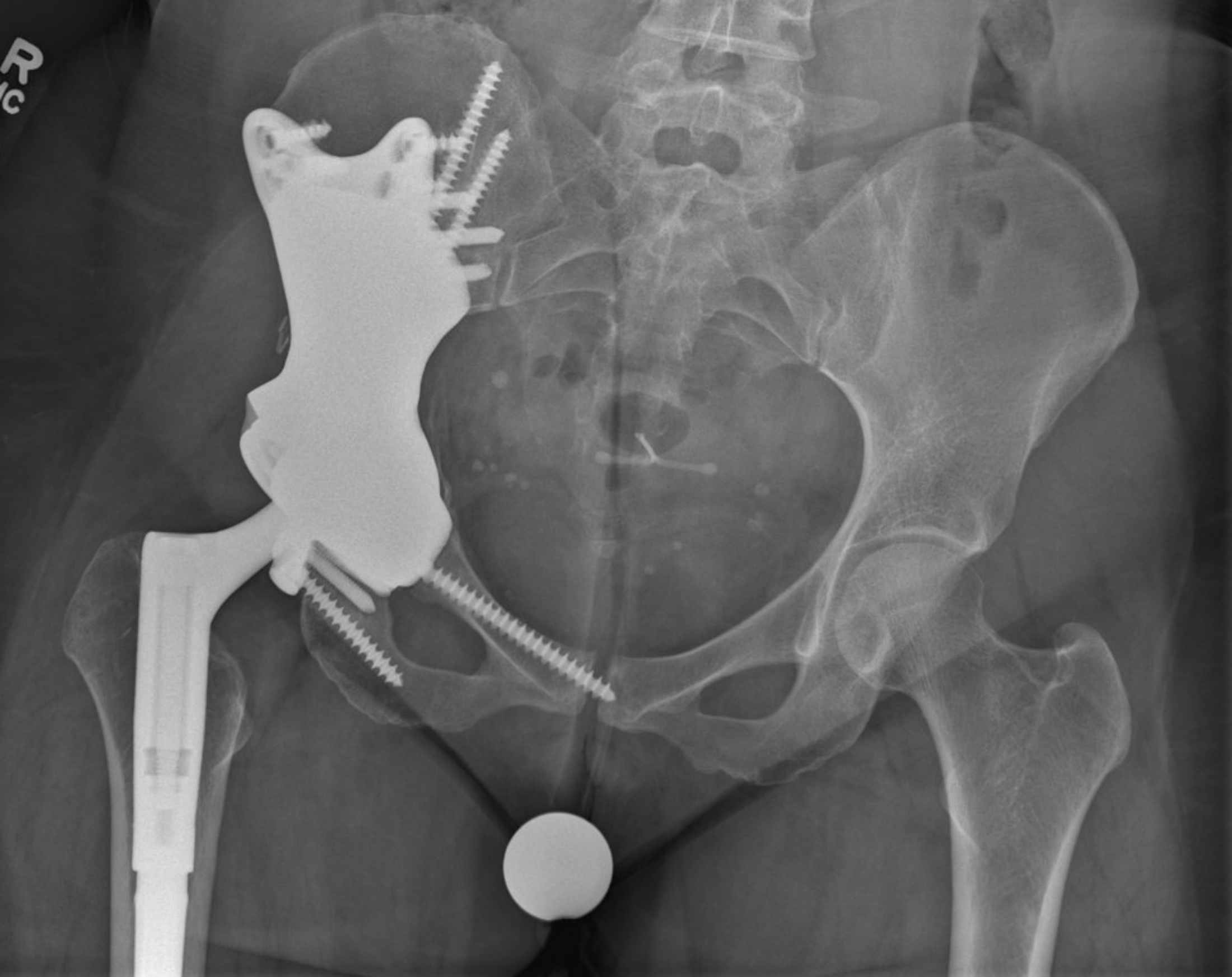
Advanced imaging helps define which structures are involved and which can be preserved. Vascular surgeons can restore blood flow when major vessels are resected. Plastic surgeons support reconstruction when large sections of tissue must be removed.
Reconstruction techniques are also evolving.
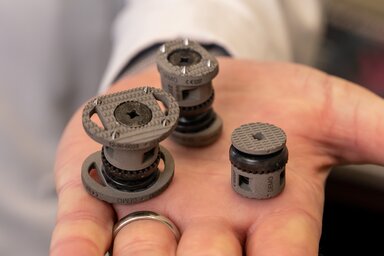
Magnetically controlled bone transport systems allow surgeons to regenerate large segments of bone after resection. In some cases, more than 15 centimeters of a patient’s femur can be restored. Pediatric patients may receive extendable prosthetics that lengthen over time without repeated surgeries.
These tools expand the surgical playbook, but the priorities remain consistent.
“The first goal is to treat the cancer and save the patient’s life,” Leddy says. “The second goal is to preserve the extremity.”
Limb preservation has clear implications for mobility, independence, and long-term function.
Planning beyond the resection
Successful tumor removal is only one part of care. Patients must also navigate recovery, rehabilitation, and ongoing surveillance.
Some return to near-normal function, while others face limitations that require careful discussion before treatment begins.
“We’re always thinking about what life is going to look like after this,” Leddy says. “Those conversations are just as important as the surgery itself.”
That includes setting expectations around function, managing wound healing risks, and supporting patients through long-term follow-up.
A team model that changes the equation
Limb salvage is not the result of a single technique or individual.
“It starts with building a collaborative team,” Leddy says. “That’s what allows us to push the limits of what’s possible.”
That model enables high-volume centers to take on complex cases and deliver consistent outcomes. It also reinforces a broader truth in sarcoma care: where patients are treated continues to influence what options are available.
Amputation remains necessary in some cases, but it is no longer the default.
For many patients, that shift changes both the treatment plan and the long-term outlook.