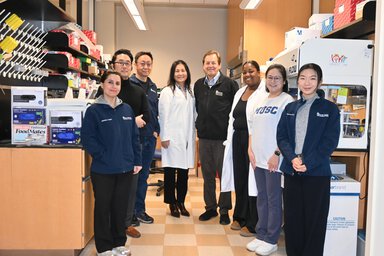

Arthur “Ace” Ellis knows a thing or two about the people who make exceptional health care possible. For years, he worked alongside MUSC Health clinicians to help them to navigate the technology that supported their work.
But in 2017, Ellis experienced MUSC from an entirely different perspective. It was his turn to be the patient because he needed a hip replacement. And while the surgery went well, once in the recovery room, he experienced bradycardic pulseless electrical activity (PEA) arrest and had to be resuscitated not once but twice. PEA is a form of cardiac arrest that requires immediate intervention, as the heart’s electrical activity continues but the heart is unable to pump enough blood to maintain circulation. He then had to spend three days in the intensive care unit (ICU) before moving to the regular orthopedic floor for recovery.
The care he received after his ICU stay gave him a renewed perspective on life and appreciation for the people who took care of him. It inspired him to find ways to give back, and one of those ways was writing thank-you notes.
After having a colectomy in September 2026, Ellis once again wanted to express his appreciation to the people who took care of him. He joked that Hallmark probably didn’t make a card for that particular occasion, so he did what he has done for years. He sat down with a pen and paper to find the right words.
From colleague to patient
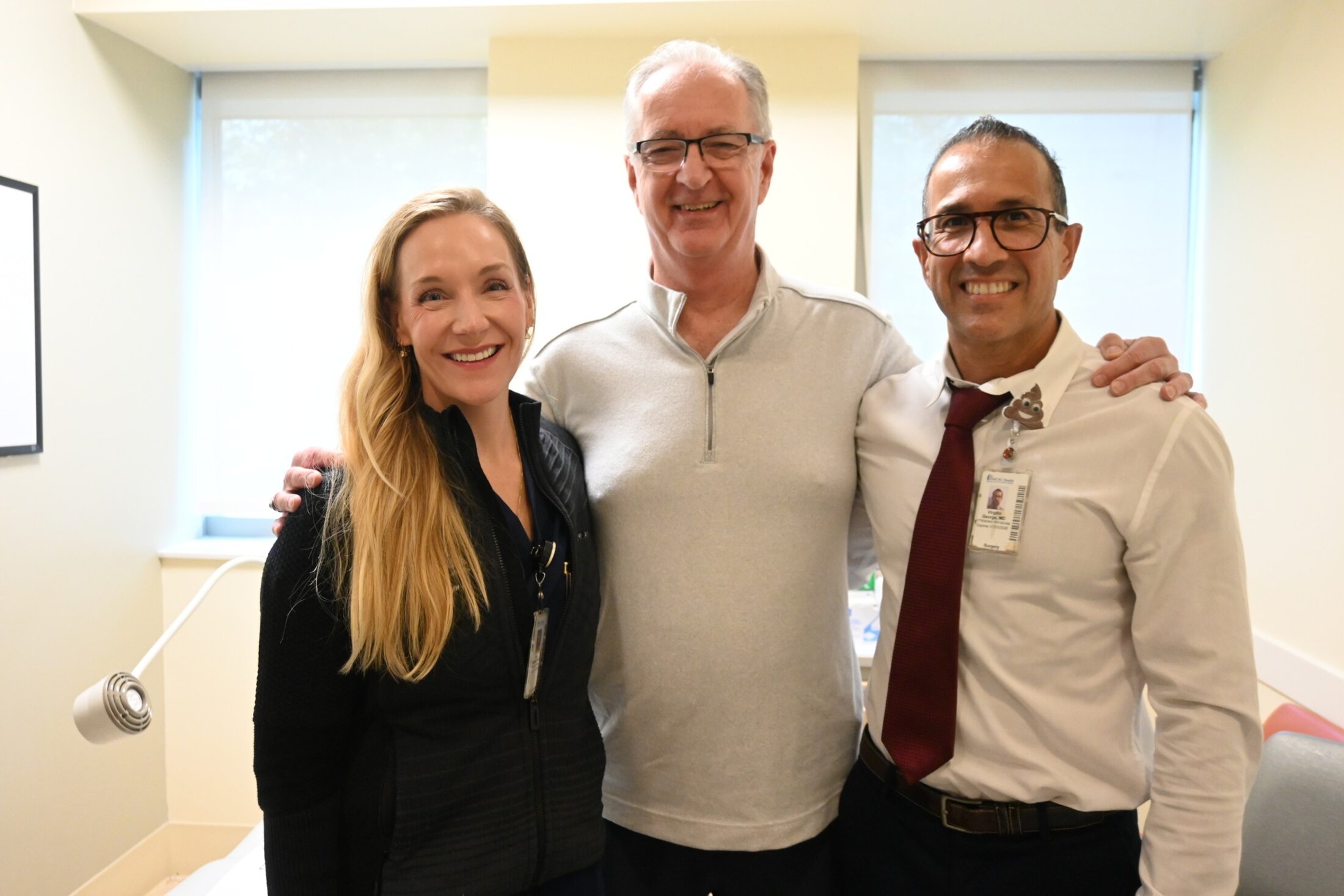
In 2012, Ellis joined MUSC to help with the implementation of Epic, an electronic health record system that allows healthcare providers to document patient care and manage medical information. His work took him into clinics to help providers to learn the new technology. While his technical expertise was important, one of the things he loved most about the job was building relationships with clinicians.One of those clinicians was Karen Anderson, a physician assistant with the MUSC Health Colorectal Surgery team, whom Ellis helped to orient to Epic. This year, their paths crossed again under very different circumstances.
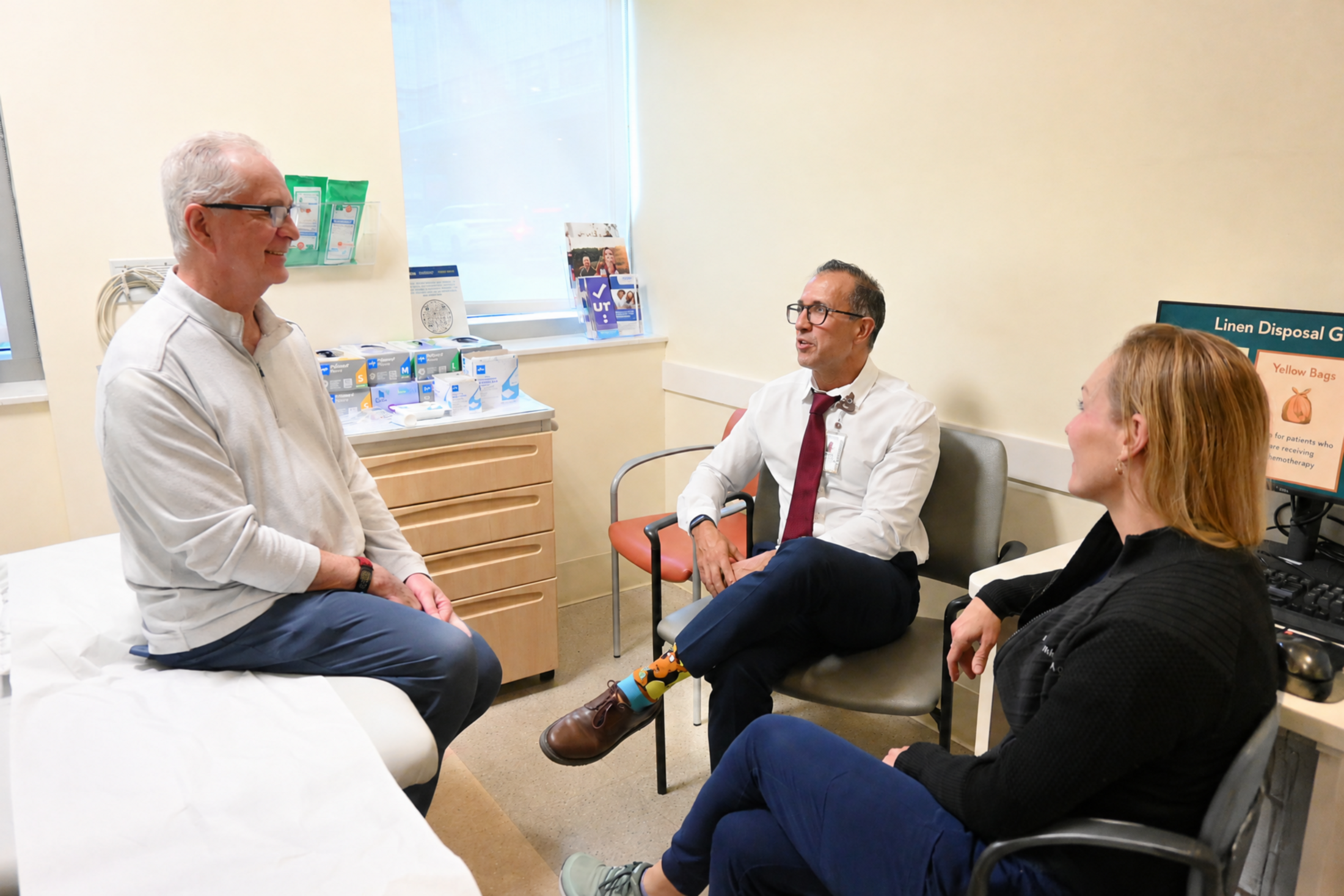
Ellis has been living with diverticulitis, a progressive digestive condition that can cause acute and severe recurrent episodes of abdominal pain, often resulting in trips to the Emergency Department for evaluation and treatment. In 2026, he was referred to Virgilio George, M.D., chief of the Division of Colorectal Surgery, and learned he needed a colectomy. As he navigated the experience, he found himself reconnecting with Anderson, who works alongside George.
The experience reminded him that excellent healthcare involves more than technical skills. It also involves people who take time to listen and make patients feel at ease. And to Ellis, MUSC Health has always done that well.
After his surgery, Ellis wanted both George and Anderson to know what their care meant to him. It took him about two weeks to perfect his letters, but he finally found the right words to express his gratitude.
There is tremendous comfort in knowing that the person who is about to operate on you is exceptionally skilled. There is another kind of comfort in discovering that the same person is relaxed, approachable, positive and has the ability to make you feel remarkably calm.
Putting gratitude into words
In his letter to Anderson, Ellis reflected on the remarkable reversal of their roles. Years earlier, he had helped her to learn the technology she needed to care for patients. Now, she was helping him to navigate a significant chapter in his own health. He thanked her for her intelligence, patience, warmth, humor and reassurance, but it was the personal connection that stood out most.
“I am extraordinarily grateful our paths crossed again,” he wrote.
His letter to George carried the same appreciation, along with Ellis’ signature humor. He praised the surgeon’s ability to explain complicated medical issues in ways he could understand, listen carefully to his questions and put him at ease before surgery.
“There is tremendous comfort in knowing that the person who is about to operate on you is exceptionally skilled,” Ellis wrote. “There is another kind of comfort in discovering that the same person is relaxed, approachable, positive and has the ability to make you feel remarkably calm about something that is, objectively speaking, a pretty lousy way to spend a Monday.”
He was equally appreciative of the surgery itself, joking that he had slept through what appeared to be the surgeon’s finest work.
“Surgery is about more than treating a diagnosis. It’s about building trust and helping patients feel confident in the care they are receiving,” said George. “Ace brought so much positivity and humor to the experience, and his letter was a wonderful reminder of why the relationships we build with our patients matter so much.”
More than 300 thank-you notes
For Ellis, writing these letters is a way to give something back not only to the people who have cared for him but to people he’s encountered in other parts of his life, too. Since his surgery in 2017, he estimated that he has written 300 thank-you notes to healthcare providers, professional colleagues and others.
For George and Anderson, his words were a meaningful reminder of the impact they have on their patients.
“We are always grateful when patients take the time to share their experiences with us,” said Anderson. “In healthcare, we don’t always get to hear how much those personal interactions mean to someone. Knowing that Ace felt supported throughout his experience means a great deal to us.”
Following his colectomy, Ellis has recovered well. And while he may not have found a Hallmark card for the occasion, he once again found the perfect words to make sure the people who cared for him knew just how much they mattered.