
Most current treatments for pediatric aortic valve disease rely on fixed solutions. New research is exploring whether valve technology itself can be adjusted as a child grows.
Today’s surgical and catheter-based interventions are designed to address a specific moment in time. But as a child grows, the heart changes with it, often requiring those solutions to be revised or replaced.
Researchers are exploring whether that model can shift, from replacing valves as patients grow to designing valves that can be adjusted alongside them.
Engineering for growth
Aortic valve disease is one of the most common congenital heart defects treated at MUSC and often begins early in life. Initial interventions may include balloon dilation or surgical repair, each restoring function but not providing a permanent solution.
The limitation is structural. Valves can function well, but they do not grow with the patient.
In collaboration with bioengineers at Clemson University, MUSC is developing an expandable pediatric valve designed to change size over time. The concept is to implant a valve early, then expand it through catheter-based balloon dilation as the child grows.
The ability to put a balloon in through a vessel in the leg or the arm and blow that valve up maybe to 12 or 14 millimeters would buy that child another two or three or four years before they would need to have something else done
The same valve could potentially be expanded again, eventually reaching adult size.
The challenge beneath the concept
Making a valve larger is not the difficult part. Making it larger while preserving function is.
“Oftentimes when you balloon these valves, they’ll stop functioning,” Kavarana explains. “You develop a leak because the leaflet tissue that keeps the valve working gets pulled apart.”
That tension between expansion and performance sits at the center of the research.
Through bench testing and bio-simulators, the team has developed a prototype designed to maintain structural integrity as it expands. Early results have been promising, and the next phase will evaluate the valve in a growing animal model, where researchers can observe how it performs as size and physiology change together.
A different way to think about intervention
This work represents more than a device improvement. It reflects a shift in how pediatric valve disease is approached.
Current treatment pathways are often defined by timing, when to intervene, when to revise, and how long each solution will last. The expandable valve introduces a different possibility: a device that can be expanded through catheter-based intervention without open surgery.
That distinction matters in a condition where patients may otherwise face multiple interventions across childhood.
What comes next
The expandable valve remains in development, and important questions still need to be answered through clinical study. But the direction is clear.
At MUSC Children’s Heart Center, the focus is not only on improving individual procedures, but on rethinking how those procedures fit together across a patient’s life. In this case, that means asking whether a valve can be designed not just to function, but to adjust as the patient grows.
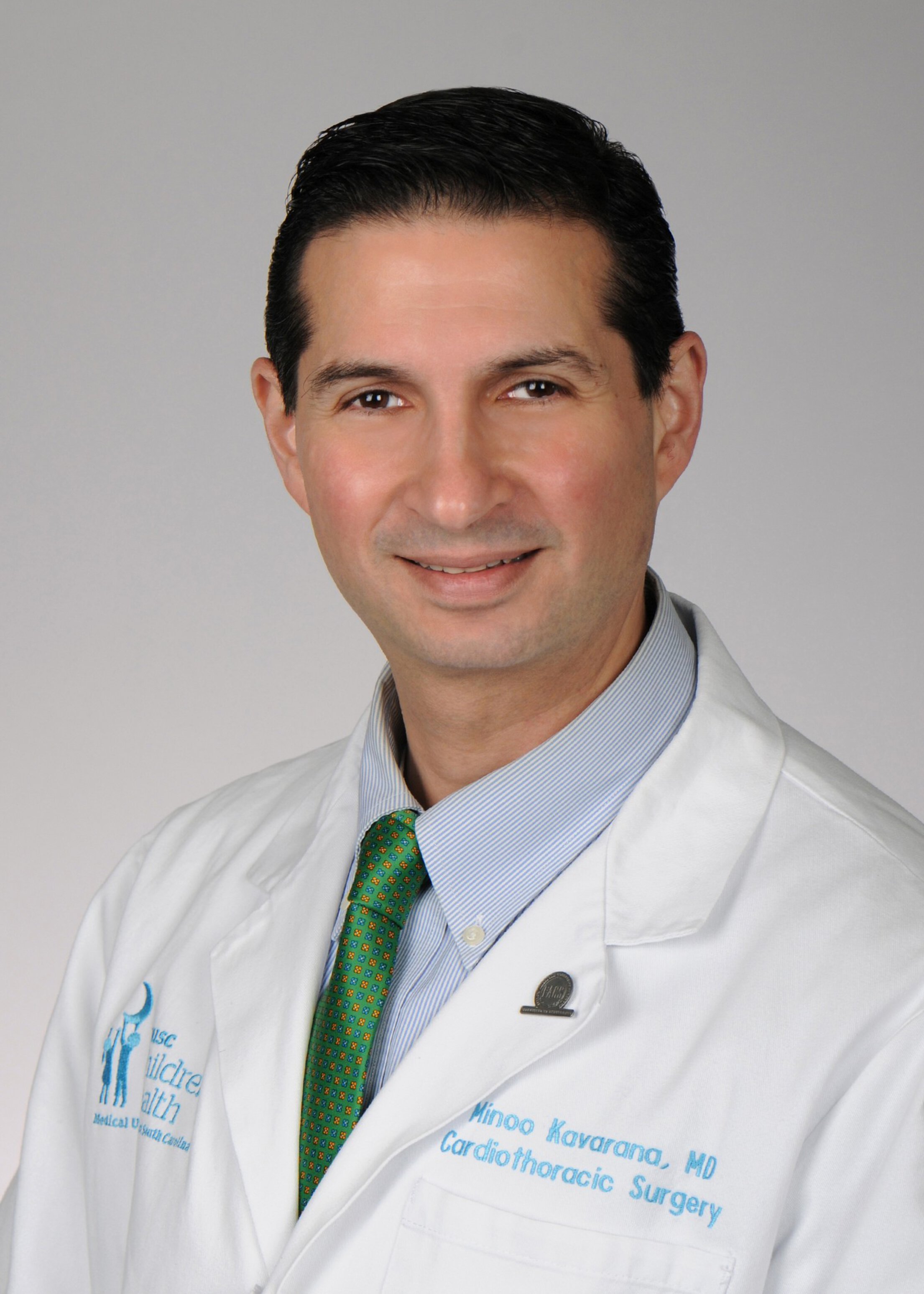
Minoo Naozer Kavarana
Co-Director, Pediatric & Congenital Heart Center Surgical Director, Pediatric Heart Transplantation & Mechanical Support Chief, Pediatric & Adult Congenital Cardiothoracic Surgery Director, Pediatric Cardiothoracic Surgery Fellowship Program
Minoo Kavarana, M.D., is a pediatric cardiothoracic surgeon who joined the department in 2010. In 2023, he was appointed the inaugural division chief of the newly created Division of Cardiothoracic Surgery in the Department of Surgery. Dr. Kavarana also serves in MUSC Health as Co-Director, Pediatric and Congenital Heart Center, and is the Surgical Director of the Pediatric Heart Transplantation and Mechanical Support.
Dr. Kavarana's clinical expertise include neonatal and infant heart surgery, adult congenital heart surgery, heart and lung transplant and mechanical circulatory support. He graduated from medical school in India in 1994. Following this he received post-graduate training in general surgery at New York Medical College, where he spent a year at Columbia University, New York as a heart transplant and ventricular assist device post-doctorate fellow. He then received cardiothoracic surgery training at the Jewish Hospital, University of Louisville, Kentucky where they implanted the first implantable total artificial heart. During this time, he developed a deep clinical and research interest in pediatric cardiac disease, pediatric cardiac assist and thoracic organ transplantation. Following this he completed a congenital heart surgery fellowship at the University of Michigan in Ann Arbor with Dr. Edward L. Bove.
In 2010, Dr. Kavarana joined MUSC in the division of cardiothoracic surgery. Dr. Kavarana's clinical interests include neonatal and infant heart surgery, adult congenital heart surgery, heart and lung transplant and mechanical circulatory support.