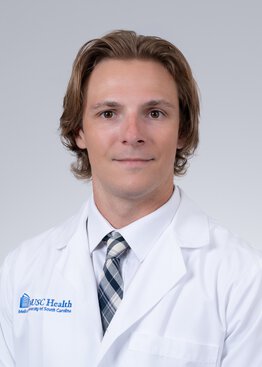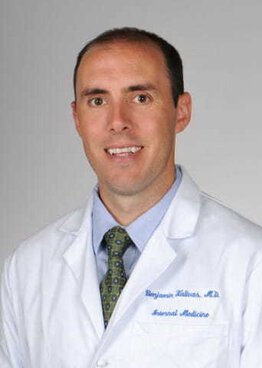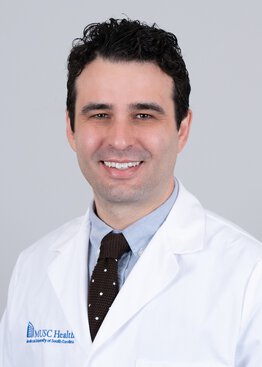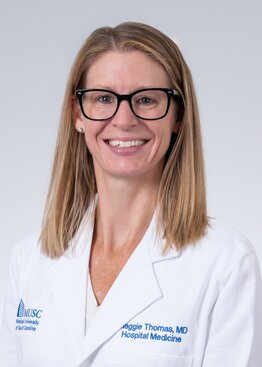

Our mission is to provide the highest quality, evidence-based care to patients in South Carolina while advancing quality improvement, patient safety, and education. MUSC’s Division of Hospital Medicine vision is to be a regional and national leader in hospital medicine by promoting excellence, lifelong learning, innovation, and professional development among our faculty.
As MUSC College of Medicine faculty, our division supports three core missions:
- Provide patient-centered, high quality, evidence-based care to patients in South Carolina.
- Deliver excellent medical education at the undergraduate and graduate medical level.
- Promote hospital medicine quality improvement, patient safety, and clinical research efforts.
Patient Care
The Division of Hospital Medicine staffs 14 inpatient services in University Hospital and the Ashley River Tower. Additionally, the division provides coverage for the following services: orthopedic co-management, hospital medicine inpatient consultation, preoperative clinic, telemedicine to rural hospitals, and observation units.
Education
The Division of Hospital Medicine includes faculty who serve as leaders in both undergraduate and graduate medical education at MUSC, Master Clinical Skills Teachers, members of the Academy of Medical Education, and Golden Apple Award Winners.
Quality Improvement & Research
The Division of Hospital Medicine is currently involved in quality improvement and clinical research in work related to tele-hospitalist services to support rural hospitals, increasing nicotine replacement therapy prescribing during hospitalization, point-of-care ultrasound curriculum development, identification and treatment of in-hospital delirium, and outcomes associated with interhospital transfers:
Tele-hospitalist Services to Support Rural Hospitals at Risk for Closure
- Tele-hospitalist services to support the opening of a new rural hospital http://doi.org/10.1002/jhm.70253
- Building a Telemedicine Program to Create a Sustainable Care Delivery Model for a Rural Hospital at Risk for Closure https://doi.org/10.1089/tmj.2024.0488
Interhospital Transfer Outcomes
- Impact of Patient-Level Characteristics on In-hospital Mortality After Interhospital Transfer to Medicine Services: an Observational Study - PubMed
- Understanding the association between admission source and in-hospital delirium: A cross-sectional study https://doi.org/10.1136/jim-2022-002342
Increasing Nicotine Replacement Therapy Prescribing During Hospitalization and upon Discharge
- Is hospitalization a missed opportunity to intervene on tobacco cessation? https://doi.org/10.1016/j.amjms.2023.11.024
- Hospitalization as an opportunity to improve lung cancer screening in high-risk patients https://doi.org/10.1016/j.canep.2024.102553
- Prescription of Nicotine Replacement Therapy for Hospitalized Tobacco Users https://doi.org/10.14423/SMJ.0000000000001719
Building a Point-of-Care Ultrasound Curriculum
- Longitudinal, Spaced-Learning POCUS Curriculum for Internal Medicine Residents to Improve Knowledge and Skills https://doi.org/10.1016/j.amjms.2022.02.004
- Building a Point of Care Ultrasound (POCUS) Curriculum in Undergraduate Medical Education Through Stepwise Development and Assessment https://doi.org/10.24908/pocusj.v10i01.18116
- Development and Assessment of Simulation-Based Point-of-Care Ultrasound Curriculum in Undergraduate Medical Education https://doi.org/10.1177/23821205231213754
Identification and Treatment of in-hospital Delirium
- The Combined Effect of Delirium and Falls on Length of Stay and Discharge https://doi.org/10.1097/jhq.0000000000000377
- The Association between Delirium and In-Hospital Falls: A Cross-Sectional Analysis of a Delirium Screening Program https://doi.org/10.1155/2023/1562773