The Caraballo Galva Lab

Accelerating the clinical translation of CAR-T cell therapies

About the Caraballo Galva Lab

We aim to develop next-generation synthetic switches and engineering tools that accelerate the clinical translation of CAR-T cell therapies and make them safer and more effective against solid tumors.

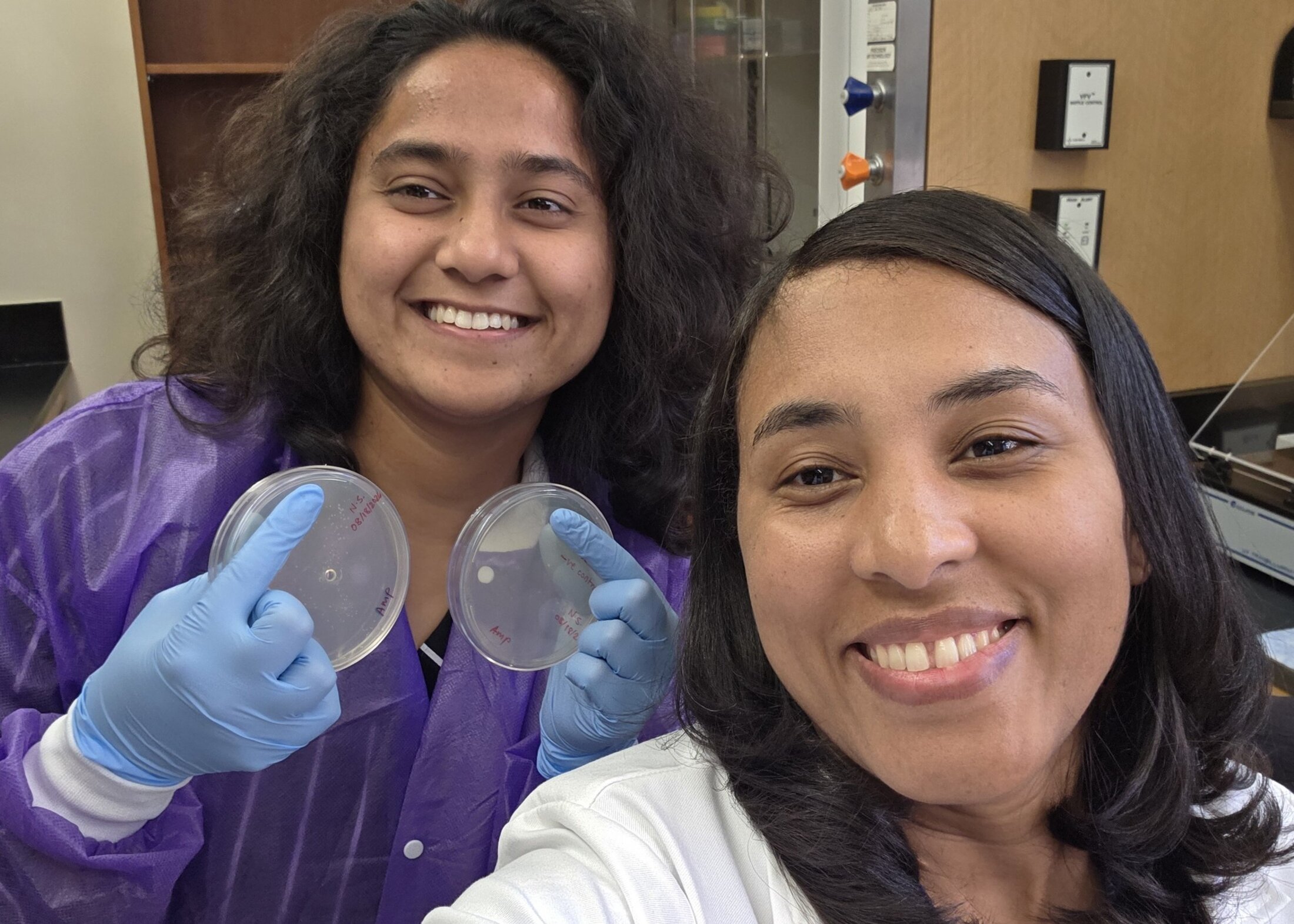
Leidy Diana Caraballo Galva, Ph.D., takes a selfie in her lab with research specialist Niraja Soman, who is holding up two petri dishes.

Why advancing CAR-T cell therapy matters

Although CAR-T cell therapies have transformed how we treat blood cancer, their success against solid tumors has been limited. Challenges include poor persistence, T-cell dysfunction, toxicity, and the immunosuppressive tumor microenvironment. Thus, children and adults with recurrent or metastatic solid tumors continue to face poor outcomes and limited treatment options.

Our research seeks to overcome these barriers by engineering smarter, controllable cell therapies that can sense, adapt, and respond to changing biological conditions, ultimately making CAR-T cell therapies safer, more potent, and more broadly applicable to patients with cancer.

Who we are

Niraja Soman

Niraja Soman, M.S., is a Research Specialist II in the Caraballo Galva Laboratory. Her research interests span translational immunology, cancer biology, molecular pharmacology, and the development of engineered immune cell therapies. She brings experience across the full research continuum, from basic and translational science to clinical research operations. 

Niraja earned her Master of Science in Molecular Pharmacology and Therapeutics from the University of Minnesota and her Bachelor of Pharmacy from Bharati Vidyapeeth Deemed University in India. During her graduate training, she investigated molecular mechanisms involved in genomic stability and DNA damage responses, gaining extensive expertise in molecular biology, cell engineering, assay development, and quantitative data analysis. 

Following her graduate studies, she worked as a Clinical Research Coordinator at the University of Minnesota, supporting clinical trials through regulatory compliance, participant management, data quality assurance, and study operations. She later joined Baylor College of Medicine and Texas Children’s Hospital, where she contributed to translational immunology research involving primary human immune cells, CRISPR/Cas9 gene editing, immune cell engineering, and flow cytometry-based immune profiling. 

At MUSC, Niraja is involved in developing next-generation cellular immunotherapies for pediatric and adult solid tumors through synthetic biology and gene regulation approaches aimed at improving the function and persistence of therapeutic T-cells. Her multidisciplinary training in laboratory research, clinical trials, and cellular immunotherapy positions her to contribute to the translation of innovative cancer therapies from bench to bedside.


Our research benefits from close integration with MUSC’s Integrated Center for Cellular Therapy, which provides access to state-of-the-art expertise, infrastructure, and cell therapy resources. 

This collaborative environment enables us to rapidly design, engineer, manufacture, and evaluate next-generation cellular immunotherapies, helping accelerate the translation of laboratory discoveries into innovative treatments for patients with cancer.

Current research studies

Our laboratory is developing next-generation cellular engineering technologies designed to overcome two major challenges facing CAR-T cell therapy: limited effectiveness against solid tumors and treatment-related toxicities. We are creating innovative genetic control systems that help engineered immune cells function more effectively, adapt to changing conditions within tumors, and maintain their cancer-fighting activity over time. These technologies are being evaluated in several aggressive solid tumors, including liver cancers, hepatoblastoma, and rhabdoid tumors, with the goal of expanding their application to many other childhood and adult cancers.

The effectiveness of a CAR-T cell therapy depends not only on the target it recognizes but also on how the cells are designed and manufactured. Our research investigates factors that influence CAR-T cell performance, persistence, and durability, allowing us to identify strategies that improve antitumor activity while reducing dysfunction. In parallel, we are developing innovative manufacturing approaches inspired by chemical and biochemical engineering principles to produce high-quality, clinically relevant CAR-T cell products that can be more efficiently translated to patients.

A major focus of our laboratory is the creation of new synthetic biology and molecular engineering tools that speed the design, testing, and optimization of therapeutic DNA, RNA, and cell-based technologies. We develop versatile research platforms that enable rapid generation and evaluation of new genetic constructs, helping accelerate discoveries from the laboratory to clinical applications. By making the engineering process faster and more efficient, these tools have the potential to support the development of a wide range of next-generation therapies for cancer and other diseases.

Support research in the Department of Pharmacology & Immunology

MUSC Foundation

You can designate a gift for the Caraballo Galva Lab via the MUSC Foundation.

Visit the MUSC Foundation, find the donation form, select Pharmacology and Immunology Research from the dropdown menu, and specify in the comment section that your gift is intended for the Caraballo Galva Lab. Please let Dr. Caraballo Galva know about your gift so she can confirm the gift was routed accordingly.

Contact us

Leidy Diana Caraballo Galva, Ph.D.
Assistant Professor
carabale@musc.edu