

Global Surgery Program
The MUSC Global Surgery Program leverages global relationships to create bidirectional clinical education, research, and innovation opportunities.
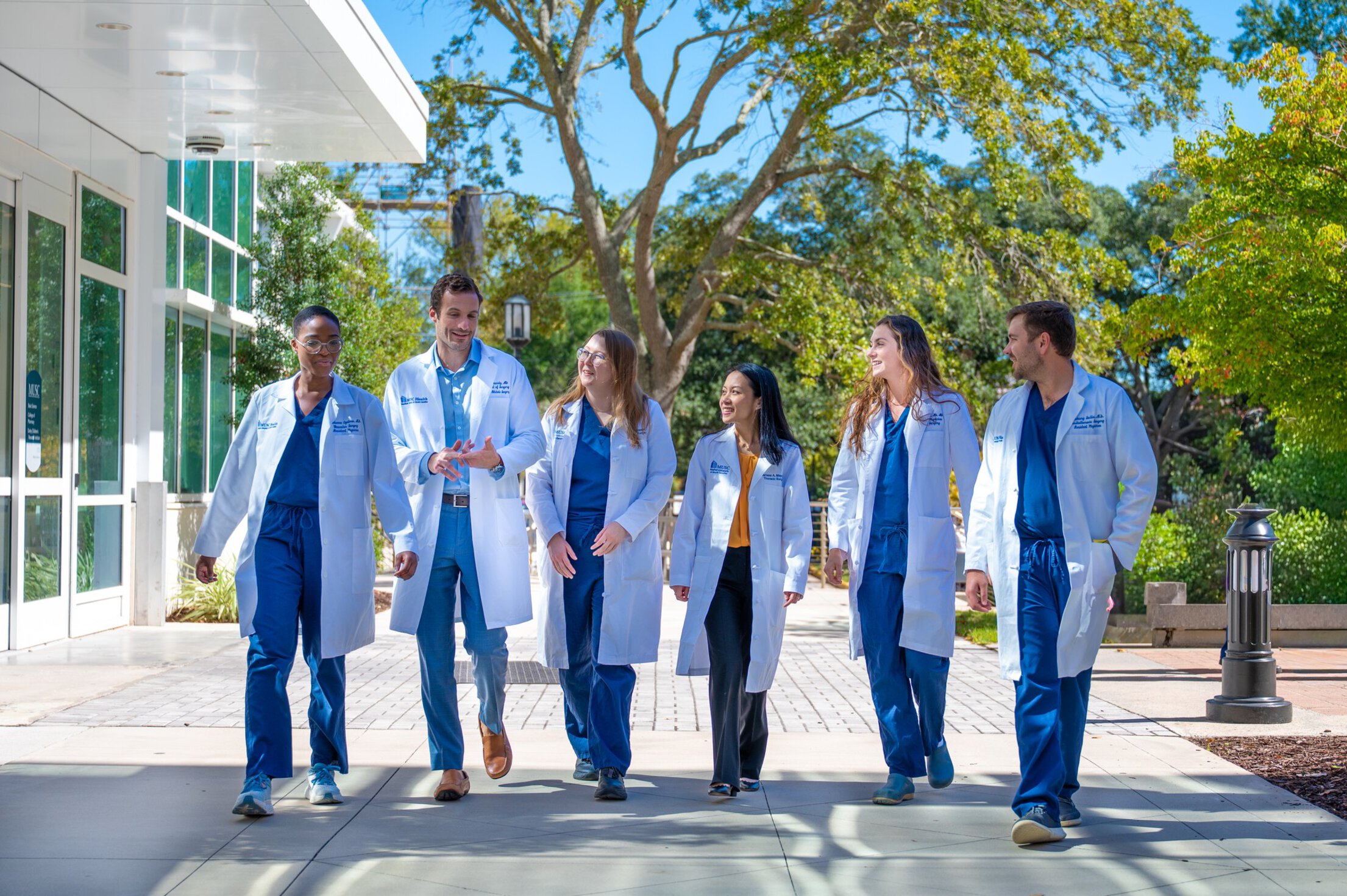
The general surgery residency is a five-year program encompassing all aspects of general surgery as well as the surgical specialties, with an optional year of basic research available. The general surgical subspecialties include endocrine surgery, gastrointestinal surgery, surgical oncology, vascular surgery, advanced laparoscopic surgery, surgical ICU, and trauma surgery. Residents are also assigned to other surgical services with approved graduate education programs including orthopedic surgery and urology.
Discover what it means to learn by doing. Hear firsthand from MUSC attendings, researchers and current residents about the exceptional educational experiences available both in and beyond the operating room.
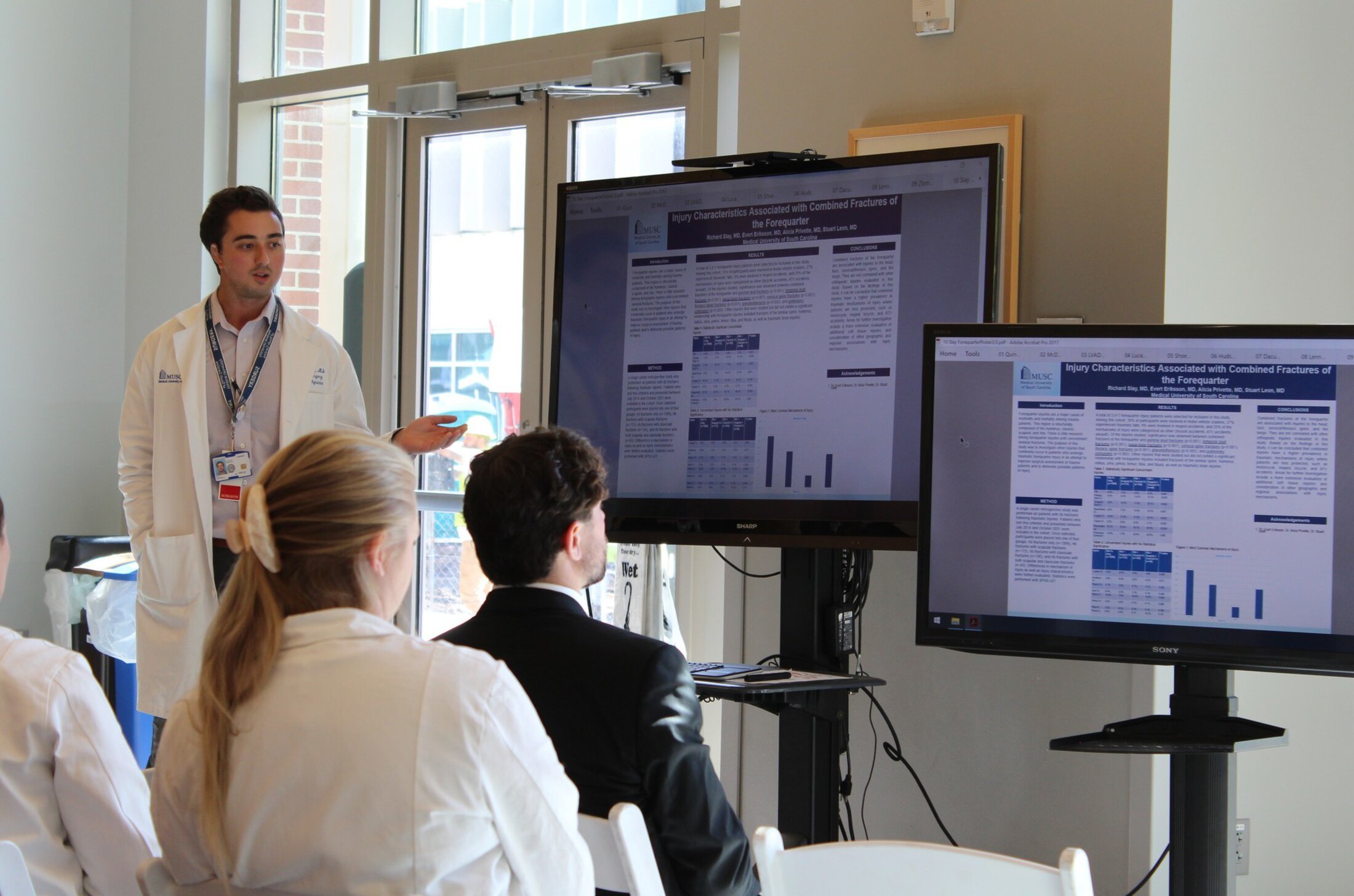
Every resident who trains here gets the same thing at the core: broad operative volume, early autonomy, and faculty who know your name. What differs is the shape of the training around it.
Three Ways to Train With Us
Every resident who trains here gets the same thing at the core: broad operative volume, early autonomy, and faculty who know your name. What differs is the shape of the training around it.
We offer three tracks. You may apply to one, two, or all three — and we encourage applying to more than one. Applying to multiple tracks does not dilute your application, and it does not signal indecision. It tells us you want to train here, and it gives us more ways to say yes.
How our positions are structured. Each year we fill:
Each track has its own NRMP program code.
Applying to more than one track: apply to as many as fit your goals, rank them in the order you prefer, and the Match does the rest. There is no penalty for applying broadly across our tracks.
Categorical General Surgery
The Categorical General Surgery program is a five-year ACGME-accredited program leading to board eligibility in general surgery. Residents rotate across the MUSC downtown campus (Level I trauma, burn, emergency general surgery), Ashley River Tower (GI specialty, colorectal, surgical oncology, HPB, thoracic, vascular, endocrine), MUSC Shawn Jenkins Children's Hospital, the Ralph H. Johnson VA, and community sites across South Carolina. Optional dedicated research time is available.
Best for: applicants seeking comprehensive general surgery training with the flexibility to pursue fellowship or go straight into practice.
Preliminary
The preliminary program offers one-year positions for residents building toward a categorical position, an advanced specialty, or additional clinical experience before the next step. Preliminary residents rotate on the same services, take the same call, and operate alongside our categorical interns — they are full members of the residency, not a parallel class.
We offer thirteen preliminary positions each year, in two groups:
Preliminary residents receive individualized advising toward their intended destination, and our preliminary alumni have gone on to categorical positions and advanced specialty training at MUSC and nationally.
Best for: applicants pursuing an advanced specialty, re-applicants, and those seeking a strong clinical foundation year.
Surgeon-Scientist Pathway
A longitudinal track for residents whose careers will be built on scientific investigation. Research is integrated across training, mentorship teams form early, protected research time is substantial, and departmental support continues through the final clinical years and into grant submission.
Best for: applicants planning an academic career in which research will be a primary, funded activity.
Surgeon-Scientist Pathway
Train as a surgeon. Train as a scientist. Not one after the other.
The MUSC Surgeon-Scientist Pathway takes a longitudinal approach: mentorship and scientific identity begin in the first year, deepen through dedicated research time, and are actively supported through the final clinical years, when most residents historically lose their research footing.
MUSC is a participating institution in the American College of Surgeons Surgeon-Scientist Training Pathway national pilot — a coordinated effort to modernize how surgeon-scientists are trained and to connect them to the wider physician-scientist community. Joining the pilot means our residents train inside a national cohort: shared guiding principles, common outcome measures, and dedicated sessions at meetings including the ACS Clinical Congress and the Academic Surgical Congress.
The pathway is separately matchable. It has its own NRMP program code, so you match directly into it rather than after you arrive.
What a Surgeon-Scientist Does
A surgeon-scientist operates, sees patients and learns how to run a research program. Our residents work across the full methodological range:
How the Pathway Works
Where the Research Happens
What This Looks Like in Practice
Allison Frederick, MD — Research Resident
Primary mentor: Aaron Lesher, MD, MSCR (Pediatric Surgery)
In a recent six-month period: 5 publications and 6 presentations, including 2nd place in the Pediatric Trauma Society resident paper competition and 1st and 2nd place awards at the NC/SC ACS meeting. Representative projects: a randomized feasibility study of virtual versus face-to-face care using a mobile health platform for outpatient pediatric burns; a comparative analysis of racial disparities between adolescents and adults undergoing bariatric surgery using the MBSAQIP database.
Pathway Leadership
Mary Kate Bryant, M.D., MSCR
Quynh Chu, M.D.
Jean Marie Ruddy, M.D.
Applying
We match two Surgeon-Scientist Pathway residents each year through a dedicated NRMP program code.
Rotation Schedule
Our residents primary rotate at the downtown Charleston campus which includes the Main Hospital, Ashley River Tower, Shawn Jenkins Children's Hospital (SJCH), and the VA Hospital. Residents also rotate at our community general surgery sites including McCleod Regional Medical Center, Tidelands Medical Center and Roper Hospital as senior residents.
PGY 1: Assignments during this year are for one-month periods, providing exposure to general and specialty services in the four affiliated hospitals: ART, VA, Main and MUSC Shawn Jenkins Children's Hospital. The resident will gain experience through one-month assignments to general surgery and the surgical specialties including anesthesia, cardiothoracic surgery, transplantation, vascular surgery, orthopedic surgery, pediatric surgery, plastic surgery, and urology.
PGY 2: Assignments in this year are for one- or two-month periods, focusing on pediatric surgery, trauma/acute care, cardiothoracic ICU, vascular surgery, breast/endocrine surgery, transplant surgery, night ART, and STICU.
PGY 3: Assignments are one- to two-months long in the third year. Assignments include the transplant, night emergency/trauma, and gastrointestinal surgery services (colorectal surgery, MIS, pancreatic biliary surgery) as well as the general surgery service at the VA Hospital and a community rotation at an offsite hospital.
PGY 4: Residents serve as senior general surgical residents on the night emergency/trauma service, breast/endocrine surgery, gastrointestinal surgery services, pediatric surgery service, and vascular surgery. They also do thoracic surgery month and a rotation with a group of well-respected surgeons at a community hospital.
PGY 5: Residents serve as general surgical chief residents on the gastrointestinal surgery services, surgical oncology, night/emergency trauma service, and the VA general surgery services. The chief resident is expected to assume maximum responsibility for all aspects of surgical care on each service
Surgical Simulation at MUSC: Designed for Resident Success
Simulation is essential to modern surgical education. The mission of our surgery simulation curriculum is to cultivate the technical and cognitive skills development of our bright surgical trainees in an environment optimally focused on their education. The goal of simulation training is to improve quality of delivered care and patient safety, while empowering the capable surgeons of tomorrow. Our curriculum is tailored per resident level to ensure our residents feel prepared for the cases they will be participating in on a daily basis, before they walk into the operating room.
Douglas Cassidy, M.D., Director of Surgical Simulation for the MUSC General Surgery Residency Program, leads a cutting-edge initiative to integrate simulation-based training into surgical education. His expertise in surgical simulation—shaped by fellowships at Massachusetts General Hospital and the Association for Surgical Education—drives a curriculum focused on improving technical skills, communication, situational awareness, and team dynamics.
In October, 2024, Dr. Cassidy joined MUSC just as the department unveiled a newly renovated state-of-the-art Surgical Simulation Center, strategically located next to the resident workspace. Open 24/7, this dedicated space ensures residents have easy, round-the-clock access to:
“Accessibility is key,” says Cassidy. “Our residents work long hours—having everything right here, whenever they need it, makes all the difference.”
With strong institutional support and a focus on convenience and high-quality training, MUSC’s Surgical Simulation Center is redefining how residents prepare for real-world surgery.
Conferences and Educational Opportunities
Protected Time: MUSC General Surgery residents have protected time every Tuesday morning for educational opportunities and conferences. This includes:
These opportunities are all hosted in person. No residents will be on call during this protected time.
Additional Opportunities:
Descriptions
Grand Rounds: Department of Surgery Grand Rounds are scheduled for the second Tuesday of every month (July-June) at 7a.m. Grand Rounds speakers vary from local to national surgical experts.
Morbidity and Mortality Conference: Morbidity and Mortality Conference is held every Tuesday at 7 a.m. The service reports are reviewed from the previous week and all complications and deaths are presented and discussed in detail by the resident responsible for that service or performing the procedure. The responsible resident is expected to have all pertinent patient records available for this conference in order to discuss their cases in depth.
Basic Science: The Basic Science Course is intended to provide an introduction to general surgery and preparation for the annual in-service exam (ABSITE), with all essential topics covered at least every third year, and the most critical topics presented annually. The conferences are held weekly from July through May on Tuesday mornings from 8:00-9:00am for all PGY levels. Residents are expected to prepare in advance for the weekly conference by reading the appropriate assignment as noted on the conference schedule.
Simulation: Following Basic Science on Tuesdays, junior residents and senior residents alternate every other week with scheduled protected time for simulation for 1-2 hours to work on laparoscopic, endoscopic, robotic, and simulated scenario skills. These sessions are led by faculty and senior residents.
ABSITE Prep: In addition to weekly didactics, the department provides year long, individual access to the question bank TrueLearn for ABSITE preparation. Prior to the exam, additional practice tests are available to residents. Any PGY4 residents who score at least 75% correct have the option to take the written boards (ABS QE) early. For any resident who scores below the standard cut-off, individual mentorship and study plans are provided.
Future Surgical Leaders: The Future Surgical Leaders Program is a first-of-its-kind surgical residency training program in the U.S. The program measures both short and long-term outcomes and provide immediate feedback to the trainees. Below are examples of topics that are covered based on the residency year:
Pathways: In coordination with the Future Surgical Leaders Program, we have added the dimension of Pathways to develop an academic niche. These include Global Health, Education, Surgeon Scientist, Innovation and Entrepreneurship, and Leadership.
Wellbeing: The Department of Surgery focuses on wellness for all its residents and faculty. To learn more, visit https://medicine.musc.edu/departments/surgery/about/wellness-opportunities.
Journal Club: Surgical Journal Club is held from August through May and open to all residents. These are held on the 3rd Tuesday of the month at local restaurants throughout the city. Residents are expected to attend 50% of journal clubs. Residents will select the articles that will be discussed.
Research Opportunities
In addition to the Surgical-Scientist Pathway, the Department of Surgery offers many research opportunities for all residents.
All residents are expected to participate in scholarly activities and encouraged to complete one research project a year. In addition, MUSC provides funding to attend regional/national meetings. The department travel policy includes funding of both scholarly travel and non-scholarly travel.
Scholarly travel: Conference with presentation of research by the resident:
PGY 1-5
Non-scholarly travel: Two meetings are supported in the senior years of residency *
PGY 4
PGY 5
*In lieu of one non-scholarly activity meeting, residents may substitute this funding for board application fees or review courses.
To learn more about research opportunities with our world-renowned faculty members, please click the button below to search for research opportunities by division. Or you can contact Jean Marie Ruddy, M.D., Vice Chair of Research, at ruddy@musc.edu.
Find key information about the application process and key deadlines to keep you on track.
Application Process
Choose your track - or more than one.
We offer three tracks, each with its own NRMP program code:Categorical General Surgery - six positionsSurgeon-Scientist Pathway - two positions, separately matchablePreliminary (undesignated) - ten positionsYou may apply to one, two, or all three. We encourage applying to multiple tracks.Applying broadly across our tracks is read as interest in MUSC, not as indecision, and gives us more ways to bring you here. Rank the tracks in the order you prefer them; the Match handles the rest.A note on radiology preliminary positions: we also host three preliminary positions designated for Interventional and Diagnostic Radiology. These are filled through the MUSC IR/DR program under its own NRMP code and are applied for alongside the advanced IR/DR application — not through this page. If you are applying to IR/DR at MUSC, your preliminary year is handled within that application.
We participate in the National Resident Matching Program (NRMP). Applications are accepted only through ERAS - we do not accept materials by email or mail. Click here to learn more about NRMP.
Interviews
All interviews are conducted in person. We think you should see Charleston, meet our residents, and get a real feel for the department before you rank us. Interview dates, open houses, and invitation timing are announced on our social accounts each cycle:
X: @MUSCGenSurg
Instagram: @muscgeneralsurgery
Both accounts are run by our residents. If you want an unfiltered picture of the program, that is the place to look - and our residents answer DMs.
After You Apply
The residency selection committee reviews each complete application and decides whether to extend an interview, hold the application, or decline. You will receive an email with your status. Interview scheduling is handled through Interview Broker - if you are selected, your email will include scheduling instructions.
Visa Sponsorship
The General Surgery Residency does not sponsor visa applications.
Application Requirements
We participate in the National Resident Matching Program (NRMP). Applications are accepted only through ERAS - we do not accept materials by email or mail.
Below is what a complete application includes:
| Requirement | Detail |
| ERAS application | Submitted to each track you wish to be considered for |
| Personal statement | One statement; you may tailor it by track if you wish |
| Letters of recommendation | Three required |
| MSPE | Required |
| Medical school transcript | Required |
| USMLE | Step 1 and Step 2 CK required |
We do not review incomplete applications.
Questions
Our program coordinators are happy to help at any point in the process.
Jerri O'Banner
843-792-4607
stanleyj@musc.edu
Keisha Vaughn
843-792-8593
brownkn@musc.edu
Michael Deal, M.D.
Medical School: University of Cincinnati College of Medicine
Leah Evans, M.D.
Medial School: Tulane University School of Medicine
John Halmark, M.D.
Medical School: Tulane University School of Medicine
Lillian Hsu, M.D.
Medical School: Texas Tech University School of Medicine
Eric Kilpsch, M.D.
Medical School: Indiana University School of Medicine
Stephen Moorhead, M.D.
Medical School: University of South Carolina School of Medicine, Greenville
Perwaiz Nawabi, M.D.
Medical School: Kansas City University College of Osteopathic Medicine
Brielle Ochoa, M.D.
Medical School: University of Virginia
Richard Slay, M.D.
Medical School: Medical University of South Carolina College of Medicine
Meredith Taylor, M.D.
Medical School: University of Cincinnati College of Medicine
Our graduates consistently match into top fellowships and excel in private practice.
2026 Graduates
Daniel Akyeampong, M.D.
Next Step: Surgical Critical Care and Acute Care Surgery Fellowship, Vanderbilt University Medical Center
Arjun Patel, M.D.
Next Step: Advanced GI/Minimally Invasive Surgery and Abdominal Wall Fellowship, University of Alabama at Birmingham
Patterson Allen, M.D.
Next Step: General Surgeon, Northside Hospital
David Mann, D.O.
Next Step: Abdominal Transplant Surgery Fellowship, University of Nebraska Medical Center
John Jordan Nunnery, M.D.
Next Step: Cardiothoracic Surgery Fellowship, Ochsner Clinic
2025 Graduates
Lex Booth, M.D.
Next Step: Colon & Rectal Surgery Fellowship, Cook County Health
Andrew Cole, M.D.
Next Step: Minimally Invasive Surgery Fellowship, Atrium Health
John Hulse, M.D.
Next Step: General Surgery, U.S. Navy
Maggie Jordan, M.D.
Next Step: General Surgery, MUSC Orangeburg
Kristen Quinn, M.D.
Next Step: Surgical Oncology Fellowship, MD Anderson Cancer Center
Haley Zlomke, M.D.
Next Step: Surgical Oncology Fellowship, Fox Chase Cancer Center
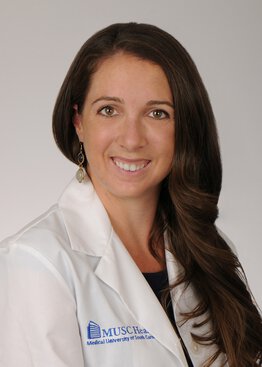
Colleen Donahue, M.D., is a fellowship trained colorectal surgeon that specializes in both benign and malignant diseases of the colon, rectum and anus. Her clinical interests include benign conditions of the anus and rectum, rectal prolapse, diverticulitis, inflammatory bowel disease and cancer of the colon and rectum, focusing on a multidisciplinary, team-based treatment approach. Dr. Donahue is committed to the advancement of surgical education, serving as the program director of the Department of Surgery’s General Surgery Residency Program.
She earned her medical degree from Tufts University School of Medicine followed by General Surgery Residency at Lahey Hospital and Medical Center in Massachusetts. She completed her colon and rectal fellowship at John H. Stroger Jr. Hospital.
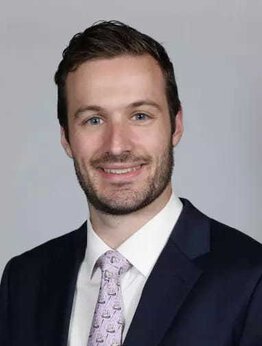
Douglas Cassidy, M.D., is a fellowship-trained minimally invasive surgeon who specializes in laparoscopic, robotic, and endoscopic techniques for hernia and benign foregut surgery. He has clinical interests in abdominal wall reconstruction and hernia surgery as well as foregut surgery, including gastroesophageal reflux disease (GERD), paraesophageal and hiatal hernias, achalasia, and gastroparesis. He has a special interest in resident education and serves as the Associate Program Director for General Surgery Residency and as the Director of Surgical Simulation.
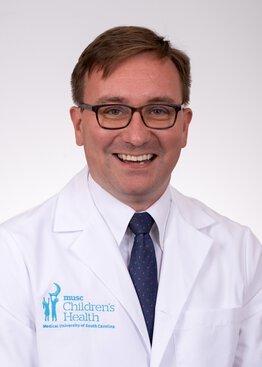
Aaron Cunningham, M.D., is a board-certified pediatric surgeon who maintains a comprehensive practice in pediatric general and thoracic surgery including the surgical care of neonates, pediatric surgical oncology, and minimally invasive surgery in children with congenital anomalies such as congenital pulmonary airway malformations (CPAM), esophageal atresia (EA/TEF), diaphragmatic hernia or a rare hepatobiliary disorder known as biliary atresia. He was trained with a focus in minimally invasive techniques for small neonates and believes in the comprehensive, multidisciplinary care of children with the goal of improving health over the course of a lifetime.
He received his M.D. from the Medical College of Georgia, and completed surgical residency at Oregon Health & Science University, where he also completed a research fellowship in pediatric surgical outcomes. Dr. Cunningham then completed his fellowship training in pediatric surgery at Lucile Packard Children’s Hospital at Stanford University. The highly specialized fellowship training that he received while at Stanford predominantly focused on minimally invasive surgical techniques in small neonates including minimally invasive approaches to esophageal atresia, CPAM, diaphragmatic hernia, and an advanced endosurgical technique called peroral endoscopic myotomy (POEM), which was performed on children in only one other center in the country.
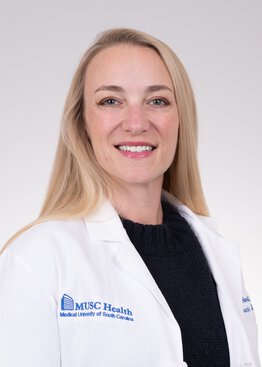
Kathryn E. Engelhardt, M.D., MS, is double board-certified in thoracic surgery and general surgery; she specializes in surgery of the lung, airway, esophagus, stomach, chest wall, and mediastinum. Whenever possible, Dr. Engelhardt performs surgery using minimally invasive robotic technology, providing optimal outcomes, quicker recoveries, and shorter hospital stays.
Dr. Engelhardt completed medical school at the University of Cincinnati and completed general surgery residency at MUSC. She then completed a two-year cardiothoracic surgery fellowship at Barnes-Jewish Hospital/Washington University in St Louis; a hospital consistently ranked among the best in the country by US News and World Report.
Academically, Dr. Engelhardt is an Associate Program Director in the General Surgery Residency Program, where she serves as the Director of Resident Professional Development.

Christian Streck, M.D., serves as Chief of Pediatric Surgery and a professor of surgery and pediatrics. His clinical interests include minimally invasive surgery for a variety of conditions of the chest, abdomen, and pelvis. His specific interests include cancer, inflammatory bowel disease, pectus excavatum, trauma, appendicitis, and ovarian masses. Dr. Streck's research interests include pediatric trauma and minimally invasive surgery.
Dr. Streck also serves the Department of Surgery as the Vice Chair of Education.. Before assuming the Vice Chair role in 2023, he led the General Surgery Residency Program as Program Director for eight years.
He graduated from Duke University in 1994 with a BS in biology and an AB in history. He received his medical degree from the Wake Forest University School of Medicine, completed general surgery residency in Memphis, Tennessee, which included a research fellowship studying children's cancer at St. Jude Children's Research Hospital. He then completed pediatric surgery fellowship at LeBonhuer Children's Hospital in Memphis in 2008.
Benefits and salary are provided by the GME Office. Click here to view the information.
Residents live all around Charleston and the surrounding communities. You can live downtown, by one of the many beaches or salt marshes, or in a more suburban area. Some residents bike or drive to work from downtown (5 min). Other residents drive in from Mt Pleasant (15-20 min), West Ashley (10-20 min), James Island (10 min), Johns Island (30 min), or North Charleston (10-20 min).
Click here to discover life in Charleston with MUSC, a city where history, culture, and coastal living enrich teaching, research, and learning.
Chief residents finish their training with more than enough cases to meet the training requirement set by the American Board of Surgery. Our graduating residents typically reach over 1,000 cases, which also exceeds the number of cases required by the ACGME.
Surgery residents are awarded 3 weeks (21 days) of vacation each academic year. Each vacation is a 7-day block. Residents submit their preferences to the administrative chief before the start of the academic year and all attempts are made to accommodate the preferences. Maternity, paternity, and bereavement leave are granted.
Night call for most services is covered by the night emergency/trauma (NET) Service. or the night ART (NART) service. This schedule may vary according to the assigned rotation. Work schedules are established so that residents work less than 80 hours per week with one day in seven "off", ten hours off between duty shifts, and a maximum of 24 hours on call.
The MUSC Global Surgery Program leverages global relationships to create bidirectional clinical education, research, and innovation opportunities.
The MUSC Department of Surgery is deeply committed to supporting surgeons at all stages of their careers.