
Center for Global Health + College of Pharmacy
Building a sustainable defense against antimicrobial resistance in Tanzania

The Medical Scientist Training Program (MSTP) at the Medical University of South Carolina prepares future physician scientists through an integrated M.D. and Ph.D. curriculum that unites medical education with rigorous biomedical research. For approximately 40 years, the program has received continuous support through a National Institutes of Health-funded T32 training grant, reflecting its longstanding commitment to developing the next generation of physician-scientists. Students receive comprehensive clinical training while pursuing in depth, hypothesis driven research under expert mentorship. The program emphasizes discovery, translation and professionalism, equipping graduates to advance human health and lead impactful careers in academic medicine and research.
AMCAS opens: May 5, 2026
MUSC opens: July 1, 2026
Final deadline: Dec. 1, 2026
Step into a fully integrated pathway that unites medical training and scientific discovery, equipping you to become a physician scientist who leads at the intersection of research and patient care.
We are committed to maintaining the highest standards for both the Ph.D. and M.D. degrees. Our program provides a collegial and nurturing environment in which each student’s intellectual and personal potential is nurtured, encouraged and challenged. This ensures that our trainees achieve their full potential. Upon completion of their training, our students go on to the highest quality internships, residency training programs and post-doctoral research fellowships, followed by outstanding career positions.
The MSTP offers maximum flexibility and guidance for the student to select a mentor and training experience. There are also several mechanisms available that allow the trainee to get significant exposure to clinical and translational research during the graduate years in addition to time in medical school. They include but are not limited to the Translational Sciences Clinic (during graduate years), Translational Medicine Seminar Series and the CARES Clinic, an evening clinic serving the medically indigent. Our students publish their research in top-tier journals and receive numerous honors and awards for their research.
The Medical Scientist Training Program curriculum consists of 415.5 credits or more and is designed to be completed in 23 semesters. Below is the standard plan of study outlining the structured progression of coursework as you advance through the program.
| Course ID | Course Title | Credits |
|---|---|---|
| MDCOR711 | Clinical Skills 1 | 3 |
| MDCOR720 | Foundations of Health | 8 |
| MDCOR722 | Foundations of Disease | 9 |
| MDCOR725 | Cardiovascular System | 9 |
| Semester Total | 29 | |
| Course ID | Course Title | Credits |
|---|---|---|
| MDCOR712 | Clinical Skills 2 | 3 |
| MDCOR727 | Respiratory/Renal Systems | 7 |
| MDCOR728 | Gastrointestinal | 9 |
| MDCOR731 | Reproductive/Endocrine System | 8 |
| IP711 | IP Foundations and TeamSTEPPS | 1 |
| Semester Total | 28 | |
| Course ID | Course Title | Credits |
|---|---|---|
| MDCOR713 | Clinical Skills 3 | 3 |
| MDCOR733 | Women and Pediatric Health | 5 |
| MDCOR735 | Ethics and Biostatistics | 3.5 |
| MDCOR736 | Autoimmunity and Hematology | 5 |
| Semester Total | 16.5 | |
| Course ID | Course Title | Credits |
|---|---|---|
| MDCOR714 | Clinical Skills 4 | 3 |
| MDCOR739 | Sensory and Motor Systems | 13 |
| MDCOR741 | Special Senses and Cognition | 8 |
| MDCOR742 | Behavioral and Geriatric Health | 4.5 |
| IP### | IP Concentration Course | 1 |
| Semester Total | 29.5 | |
| Course ID | Course Title | Credits |
|---|---|---|
| MDCOR750 | USMLE Step 1 Board Review | 2 |
| CGS820 | MSTP Seminar | 0.5 |
| RSCH | Research | 13 |
| Semester Total | 15.5 | |
| Course ID | Course Title | Credits |
|---|---|---|
| RSCH | Research | 15 |
| Semester Total | 15 | |
| Course ID | Course Title | Credits |
|---|---|---|
| CGS700 | Introduction to Biostatistics | 4 |
| CGS739 | Navigating the Biomedical Landscape I | 2 |
| CGS744 | Ethical Foundations in Biomedical Research | 0.5 |
| CGS768 | Techniques & Experimental Design | 2 |
| CGS820 | MSTP Seminar | 0.5 |
| RSCH | Research | 6 |
| Semester Total | 15 | |
| Course ID | Course Title | Credits |
|---|---|---|
| CGS741 | Navigating the Biomedical Landscape II | 2 |
| CGS820 | MSTP Seminar | 0.5 |
| RSCH | Research | 12.5 |
| Semester Total | 15 | |
| Course ID | Course Title | Credits |
|---|---|---|
| CGS764 | Science Writing as Persuasion | 1 |
| RSCH | Research | 14 |
| Semester Total | 15 | |
| Course ID | Course Title | Credits |
|---|---|---|
| CGS820 | MSTP Seminar | 0.5 |
| DEPT | Any additional department specific requirements | |
| RSCH | Research | 14.5 |
| Semester Total | 15+ | |
| Course ID | Course Title | Credits |
|---|---|---|
| CGS820 | MSTP Seminar | 0.5 |
| DEPT | Any additional department specific requirements | |
| RSCH | Research | 14.5 |
| Semester Total | 15+ | |
| Course ID | Course Title | Credits |
|---|---|---|
| DEPT | Any additional department specific requirements | |
| RSCH | Research | 15 |
| Semester Total | 15+ | |
| Course ID | Course Title | Credits |
|---|---|---|
| CGS820 | MSTP Seminar | 0.5 |
| DEPT | Any additional department specific requirements | |
| RSCH | Research | 14.5 |
| Semester Total | 15+ | |
| Course ID | Course Title | Credits |
|---|---|---|
| CGS820 | MSTP Seminar | 0.5 |
| DEPT | Any additional department specific requirements | |
| RSCH | Research | 14.5 |
| Semester Total | 15+ | |
| Course ID | Course Title | Credits |
|---|---|---|
| DEPT | Any additional department specific requirements | |
| RSCH | Research | 15 |
| Semester Total | 15+ | |
| Course ID | Course Title | Credits |
|---|---|---|
| CGS820 | MSTP Seminar | 0.5 |
| DEPT | Any additional department specific requirements | |
| RSCH | Research | 14.5 |
| Semester Total | 15+ | |
| Course ID | Course Title | Credits |
|---|---|---|
| CGS820 | MSTP Seminar | 0.5 |
| DEPT | Any additional department specific requirements | |
| RSCH | Research | 14.5 |
| Semester Total | 15+ | |
| Course ID | Course Title | Credits |
|---|---|---|
| MDCOR866 | Transition to Clinical Medicine | 1 |
| CLRK | Clerkship* (6-week) | 6 |
| CLRK | Clerkship* (6-week) | 6 |
| CLRK | Clerkship* (6-week) | 6 |
| CLRK | Clerkship* (6-week) | 6 |
| Semester Total | 25 | |
| Course ID | Course Title | Credits |
|---|---|---|
| MDCOR835 | Topics in Clinical Medicine | 1 |
| MDCOR853 | Ethics in Clinical Care 3A | 1 |
| MDCOR872 | Geriatric Medicine 3A | 0.5 |
| CLRK | Clerkship* (8-week) | 10 |
| SLCT | Selective (2-week) | 2.5 |
| SLCT | Selective (2-week) | 2.5 |
| Semester Total | 17.5 | |
| Course ID | Course Title | Credits |
|---|---|---|
| MDCOR854 | Ethics in Clinical Care 3B | 1 |
| MDCOR873 | Geriatric Medicine 3B | 0.5 |
| CLRK | Clerkship* (6-week) | 8 |
| CLRK | Clerkship* (6-week) | 8 |
| CLRK | Clerkship* (6-week) | 8 |
| Semester Total | 25.5 | |
| Course ID | Course Title | Credits |
|---|---|---|
| MDCOR865 | Clinical Competency Exam 3 | 1 |
| ELEC | Critical Care Elective (4-week) | 5 |
| XTRN | Externship (4-week) | 5 |
| Semester Total | 11 | |
| Course ID | Course Title | Credits |
|---|---|---|
| MDCOR859 | Ethics in Clinical Care 4A | 1 |
| EMED822 | Essentials of Emergency Medicine | 2.5 |
| ELEC | Electives (12-weeks) | 15 |
| Semester Total | 18.5 | |
| Course ID | Course Title | Credits |
|---|---|---|
| MDCOR626 | Internship 101 | 2.5 |
| MDCOR862 | Ethics in Clinical Care 4B | 1 |
| MDCOR874 | Geriatric Medicine 4 | 1 |
| ELEC | Electives (12-weeks) | 15 |
| Semester Total | 19.5 | |
| Curriculum Total | 415.5+ | |
MSTP students complete the full M.D. curriculum alongside their medical classmates, gaining broad and immersive clinical training across foundational and advanced experiences. Clinical exposure begins early and continues throughout the program to ensure strong continuity between patient care and research training. Students engage with diverse patient populations and clinical environments that help shape meaningful research questions grounded in real-world health challenges. This sustained clinical engagement reinforces professional identity, sharpens clinical reasoning, and strengthens the ability to translate discovery into improved care.
Research training is the centerpiece of the MSTP experience. Students explore research areas early through rotations before committing to focused doctoral training guided by accomplished faculty mentors. The program supports deep laboratory immersion, rigorous graduate coursework, and exposure to translational research environments that connect science to human health. Through sustained investigation, scholarly dissemination, and close mentorship, trainees develop the skills needed for independent research careers and future leadership within the biomedical research enterprise supported by the National Institutes of Health.
Discover key information about application steps and required documentation to help you move forward with confidence.
GPA and MCAT scores are a large factor in obtaining an interview, at which point we are looking for the other traits essential to becoming great physicians.
All applicants must:
We are particularly interested in why you want to come to MUSC for the MSTP and what research you would like to pursue in graduate school. The committee takes a holistic approach in the evaluation of the applications.
At MUSC, we actively support all students to ensure their success in both academic and clinical settings. To support this goal, the university outlines the essential qualities and functional abilities required for participation in its educational programs. These include a range of observational, communication, motor, intellectual and behavioral skills necessary for safe and effective practice.
Each year, the MUSC Medical Scientist Training Program receives hundreds of applications. Applicants must apply through the American Medical College Application Service known as AMCAS. The MSTP Admissions Committee holistically reviews candidates based on their experiences, attributes, and academic metrics and invites candidates to interview from October to January.
To apply to the MUSC Medical Scientist Training Program, applicants must first apply through AMCAS, the American Medical College Application Service. The AMCAS application will take approximately 4 to 6 weeks for verification.
To receive an invitation to complete the online MUSC secondary application, applicants must meet all minimum requirements under the MCAT Score, Grade Point Average, and Residency/Citizenship. When the verified AMCAS application is received, qualified applicants will be emailed an invitation to complete the secondary application. Applicants should check their spam folder for any MUSC email communications. The secondary application fee is waived on a case-by-case basis. Requests can be sent to lesterd@musc.edu for consideration. Applicants must include a copy of your AAMC Fee Assistance Program (FAP) waiver in order to be considered.
The MUSC secondary application is a requirement for all MUSC applicants regardless of program or degree. Applicants are expected to submit essay responses to questions as well as upload a copy of their CV.
Interviews allow applicants to meet with members of the MSTP Admissions Committee, COM Admissions Committee, and faculty of their choosing and give them a better understanding of their interests, experiences, motivation, and capacity to be a physician scientist.
For the current Admissions cycle, the interview process will be held virtually on select dates from October through January.
| Start Term | Application Type | Available | Deadline |
|---|---|---|---|
| Fall 2027 | Regular | Jul 1, 2026 | Dec 1, 2026 |
| Fee Type | Fee |
|---|---|
| Application Fee (per application) | $95 |
| Matriculation Fee (upon applicant acceptance) | $485 |
Applicants must select the M.D./Ph.D. program type on their application. This application will permit the applicant to submit essays describing their interest in the combined M.D./Ph.D. program. Applicants should instruct AMCAS to forward their AMCAS application to MUSC.
MUSC's Medical Scientist Training Program is unable to accept international applicants. Applications are only accepted from U.S. citizens and U.S. permanent residents.
Focus on discovery while planning responsibly by reviewing the information below. You will talk to an MSTP program director about the M.D. and Ph.D. funding package during your first interview.
Tuition and fees listed below apply to the 2026-27 academic year and are per semester unless otherwise noted.
| Fee Type | Fee |
|---|---|
| Application Fee (per application) | $95 |
| Matriculation Fee (upon applicant acceptance) | $485 |
| Tuition/Fee Type | Fall | Spring | Summer |
|---|---|---|---|
| In-State Tuition | $7,475 | $7,475 | $7,475 |
| Out-of-State Tuition | $11,666 | $11,666 | $11,666 |
| Student Disability Insurance | $79 | - | - |
| Basic Life Support Training Fee | $65 | - | - |
| Gross Anatomy Lab Fee | $950 | - | - |
| Examination and Technology Support Fee | $1,157 | - | - |
| Tuition/Fee Type | Fall | Spring | Summer |
|---|---|---|---|
| In-State Tuition | $7,475 | $7,475 | $7,475 |
| Out-of-State Tuition | $11,666 | $11,666 | $11,666 |
| Student Disability Insurance | $79 | - | - |
| Examination and Technology Support Fee | $695 | - | - |
| Rotation Credentialing Fee | $85 | - | - |
| Tuition/Fee Type | Fall | Spring | Summer |
|---|---|---|---|
| In-State Tuition | $7,475 | $7,475 | $7,475 |
| Out-of-State Tuition | $11,666 | $11,666 | $11,666 |
| Tuition/Fee Type | Fall | Spring | Summer |
|---|---|---|---|
| In-State Tuition | $7,475 | $7,475 | $7,475 |
| Out-of-State Tuition | $11,666 | $11,666 | $11,666 |
| Student Disability Insurance | $79 | - | - |
| Examination and Technology Support Fee | $488 | - | - |
| Tuition/Fee Type | Fall | Spring | Summer |
|---|---|---|---|
| In-State Tuition | $7,475 | $7,475 | $7,475 |
| Out-of-State Tuition | $11,666 | $11,666 | $11,666 |
| Student Disability Insurance | $79 | - | - |
| Examination and Technology Support Fee | $118 | - | - |
| Composite Fee | $34 | - | - |
The Cost of Attendance, or COA, estimates the total educational expenses for an enrollment period. The information below reflects the 2026-27 academic year. The COA includes direct costs, such as tuition and fees, billed by the university, as well as indirect costs you may need to plan for, including housing, food, transportation, books and other personal expenses.
For MSTP students, the COA does not reflect what you should expect to pay out of pocket. Tuition, health insurance and a stipend are generally provided as part of the student's funding package. Instead, the COA helps determine the maximum amount a student may borrow in an academic year and supports funding-related determinations, such as grants, scholarships, loans and others.
Your actual expenses may be lower than the COA, especially with careful budgeting. MUSC's Office of Student Financial Literacy can help you create a budget that supports your education, personal needs and long-term financial goals.
| Item | Year 1 | Year 2 | Year 3 | Year 4 | Year 5 | Year 6 | Year 7 | Year 8 | Est. Total |
|---|---|---|---|---|---|---|---|---|---|
| Direct Costs | |||||||||
| In-State Tuition | $22,425 | $22,425 | $22,425 | $22,425 | $22,425 | $22,425 | $22,425 | $14,950 | $171,925 |
| Out-of-State Tuition | $34,998 | $34,998 | $34,998 | $34,998 | $34,998 | $34,998 | $34,998 | $23,332 | $268,318 |
| Health Insurance | $4,000 | $4,000 | $4,000 | $4,000 | $4,000 | $4,000 | $4,000 | $4,000 | $32,000 |
| Fees | $2,551 | $1,159 | $300 | $300 | $300 | $300 | $867 | $531 | $6,308 |
| In-State Total Direct Costs | $28,976 | $27,584 | $26,725 | $26,725 | $26,725 | $26,725 | $27,292 | $20,012 | $210,764 |
| Out-of-State Total Direct Costs | $41,549 | $40,157 | $39,298 | $39,298 | $39,298 | $39,298 | $39,865 | $27,863 | $306,626 |
| Indirect Costs | |||||||||
| Living Expenses (Food and Housing) | $27,144 | $27,144 | $27,144 | $27,144 | $27,144 | $27,144 | $27,144 | $18,096 | $208,104 |
| Miscellaneous Personal Expenses | $2,880 | $2,880 | $2,880 | $2,880 | $2,880 | $2,880 | $2,880 | $1,920 | $22,080 |
| Transportation | $3,240 | $3,240 | $3,240 | $3,240 | $3,240 | $3,240 | $3,240 | $2,160 | $24,840 |
| Books, Course Materials, Supplies and Equipment | $3,860 | $2,650 | $1,510 | $1,510 | $1,510 | $1,510 | $2,150 | $4,460 | $19,160 |
| Total Indirect Costs | $37,124 | $35,914 | $34,774 | $34,774 | $34,774 | $34,774 | $35,414 | $26,636 | $274,184 |
| Estimated Total Costs | |||||||||
| In-State Total Costs | $66,100 | $63,498 | $61,499 | $61,499 | $61,499 | $61,499 | $62,706 | $46,648 | $484,948 |
| Out-of-State Total Costs | $78,673 | $76,071 | $74,072 | $74,072 | $74,072 | $74,072 | $75,279 | $54,499 | $580,810 |
MUSC offers scholarships for which you may be eligible. Some are awarded based on academic achievement; others are awarded based on community service, for example. However, the majority of scholarships awarded at MUSC are based on financial need. This means that these scholarships are only awarded to students who need some financial assistance to cover the cost of tuition and fees. If you would like to be considered for a financial need-based scholarship, you must have an up-to-date Free Application for Federal Student Aid (FAFSA) on file. Make sure you list the Medical University of South Carolina on your FAFSA form, along with MUSC's code: 003438. We encourage you to submit your FAFSA as early as possible. It is recommended to submit your FAFSA in January if you plan to enroll in the fall.
Applicants who are accepted to the MSTP and maintain academic requirements generally receive full tuition, health insurance and stipend support throughout their training. The annual stipend rate is $39,000, effective July 1, 2026.
|
Nancy Klauber-DeMore, M.D. Donald R. Menick, Ph.D. DeAnna Baker Frost, M.D., Ph.D. |
Brandon Miller, M.D., Ph.D. DJ Lester |
The MUSC MSTP offers an integrated M.D. and Ph.D. curriculum with strong mentorship, flexibility in research training, and sustained clinical engagement throughout the program. Students benefit from dedicated translational experiences, close faculty access, and a collaborative academic medical center environment that supports physician-scientist development.
Clinical exposure begins early and continues during the research years to maintain continuity between patient care and discovery. Structured opportunities such as translational clinics, service learning experiences, and research immersion ensure that clinical insight informs scientific inquiry and translational impact.
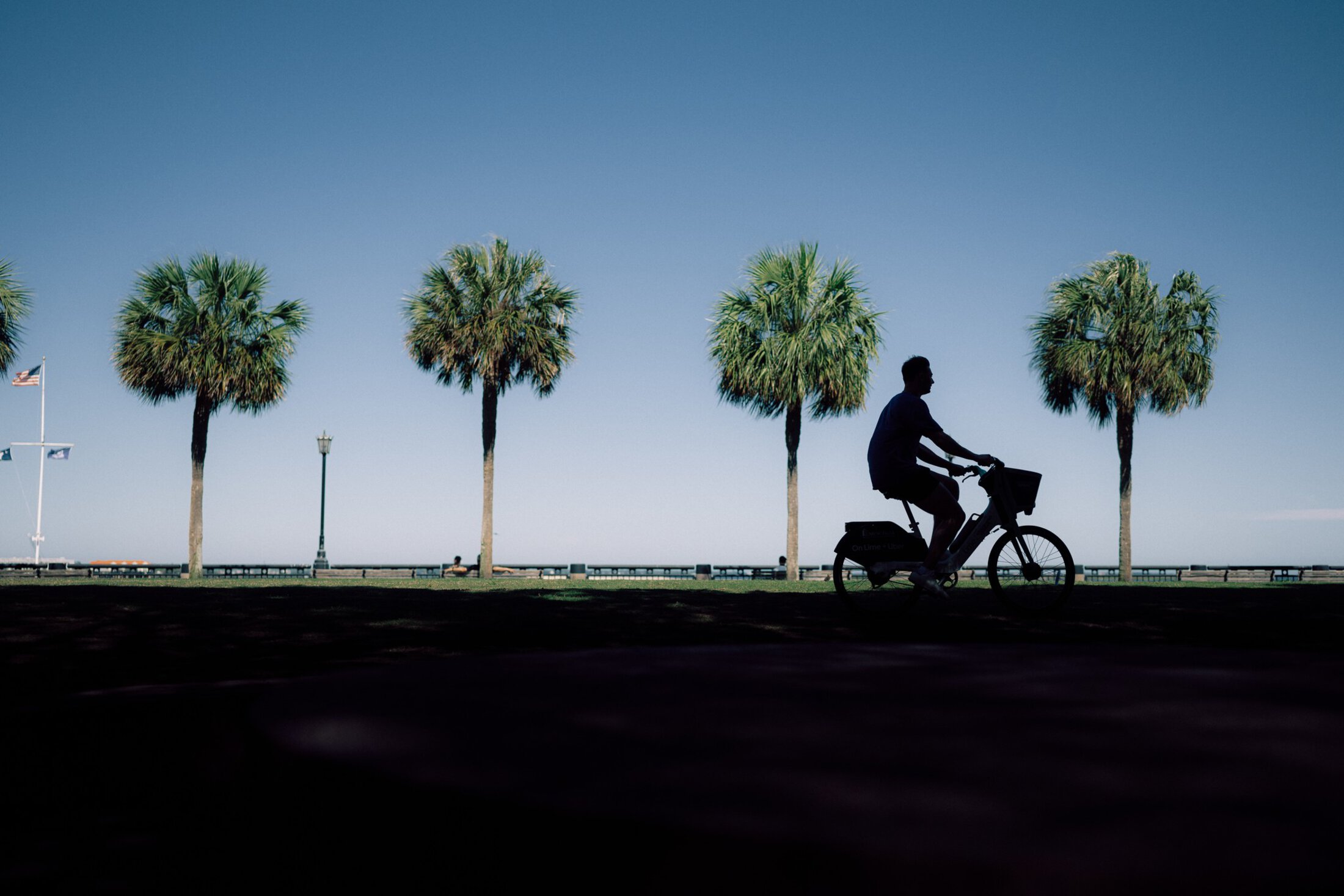
Charleston offers a unique blend of coastal beauty and modern convenience. With top-rated dining, scenic waterfronts and endless outdoor activities, the city offers an unmatched quality of life for residents, striking a balance between work and leisure.
Join a community grounded in compassion, collaboration, respect, integrity and innovation, committed to empowering future leaders in medical science.
The MSTP program aims to prepare graduates to:
Upon completion of the MSTP program, graduates should be able to:
To develop physician-scientists who integrate rigorous biomedical research with medical practice to advance discovery, translate science into improved health outcomes, and lead ethically within academic medicine.
At the core of our program, we are guided by a commitment to the following values that drive our mission:
To train the future generation of physician-scientists and leaders in academic medicine.
Stay connected to the discoveries, milestones, and experiences shaping the MSTP community.
The Medical Scientist Training Program at the Medical University of South Carolina is accredited by the Liaison Committee on Medical Education (LCME), the official accrediting body for medical education programs in the United States. LCME accreditation means that our program meets or exceeds established standards for a professional program leading to the Doctor of Medicine (MD) degree and the Doctor of Philosophy (PhD) degree. Whereas accreditation applies to training programs, licensure applies to individuals.
Our program prepares students for and makes them eligible to take the United States Medical Licensing Examination (USMLE) sequence, which all individuals must pass in order to become a licensed practicing physician. Upon passing the USMLE Step 1 and Step 2 Clinical Knowledge (CK), graduates are eligible for residency programs accredited by the Accreditation Council for Graduate Medical Education (ACGME).
Passing the USMLE sequence and completing accredited postgraduate training satisfies licensure requirements for the state of South Carolina.