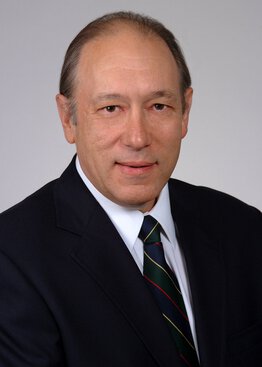
Dr. Zile is a graduate of Rush University School of Medicine. He did his internal medicine residency at Rush Presbyterian St. Lukes Medical Center in Chicago, a clinical cardiology fellowship at Tufts-New England Medical Center in Boston and a research cardiology fellowship at the Department of Veterans Affairs Medical Center, Boston.
Dr. Zile is currently the Charles Ezra Daniel professor of medicine at the Medical University of South Carolina. He also serves as the director of cardiology at the Ralph H. Johnson Department of Veteran's Affairs Medical Center in Charleston. He is an adjunct professor of bioengineering at Clemson University.
Dr. Zile's research career has involved both basic laboratory research examining the mechanisms of disease development and progression and translational clinical research examining the application of these basic mechanisms to development of effective treatment methods.
Dr. Zile is a recognized leader in the areas of cardiac function, congestive heart failure, diastolic heart failure and valvular heart disease. His research is supported by grants from the National Heart, Lung and Blood Institute, the American Heart Association, the Department of Veterans Affairs and the Medical University of South Carolina.
Dr. Zile is the author of over 100 peer-reviewed publications. He is a member of a number of professional societies including the American College of Physicians, American Federation of Clinical Research, American Heart Association, American College of Cardiology, the Heart Failure Society of America, International Society of Heart Failure, and the American Physiology Society. Dr. Zile has served on the research, educational and program committees of these organizations. He serves on the editorial boards of the Journal of the American College of Cardiology and Circulation and is an editorial consultant to a number of others including Circulation Research, Journal of Clinical Investigation and the American Journal of Physiology. Dr. Zile is a member of the Association of University Cardiologists and a member of the ABIM Subspecialty Board on Cardiovascular Disease.
Research Profile
Effective management of patients with chronic heart failure (CHF) remains one of the most critical unmet needs in cardiology in the United States and in the world. The fundamental goals of our research efforts over the last 35 years have been to define the ventricular, myocardial, cellular, and molecular mechanisms that cause the development and the progression of CHF and then to use these identified mechanisms as targets to improve diagnostic techniques, prognostic prediction, and therapeutic management of patients with CHF. In particular, I have focused my efforts on the clinical syndrome of heart failure (HF) with a preserved ejection fraction (HFpEF). More than 50% of all HF patients have HFpEF. HFpEF results in morbidity and mortality rates that are staggering: 50 to 60% 5-year mortality rate, 50% 6-month rehospitalization rate, and severe clinical disability. However, as stated in the current HF guidelines: “to date, no treatment management strategies have yet been shown, convincingly, to reduce morbidity or mortality in patients with HFpEF”.
Together with collaborators, we have developed state-of-the-art imaging techniques to characterize the structural and functional remodeling that occur in CHF patients. In addition, we have applied these techniques in an echocardiographic core laboratory used for all of our clinical, translational, and basic science studies. We have also developed clinically relevant animal models of human disease, state-of-the-art methods to assess cardiovascular remodeling, extracellular matrix homeostasis and myocardial function, and applied innovative advanced progenitor cell, transgenic and viral-based alterations in gene expression, translation, and activity to define the pathophysiologic mechanisms underlying CHF.
The Zile laboratory has been supported by research grants from the National Heart, Lung and Blood Institute, the American Heart Association, the Medical University of South Carolina, the National Aeronautics and Space Administration, the United States Department of Veterans Affairs, the United States Department of Defense.