
Managing aortic valve disease in younger patients often means planning beyond a single operation. Advances in surgical technique are helping extend durability and reduce the frequency of repeat interventions.
For children and young adults with aortic valve disease, the question is not just whether a surgery will work. It is how long it will last.
Many of these patients require intervention early in life. But as they grow, the durability of that first operation can shape everything that follows, including the need for future procedures.
The Ross procedure has long been one of the most effective surgical options for this population. By replacing the diseased aortic valve with the patient’s own pulmonary valve, it offers strong performance and avoids the need for lifelong anticoagulation.
The most long-term durable solution for a child happens to be the Ross procedure. We take the pulmonary valve and implant it in the aortic position.
For younger patients, those advantages can be significant, but durability has remained a known challenge. Over time, dilation of the autograft, particularly at the root, can affect valve function and increase the likelihood of reintervention.
“The Ross procedure works really well and minimizes the need for another open-heart surgery,” Kavarana explains.
At MUSC Children’s Heart Center, surgeons are working to address that limitation by refining how the Ross procedure is performed.
Strengthening an established approach
Rather than moving away from the Ross procedure, the focus is on improving its durability.
MUSC Health has adopted what is often referred to as a reinforced Ross approach, combining the Ross procedure with a valve-sparing root technique designed to prevent dilation and protect valve function over time.
“We had two operations that we knew worked well,” Kavarana says. “We combined the valve-sparing root operation with a Ross operation, knowing that the valve-sparing root operation does effectively prevent dilation and protect the valve.”
By supporting the autograft within a graft at the time of surgery, the goal is to reduce the risk of future dilation while preserving the performance advantages of the patient’s own valve.
This approach reflects an evolution of established techniques, bringing together complementary procedures to address known limitations.
Durability across a lifetime of care
For patients with congenital aortic valve disease, treatment often unfolds over many years.
Early interventions may stabilize function and allow for growth. Later, the focus shifts toward durability and reducing the need for repeat procedures.
“It’s an evolution of different therapies and techniques for this one disease at different stages in the patient’s life,” Kavarana says.
Surgical decisions are made within that longer timeline. The goal is not only to address the immediate problem, but to support a path that minimizes cumulative interventions over time.
“If we can get it right earlier and extend how long a repair lasts, we can reduce how many times a child needs to come back for another operation,” Kavarana says.
Individualized surgical planning
Not every patient is a candidate for the Ross procedure, and not every case requires reinforcement.
Patient selection depends on a range of factors, including anatomy, age, and the condition of the pulmonary valve. Surgical planning is tailored to the individual, with an emphasis on choosing the approach that best supports both current needs and long-term outcomes.
Implications for referring physicians
For referring physicians, the evolution of techniques like the reinforced Ross reflects a broader shift in how congenital valve disease is managed. The focus is not only on achieving a successful repair, but on how that repair will perform over time, and what it means for the patient’s future care.
At MUSC Children’s Heart Center, that work is ongoing, with a focus on strengthening established procedures in ways that support patients across each stage of life.
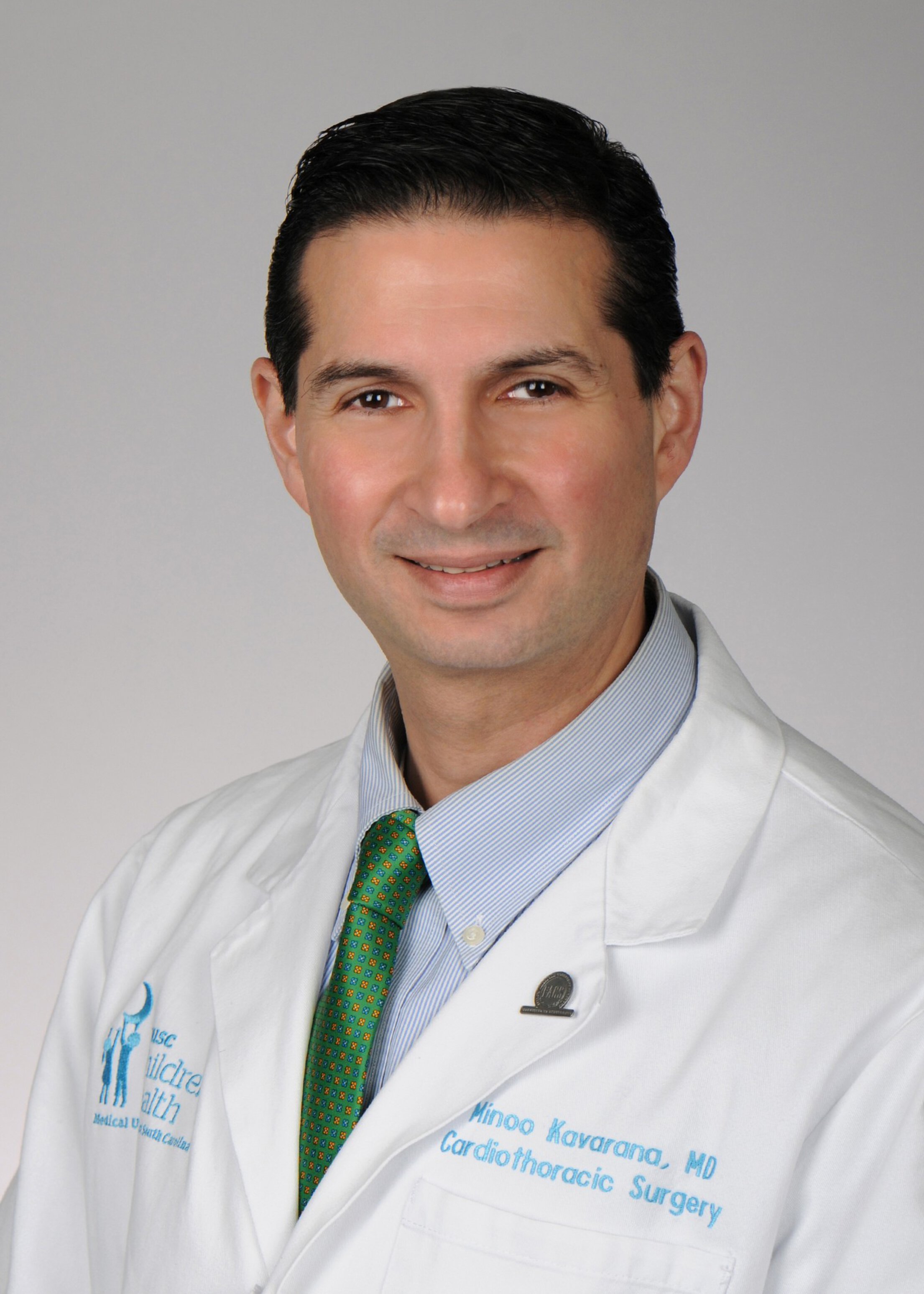
Minoo Naozer Kavarana
Co-Director, Pediatric & Congenital Heart Center Surgical Director, Pediatric Heart Transplantation & Mechanical Support Chief, Pediatric & Adult Congenital Cardiothoracic Surgery Director, Pediatric Cardiothoracic Surgery Fellowship Program
Minoo Kavarana, M.D., is a pediatric cardiothoracic surgeon who joined the department in 2010. In 2023, he was appointed the inaugural division chief of the newly created Division of Cardiothoracic Surgery in the Department of Surgery. Dr. Kavarana also serves in MUSC Health as Co-Director, Pediatric and Congenital Heart Center, and is the Surgical Director of the Pediatric Heart Transplantation and Mechanical Support.
Dr. Kavarana's clinical expertise include neonatal and infant heart surgery, adult congenital heart surgery, heart and lung transplant and mechanical circulatory support. He graduated from medical school in India in 1994. Following this he received post-graduate training in general surgery at New York Medical College, where he spent a year at Columbia University, New York as a heart transplant and ventricular assist device post-doctorate fellow. He then received cardiothoracic surgery training at the Jewish Hospital, University of Louisville, Kentucky where they implanted the first implantable total artificial heart. During this time, he developed a deep clinical and research interest in pediatric cardiac disease, pediatric cardiac assist and thoracic organ transplantation. Following this he completed a congenital heart surgery fellowship at the University of Michigan in Ann Arbor with Dr. Edward L. Bove.
In 2010, Dr. Kavarana joined MUSC in the division of cardiothoracic surgery. Dr. Kavarana's clinical interests include neonatal and infant heart surgery, adult congenital heart surgery, heart and lung transplant and mechanical circulatory support.