Palygin Research Lab

The Palygin Lab is at the forefront of advanced imaging and physiological techniques, employing patch-clamp electrophysiology, multiphuoton microscopy, biosensor amperometry, multiomics approach and intravital imaging to explore kidney fnction. Studies in Dr. Palygin’s lab have provided groundbreaking insights into the role of redox mechanisms in kidney pathophysiology and the interplay between glomerular and tubular cell signaling.

Meet Dr. Palygin

Oleg Palygin, MSc, Ph.D., FAHA

SmartState Endowed Chair in Renal Disease Biomarkers Professor, Nephrology

Dr. Oleg Palygin is a Professor in the Division of Nephrology, Department of Medicine at the Medical University of South Carolina (MUSC). He earned his Ph.D. in Biophysics from the Bogomoletz Institute of Physiology in Kyiv, Ukraine, in 2004. Dr. Palygin completed postdoctoral training in renal physiology and neuroscience at the University of Iowa, University of Warwick (UK), and the Medical College of Wisconsin. He joined MUSC in 2021, continuing his innovative research on renal physiology and pathophysiology.

Dr. Palygin’s research focuses on the molecular and cellular mechanisms of kidney function, particularly the role of ion channels, transporters, and redox signaling in renal and cardiovascular health and disease. The Palygin lab investigates the intricate processes of electrolyte balance, albumin handling, and calcium signaling, exploring their implications in conditions such as diabetic kidney disease, polycystic kidney disease, lupus nephritis and salt-sensitive hypertension. A key area of interest in the Palygin lab is the investigation of oxidative and nitrosative stress in kidney damage.

Bibliography
cells

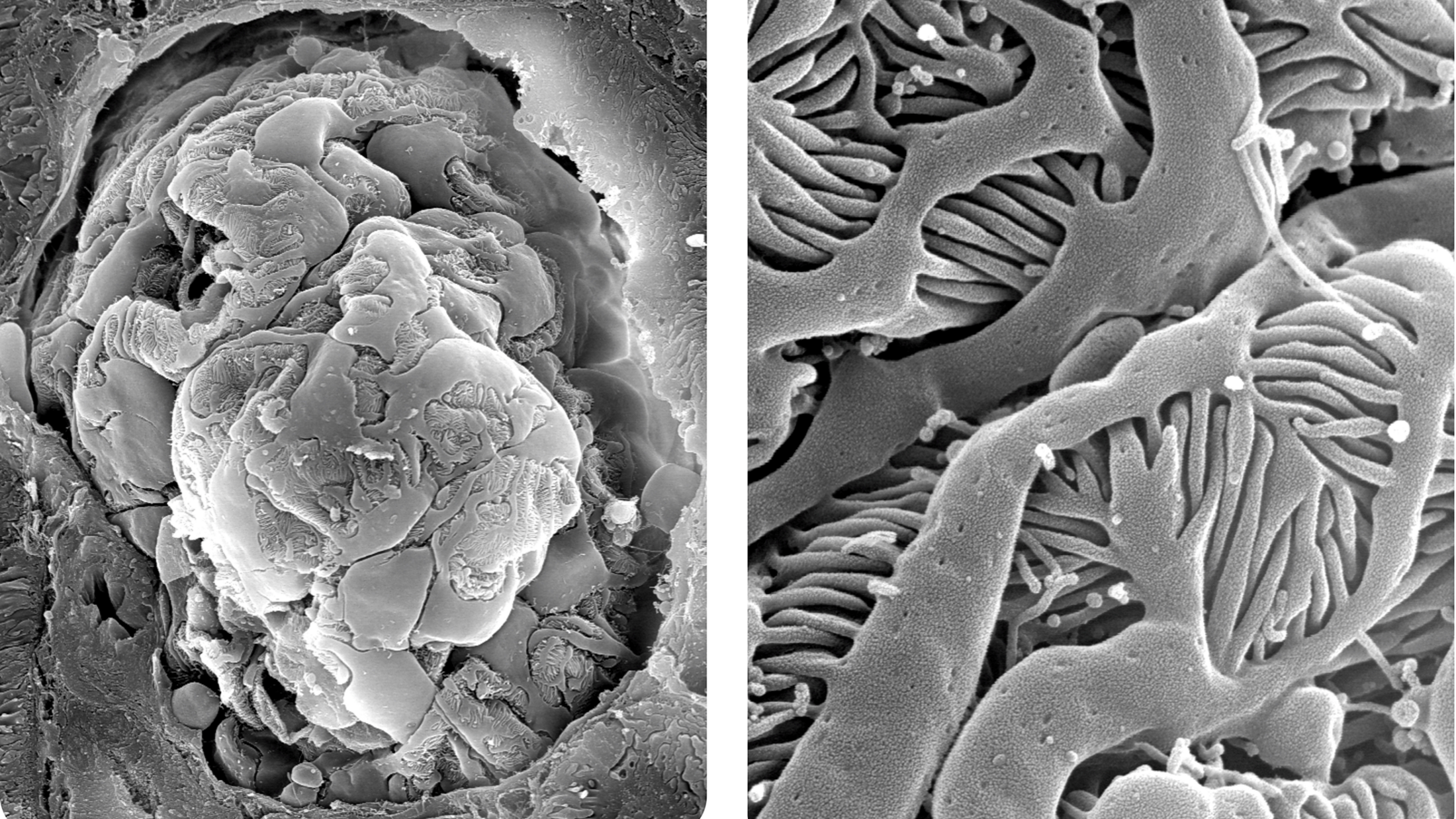
Scanning electron microscopy (SEM) of the glomerulus, the key structure in the kidney’s filtration system (PMID: 39534957). 

The complex architecture of the rat glomerulus in the kidney as revealed by SEM highlights the intricate network of podocytes covering the glomerular capillaries. Podocyte interdigitated foot processes that are intertwined with each other, creating filtration slits. This structure is crucial for maintaining the selectivity of the glomerular filter, permitting water and small molecules to pass into the urine while preventing larger molecules such as proteins from leaving the bloodstream.

Meet Our Team

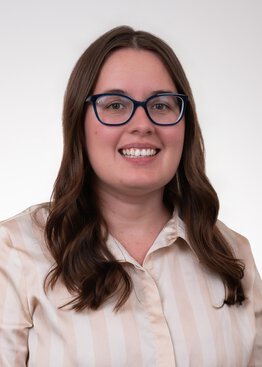
Marharyta (Rita) Semenikhina, Ph.D.

Research Instructor, Nephrology

Dr. Semenikhina earned a Ph.D. in 2020 from the Bogomoletz Institute of Physiology in Ukraine, focusing on GPCR signaling in disease development. Joining Dr. Palygin's lab at MUSC in 2021, Rita has since led research on redox signaling in podocyte pathophysiology and its role in glomerular diseases, particularly in diabetes. Dr. Semenikhina has published 17 peer-reviewed papers and received multiple awards, including recognition for work on nitric oxide signaling in podocytes from the American Physiological Society, American Heart Association, and Women in Nephrology. She is focused on molecular mechanisms of renal filtration barrier dysfunction and aims to translate her findings into innovative therapeutic strategies for kidney diseases in the US.

Awards:

  • 2025 MUSC Rising Scholar2025 AHA CDA Award # 25CDA1449142 (07/2025-06/2028)
  • 2025 George M. O’Brien Kidney Resource Alliance (OKRA) travel award
  • 2025 The American Physiological Society (APS) Charlie Bates Research Award
  • Poster Award from American Heart Association (2024 Hypertension Scientific Sessions)
  • Excellence in Research Award from AJP Renal (2023 International Podocyte Meeting)
  • Woman in Nephrology (WIN) Presentation Award (2022 WIN Leadership Conference)
  • Renal Section Research Recognition Award (2022 American Physiological Society)
  • Woman in Nephrology Leadership Conference Travel Award (2022)
View Published Research

Mykhailo Fedoriuk, Ph.D.

Postdoctoral Fellow Division of Nephrology
Single cells patch clamp and vibrodissociation

Dr. Mykhailo Fedoriuk earned his Ph.D. in 2021 from the Bogomoletz Institute of Physiology in Ukraine, where his research focused on proton-gated ASIC channels. During his undergraduate training, Dr. Fedoriuk contributed to the development of novel techniques, including vibrodissociation for isolating nephron segments and high-resolution scanning ion conductance microscopy for renal imaging, in the laboratories of Drs. Palygin and Staruschenko. In 2022, Dr. Fedoriuk joined Dr. Palygin's lab at MUSC, where he mastered his expertise in single-channel recordings of TRPC, KIR, and EnaC channels in kidney cells. His current research focuses on unraveling the mechanisms underlying tubular and glomerular pathology in hypertension and exploring the role of redox signaling in PKD pathology. To date, Dr. Fedoriuk has authored 18 publications in high-impact journals. His research aims to elucidate the mechanisms of salt-sensitive hypertension and develop strategies to protect kidneys from damage.

Awards:

  • Renal Section Research Recognition Award (2023 American Physiological Society)
    Hollings Cancer Center Scholarship (2023, MUSC)
View Published Research

Mariia Stefanenko, M.S., Ph.D. Candidate

Research Scholar Division of Nephrology
Expert in primary human mesangial culture and confocal imaging

Mariia Stefanenko, MS, is a visiting graduate student and a Ph.D. candidate at the Bogomoletz Institute of Physiology in Ukraine. She has expertise in electrophysiology, imaging, and renal pathophysiology. Her research focuses on GPCR and ion channel interactions, as well as redox mechanisms in kidney diseases such as diabetic kidney disease and lupus nephritis. Mariia possesses exceptional skills in cultivating primary human cell cultures, performing functional confocal imaging, and studying the molecular mechanisms linking ceramides to endoplasmic reticulum stress. Mariia’s work has been recognized with awards from the American Society of Nephrology and the American Physiological Society. Mariia aims to pursue a career in academia, advancing therapies for renal diseases through innovative molecular research.

Awards:

  • ASN Kidney STARS (2024 American Society of Nephrology)
  • ASN Kidney TREKS (2024 American Society of Nephrology)
  • Renal Section Research Recognition Award (2024 American Physiological Society)
  • Finalist of the Renal Section Predoctoral Excellence in Renal Research Award (2023 American Physiological Society)
  • Graduate Student Research Symposium Travel Award (2022, University of Mississippi Medical Center Cardio-Renal Research Center (CRRC)
View Published Work

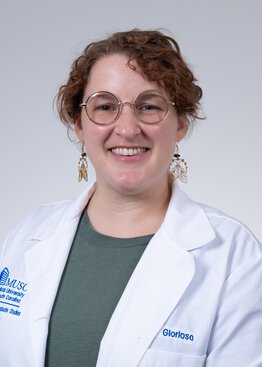
Kathryn Glorioso, Ph.D. Candidate

Graduate Research Assistant

Kathryn Glorioso is a Ph.D. candidate in the Molecular and Cellular Biology and Pathology Program at the Medical University of South Carolina (MUSC), co-mentored by Drs. Joshua H. Lipschutz and Oleg Palygin. Her research focuses on renal physiology, with particular emphasis on renin-angiotensin system-mediated calcium and nitric oxide signaling in glomerular cells, pharmacological modulation of angiotensin receptors, and redox regulation in kidney disease. Kathryn has developed expertise in isolating human and rodent glomeruli, primary cell culture, confocal calcium imaging, and functional ex vivo assessment of intracellular signaling in renal tissues. Kathryn has received numerous national and international awards, including the North American Three Minute Thesis (3MT) People's Choice Champion, the ASN Kidney STARS and TREKS Travel Awards, and the O'Brien Kidney Resource Alliance Travel Award. She is committed to pursuing an academic career focused on translational nephrology, integrating mechanistic studies with human kidney research to develop innovative therapies for glomerular diseases.

Awards:

  • 2026 George M. O’Brien Kidney Resource Alliance (OKRA) travel award
  • 2026 Participation in Kidney TREKS (Tutored Research and Education for Kidney Scholars) Program, American Society of Nephrology (ASN)
  • 2026 Outstanding Poster Presentation Award, Graduate Student Section, Department of Medicine Research Day, Medical University of South Carolina
  • 2026 3rd Place, Lowcountry Speaking Invitational, The Citadel, Charleston, SC
  • 2025 People’s Choice Winner of the Three Minute Thesis (3MT®) Showcase and Roundtable at the annual meeting of Council of Graduate Schools' (CGS) 65th Annual Meeting in Washington, DC


 

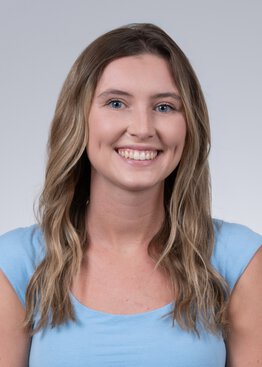
Brooke Elisabeth Chapple, B.S.

Ph.D. Student, Biomedical Sciences
Collection and Biobanking of Clinical Specimens from Patients with FSGS and Recurrent FSGS

Brooke Chapple is a graduate student in the Molecular and Cellular Biology and Pathology Program at the Medical University of South Carolina (MUSC) co-mentored by Drs. Marharyta “Rita” Semenikhina and Oleg Palygin.

She earned her B.S. in Biochemistry and Molecular Biology, graduating summa cum laude from Liberty University, where she developed a strong foundation in cellular metabolism, molecular biology, and biochemical research. Brooke’s research focuses on the mechanisms underlying recurrent focal segmental glomerulosclerosis (FSGS), with particular emphasis on circulating permeability factors, calcium signaling, and glomerular cell dysfunction. She has extensive experience in mammalian cell culture, molecular and biochemical techniques, confocal imaging, and functional assays, as well as expertise in western blotting, qPCR, flow cytometry, and cellular metabolism.

Brooke's research accomplishments have been recognized with numerous awards, including the Outstanding Student in Biochemistry & Molecular Biology Award and the Undergraduate Research Award from Liberty University. Brooke is dedicated to pursuing an academic career in translational nephrology, integrating mechanistic studies with human kidney research to develop innovative therapies for glomerular diseases.