Research Interests
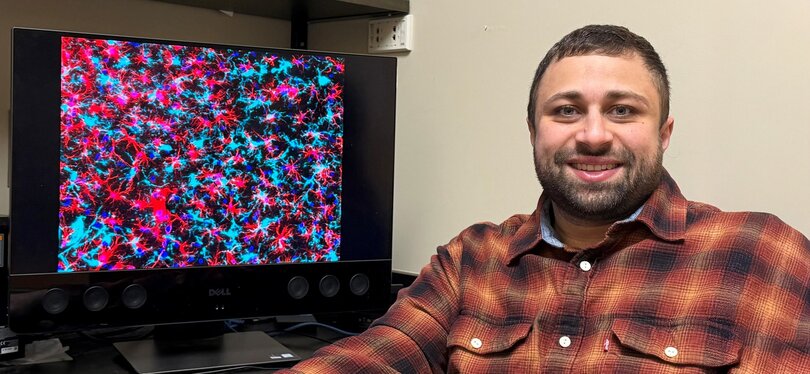
The Mallah Lab studies neuroimmune interactions following injury to the central nervous system, with a primary focus on traumatic brain injury (TBI). Although the primary insult occurs within seconds, the neuroimmune response within the brain evolves over months to years and critically shapes long-term neurological and psychiatric outcomes. We investigate how injury-driven neuroimmune activity alters neural function and behavior, contributing to persistent cognitive and affective impairment.
Our research examines how these immune processes evolve across brain regions and influence recovery during both acute and chronic phases of TBI. Using cell-specific genetic mouse models, behavioral paradigms, high-resolution microscopy, high-dimensional immune profiling, and multi-omics approaches, we integrate molecular, cellular, and systems-level analyses to define mechanisms that drive vulnerability to cognitive impairment, depression, anxiety, and related neuropsychiatric conditions after TBI. A key component of this work is understanding how complement signaling contributes to sustained neuroinflammation and development of such disorders after initial insult. Although we cannot prevent the initial traumatic insult, our goal is to identify precise intervention points that prevent the development of secondary neuropsychiatric disorders following brain injury.
Education and Training
2018: PhD, Lille University, France
2019-2025: Post-Doctoral Fellow, Medical University of South Carolina, USA
Contact Info
mallah@musc.edu
Tel: 843-792-0110
Office: BSB 208D
Lab Members
Tialeisha Corley (Research Specialist)
Social Media
X: @KhalilMallahPhD
LinkedIn: Khalil Mallah
Highlighted Publications
- Khalil Mallah, Carsten Krieg, Devin Hatchell, Nahla Hamouda, Tylar Roof, Stephen Walterhouse, Amer Toutonji, Davis Borucki, Christine Couch, Gary Hardiman, Firas Kobeissy, Silvia Guglietta, and Stephen Tomlinson. “Targeted complement inhibition ameliorates the pathological and cognitive outcomes in repetitive mild closed head injury”. Signal Transduction and Targeted Therapy. November 2025. doi: 10.1038/s41392-025-02466-7
- Khalil Mallah, Christine Couch, Mohammed Alshareef, Davis Borucki, Xiaofeng Yang, Ali Alawieh, and Stephen Tomlinson. “Complement mediates neuroinflammation and cognitive decline at extended chronic time points after traumatic brain injury”. Acta Neuropathologica Communications. April 2021. doi: 10.1186/s40478-021-01179-6.
- Khalil Mallah, Jusal Quanico, Antonella Raffo-Romero, Tristan Cardon, Soulaimane Aboulouard, David Devos, Firas Kobeissy, Kazem Zibara, Michel Salzet, and Isabelle Fournier. “Matrix-Assisted Laser Desorption/Ionization-Mass Spectrometry Imaging of Lipids in Experimental Model of Traumatic Brain Injury Detecting Acylcarnitines as Injury Related Markers”. Analytical Chemistry. September 2019. doi: 10.1021/acs.analchem.9b02633.
- Khalil Mallah, Jusal Quanico, Antonella Raffo-Romero, Tristan Cardon, Soulaimane Aboulouard, David Devos, Firas Kobeissy, Kazem Zibara, Michel Salzet, and Isabelle Fournier. “Mapping Spatiotemporal Microproteomics Landscape in Experimental Model of Traumatic Brain Injury Unveils a link to Parkinson’s Disease”. Molecular and Cellular Proteomics. August 2019. doi: 10.1074/mcp.RA119.001604.
- Khalil Mallah, Jusal Quanico, Dennis Trede, Firas Kobeissy, Kazem Zibara, Michel Salzet, and Isabelle Fournier. “Lipid Changes Associated with Traumatic Brain Injury Revealed by 3D MALDI-MSI”. Analytical Chemistry. August 2018. doi: 10.1021/acs.analchem.8b02682.
Complete List of Publications
https://www.ncbi.nlm.nih.gov/myncbi/1tkUU91pmz-5-/bibliography/public/