Radiation Medicine Physics Residency

book_2 Learning Mode: Residential
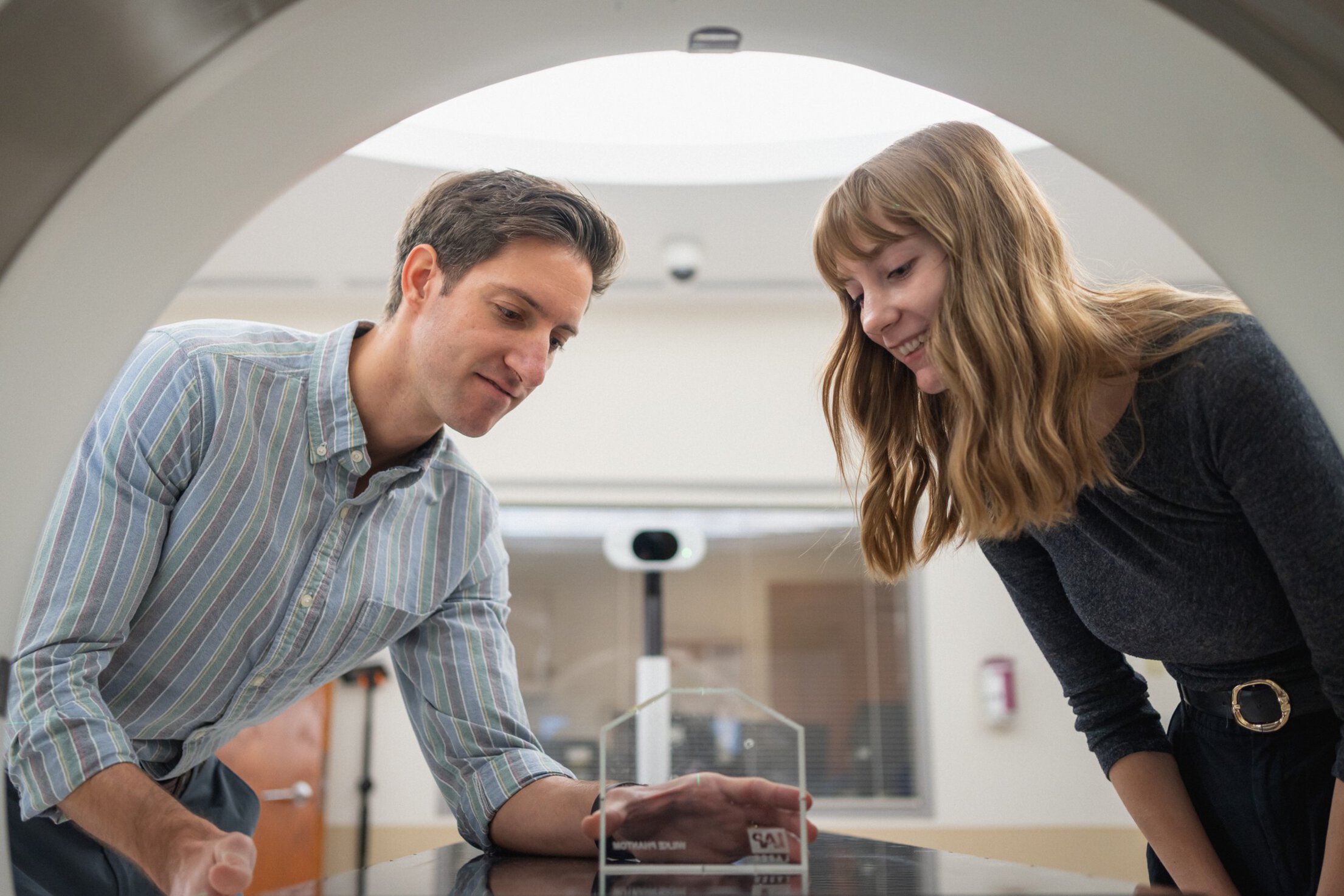
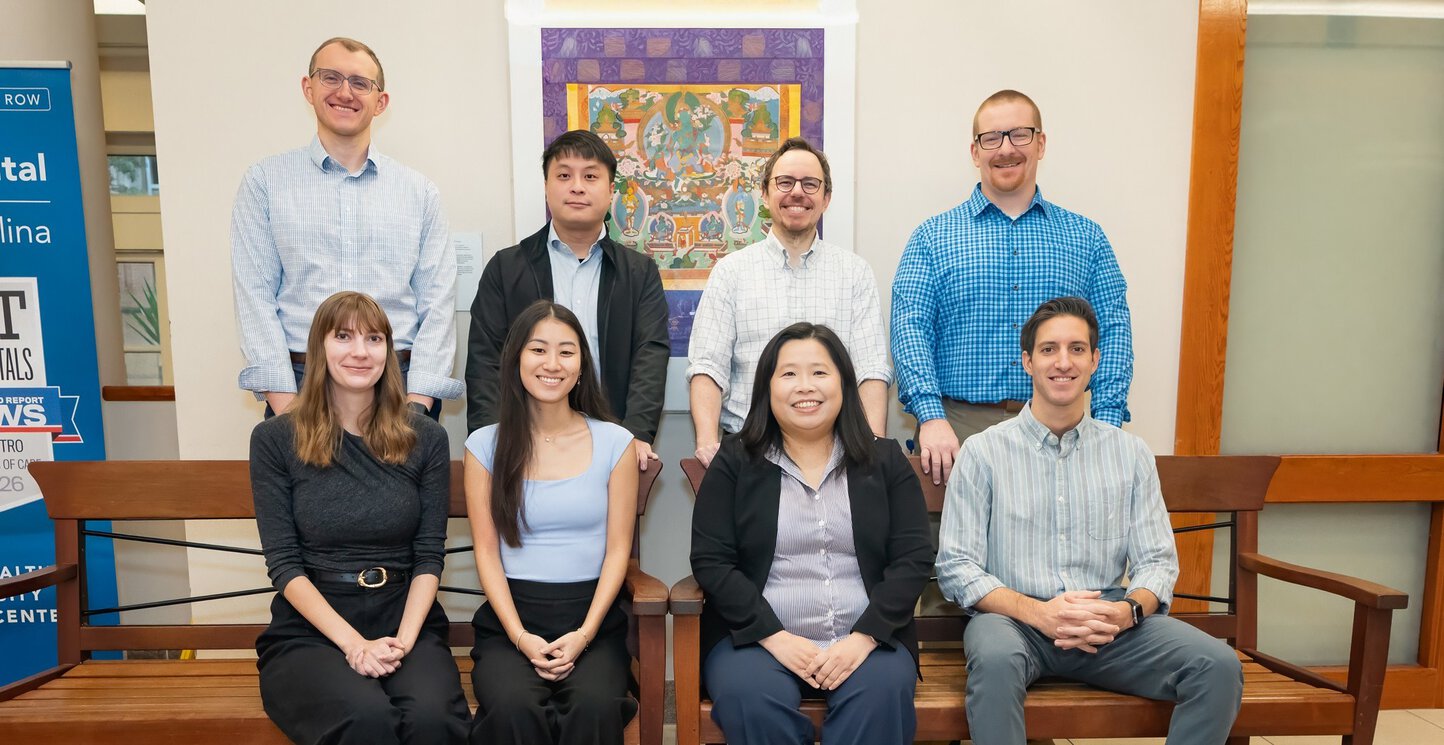
Ryan Mansfield and Alyssa Gadsby

Program Overview

The MUSC Radiation Medicine Physics Residency program prepares graduates for independent practice and American Board of Radiology (ABR) certification. Residents receive comprehensive clinical training across a broad spectrum of modern radiation medicine procedures.

At the MUSC Hollings Cancer Center – the only NCI-designated cancer center in the state – residents work closely with twelve faculty physicists, nine radiation oncologists, dosimetrists, therapists, and physicians. Our clinical environment encourages collaboration, progressive responsibility, and strong mentorship.

This two-year, CAMPEP-accredited clinical training program in Charleston, South Carolina accepts one new resident each year.

Application Timeline

October - December

Program Statistics

  • 100% of graduates have accepted positions prior to graduation
  • 100% pass rate on ABR Parts 2 &3
  • 1-seat class size guarantees close mentorship

View admission rates and what graduates did next.

Applicant & Graduate Stats

Training Experience

The MUSC Radiation Medicine Physics Residency is a two-year clinical training program designed to provide comprehensive hands-on experience in clinical radiation medicine physics.

Inside the Program

The MUSC Radiation Medicine Physics Residency is a two-year clinical training program designed to provide comprehensive hands-on experience in clinical radiation medicine physics.

Clinical experience you'll gain

Residents receive training in external beam radiation therapy, stereotactic radiosurgery, stereotactic body radiation therapy, high and low dose rate brachytherapy, treatment planning, machine quality assurance, commissioning, radiation safety, and special procedures including total body irradiation and total skin irradiation. In addition to hands-on training in these areas at MUSC, residents also participate in away opportunities for experience with proton therapy and MRI linac.

Residents gain hands-on clinical experience in:

  • 3D conformal radiation therapy
  • IMRT and VMAT treatment planning and delivery
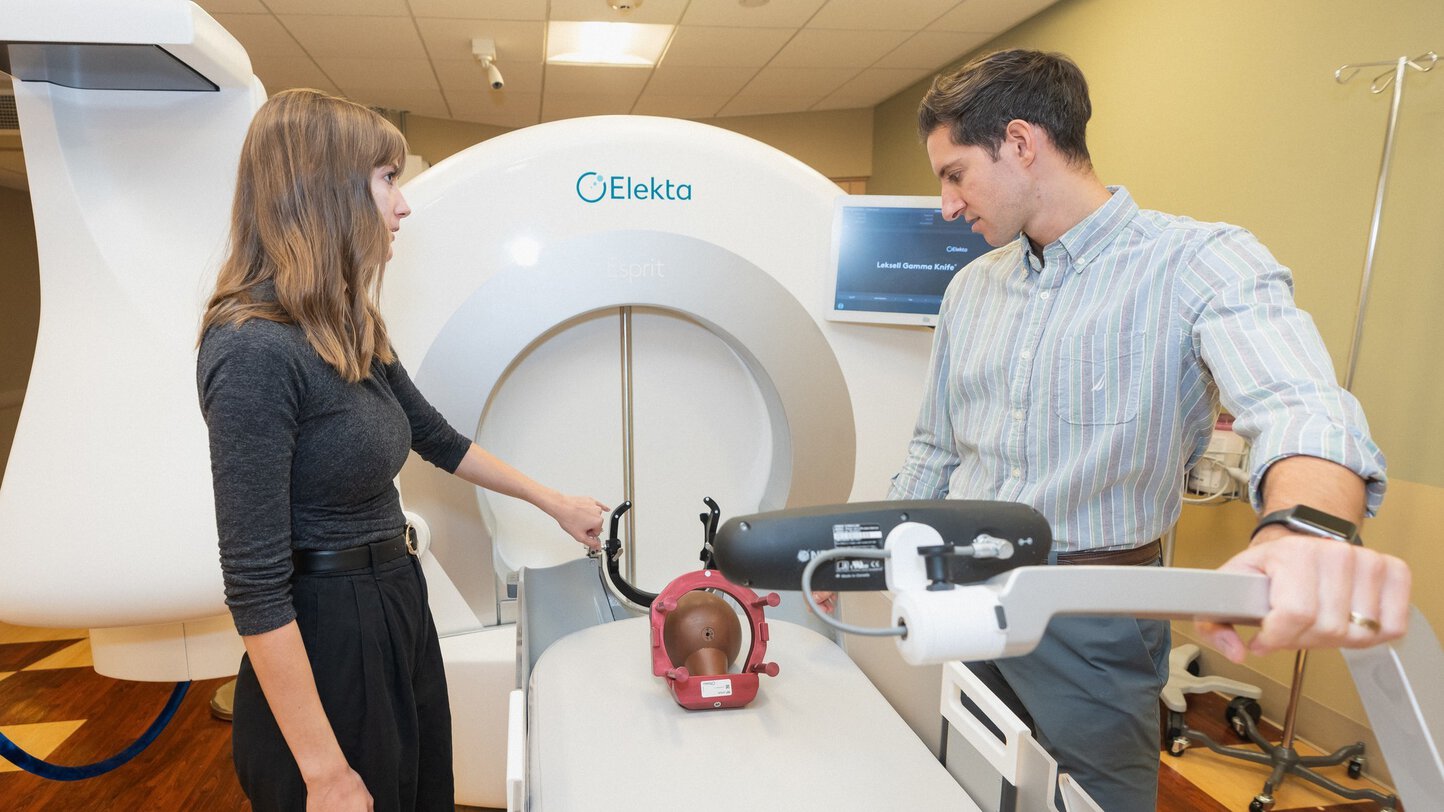
  • Stereotactic radiosurgery (Gamma Knife)
  • Stereotactic body radiation therapy (SBRT)
  • Total body irradiation (TBI)
  • Total skin irradiation (TSI)
  • High-dose-rate (HDR) brachytherapy
  • Low-dose-rate (LDR) brachytherapy (prostate, brain, eye plaque)
  • Motion management and respiratory gating
  • Surface-guided radiation therapy (SGRT)
  • Treatment planning, machine QA, commissioning, and radiation safety

Benefits & Salary

Benefits

Resident benefits are provided by the Department of Radiation Medicine:

  • Academic expense account
  • Gym membership – MUSC Wellness Center membership for residents
  • Health, dental and vision insurance – See University Human Resources
  • Malpractice – occurrence-based policy provided through the Insurance Reserve Fund
  • Parking

Salary

The Office of Graduate Medical Education (GME) provides information on resident salaries, policies, and more.

Please note that the GME Provided Benefits information does not pertain to this program.

Clinical Experience

Equipment & Systems

Train on multiple treatment planning platforms.

  • Three Varian TrueBeam linear accelerators with Hypersight imaging, RapidArc/RapidArc Dynamic, 6 degree-of-freedom couch, real-time position management (RPM), and VisionRT surface guidance
  • Accuray Radixact TomoTherapy system
  • Elekta Gamma Knife Esprit with cone-beam CT and active motion tracking
  • Two Siemens wide-bore CT simulators with Varian respiratory gating
  • Elekta Nucletron Flexitron HDR afterloader

  • Varian Eclipse cloud-based treatment planning system and ARIA record and verify
  • RaySearch RayStation treatment planning system (Radixact planning)
  • Varian Velocity image registration and dose accumulation system
  • Radformation treatment planning software suite
  • Varian Mobius3D and MobiusFx secondary dose verification and log file QA system
  • Elekta Oncentra brachytherapy planning system
  • Elekta GammaPlan radiosurgery planning system

Rotations

During this rotation, the resident will:

  • Participate in MUSC and Graduate Medical Education (GME) orientation and complete all required prerequisite training.
  • Become familiar with radiation medicine equipment, clinical workflow, procedures, and operations at MUSC.
  • Become acquainted with faculty, physicists, physicians, dosimetrists, and therapists.
  • Become familiar with the responsibilities of the Radiation Safety Office.
  • Develop didactic knowledge of regulations pertaining to radiation medicine.
  • Complete required institutional and departmental safety training.

During this rotation, the resident will learn the external beam treatment planning process and treatment planning system operation, including:

  • Treatment planning strategies, prescription doses, and dose limits to critical structures
  • 3D conformal treatment planning and basic IMRT planning techniques
  • CT simulation and simulation procedures
  • Treatment planning system operation and planning techniques
  • Electron and photon block fabrication
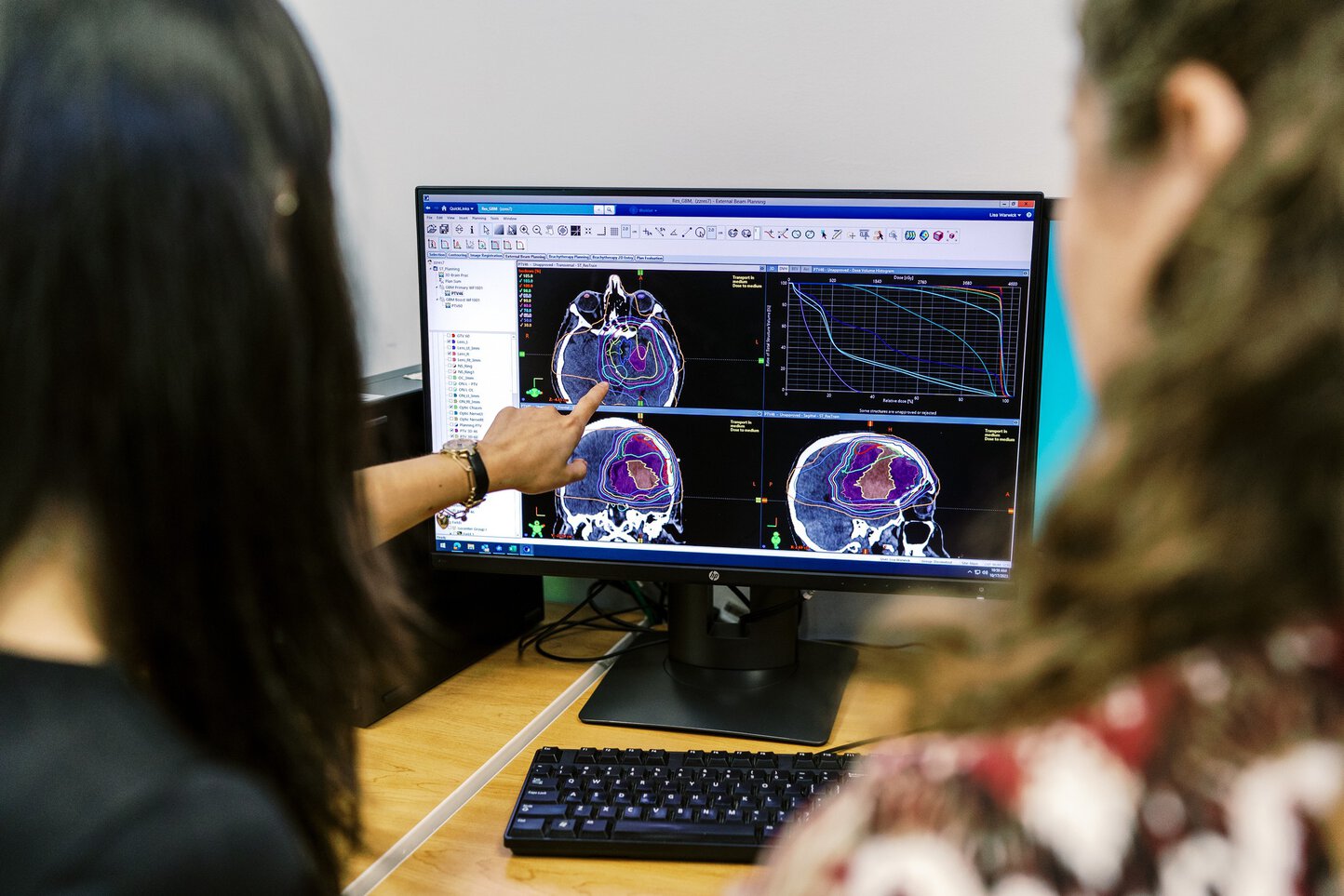
  • Plan evaluation tools and dose–volume histogram analysis
  • Manual and computerized monitor unit (MU) calculations
  • Importing and exporting digital DICOM data
  • Patient setup and image-guided radiation therapy (IGRT)
  • Billing processes and physics quality check procedures

The resident will demonstrate competency in basic 3D treatment planning and plan evaluation prior to completing this rotation.

During this rotation, the resident will gain a thorough understanding of quality assurance (QA) testing and performance evaluation for:

  • Physics measurement equipment
  • Imaging equipment
  • C-arm linear accelerators
  • RadiXact treatment unit

The resident will perform routine and annual QA procedures and develop an understanding of equipment performance evaluation, tolerances, and documentation requirements. Brachytherapy and Gamma Knife® equipment are covered in separate rotations.

During this rotation, the resident will:

  • Become familiar with all low and high dose rate brachytherapy procedures performed at MUSC.
  • Understand fundamental brachytherapy principles and dose calculation methods.
  • Calibrate brachytherapy sources.
  • Perform brachytherapy treatment planning.
  • Understand brachytherapy quality management program (QMP) requirements.
  • Become knowledgeable about pertinent radiation safety regulations.
  • Become familiar with commonly used brachytherapy references and protocols.
  • Learn the fundamentals of radiopharmaceuticals.

During this rotation, the resident will:

  • Gain a working knowledge of radiation detectors and scanning equipment used for linear accelerator commissioning and QA.
  • Perform beam data acquisition and measurements.
  • Develop an understanding of measurement techniques, detector selection, and scanning system operation.
  • Begin collecting beam data for use in treatment planning system commissioning.

During this rotation, the resident will gain a thorough understanding of the process of commissioning a treatment planning system – Eclipse – for clinical use. This includes:

  • Collection of beam data
  • Creation of beam models
  • Beam model validation and verification
  • End-to-end testing and plan verification
  • Documentation required for clinical implementation

During this rotation, the resident will:

  • Expand knowledge of IMRT, conformal arc, and VMAT treatment planning techniques
  • Become familiar with RadiXact treatment planning and optimization parameters
  • Learn to compare and evaluate optimal planning techniques among IMRT, VMAT, and RadiXact for various clinical cases
  • Become proficient in hypofractionated stereotactic body radiation therapy (SBRT), including 4D-CT simulation, motion management, margin definition, technique selection (3D, IMRT, conformal arc, or VMAT), and plan evaluation

During this rotation, the resident will:

  • Perform QA and physics support procedures for Gamma Knife Esprit and linac-based stereotactic radiosurgery (SRS).
  • Become knowledgeable in methods used to deliver total body irradiation (TBI) and demonstrate competency in performing annual QA of TBI equipment and devices.
  • Become knowledgeable in methods and practical aspects of total skin electron irradiation (TSI).
  • Evaluate and recommend motion management techniques for clinical patient scenarios.
  • Understand the benefits and limitations of patient alignment and monitoring using real-time 3D surface imaging.
  • Perform QA procedures for a 3D surface imaging system.
  • Develop a basic understanding of rigid and deformable image registration algorithms and the benefits and limitations of each.
  • Learn the fundamentals of proton therapy.
  • Explore the unique challenges and opportunities offered by MRI-Linac.

During this rotation, the resident will become familiar with the administrative and regulatory aspects of radiation medicine physics, including:

  • Structural shielding design for linear accelerators, HDR brachytherapy, Gamma Knife, and other radiation-producing equipment
  • Performing a facility radiation shielding survey
  • Radiation safety regulations and licensing requirements
  • Professional responsibilities of the medical physicist
  • Ethics and professionalism in clinical practice
  • Participation in audits and accreditation processes

Resident performance and completion requirements are those in effect at the time the resident enters the program. Improvements and minor changes may be approved by the Physics Residency Committee but shall not extend the overall length of the program.

Mentorship

Residents complete each clinical rotation under the supervision of both a primary and secondary rotation mentor. Rotation mentors coordinate the resident’s activities and ensure that rotation objectives are met. All members of the physics faculty participate as mentors for the residency program.

Residents maintain a clinical procedure log documenting the procedures and clinical tasks they perform. Each rotation includes defined objectives, required clinical tasks, conferences, and reading assignments.

Residents meet with the Program Director at least monthly to review progress and address any concerns.

Educational Activities

Ethics and Professional Training

CAMPEP requires training in ethics and professionalism. To meet this requirement, residents must complete the ABR/ACR/RSNA/AAPM/ASTRO/ARR/ARS online modules (login required) on Ethics and Professionalism. All modules must be completed prior to the end of the first rotation. Certificates of completion must be provided to the Program Director.

Diagnostic Imaging Physics Training

To ensure a fundamental knowledge of imaging physics, residents are required to complete the RSNA/AAPM physics education modules (login required). All modules must be completed prior to the end of the first year. Certificates of completion must be provided to the Program Director.

Didactic Training

Physics residents attend formal lectures with the radiation medicine physician residents, including:

  • Radiobiology
  • Radiation oncology physics
  • Imaging physics

Residents are required to take the RAPHEX examination. During the second year of residency, the resident presents at least two radiation oncology physics lectures. Attendance at lectures is expected unless excused for clinical responsibilities or approved leave.

Morning Rounds

Each morning from 8-9 a.m., the physics resident attends morning rounds with the medical residents and faculty. Morning rounds include:

  • Journal club
  • Special topics lectures
  • Chart rounds
  • Guest lecturers

Attendance is expected unless excused for clinical responsibilities or approved leave.

Tumor Boards, Seminars, and Special Topics

Residents attend multidisciplinary tumor boards throughout their training. Residents are expected to attend at least two sessions each of the following tumor boards:

  • Head & Neck
  • Thoracic
  • Gynecologic
  • Pediatric
  • Neurosurgery
  • Breast
  • Genitourinary

Melanoma and leukemia tumor boards are optional. Residents maintain a log of attendance.

Professional Knowledge and Board Preparation

During the residency, residents are expected to become familiar with:

  • Applicable AAPM Task Group reports
  • Major medical physics textbooks and references
  • Current literature, including:
    • Medical Physics
    • Journal of Applied Clinical Medical Physics
    • International Journal of Radiation Oncology Biology and Physics
    • Physics in Medicine and Biology

Residents are expected to take the RAPHEX examination in preparation for boards.

Research

Residents are encouraged to participate in clinical research or development projects, particularly those related to clinical workflow, quality assurance, treatment planning, or implementation of new technology.

Research projects are assigned at the discretion of the rotation mentor and Program Director, based on the resident’s progress and ability to complete the project while meeting clinical training objectives.

Residents are encouraged to present their work at regional or national AAPM meetings. Travel support may be available through departmental or educational funds.

Program Completion Requirements

Residents are expected to successfully complete all clinical and educational requirements of the program within the 24-month residency period.

Successful completion of the program includes satisfactory performance in all clinical rotations, completion of assigned projects and educational activities, and demonstration of professional and clinical competency. As part of the evaluation process, residents are required to complete an oral examination at the conclusion of each rotation. The purpose of the oral examination is to assess the resident’s understanding of the clinical, technical, and professional material covered during the rotation. If necessary, a remediation plan and additional training assignments may be implemented to assist the resident in successfully meeting the rotation objectives.

CAMPEP requires that residents miss no more than 40 days of clinical instruction per year, which may be resolved with make-up days. In some circumstances, educational progress may be delayed due to extended medical leave or other approved leave. In such cases, the residency training period may be extended to allow the resident sufficient time to complete all program requirements. The duration and terms of any extension will be determined on a case-by-case basis by the Program Director and approved by the Residency Program Committee. Because residency positions are funded for a fixed period, extensions beyond the standard 24-month training period may be without salary support.

Certificate of Program Completion

Upon successful completion of all residency program requirements, the resident will be issued a completion certificate attesting to satisfactory completion of the Radiation Medicine Medical Physics Residency Program.

Your path to admission

The application process and requirements are provided here to help you move forward with confidence.

Eligibility Requirements

Applicants must meet the following requirements:

  • Have an MS, Ph.D., or certificate in medical physics from a CAMPEP-accredited academic program.
  • Be a U.S. citizen or authorized to work in the United States. MUSC does not sponsor visas for radiation medicine physics residents.

Application Process

MUSC uses the National Matching Services MedPhys Match Program for both application submission and the matching process.

Application Submission

  1. Register for the MedPhys Match.
  2. Submit your application to MUSC’s therapy physics residency program through the MedPhys Match application system. The MUSC Program ID Number is 15911.
  3. In January, the selection committee reviews and ranks applications submitted through the Match system.
  4. A maximum of 25 applicants are selected for a phone or video screening.
  5. The committee selects 16 candidates at most for a final, more in-depth, in-person interview. Two interview dates, typically in January or February, are offered on a first-come, first-served basis. Each date has a maximum of 10 interview slots available.

Matching

Additional information is available through the MedPhys Match.

  1. MUSC ranks the candidates who interviewed and submits the ranked list to National Matching Services.
  2. Applicants submit their ranked list to National Matching Services.
  3. National Matching Services announces the results. Match results constitute a binding commitment between the applicant and the program, which cannot be withdrawn without mutual written consent.
  4. MUSC sends a confirmation letter to the matched applicant within 10 days of the match.
  5. The applicant must sign and return the letter within 30 days of the release of match results.
  6. The matched applicant receives a formal contract at a later date from the Graduate Medical Education office.

All relocation expenses are the responsibility of the successful candidate.

Program Faculty

Learn from experienced physicists and mentors on the Department of Radiation Medicine's physics team.

William Godwin, Ph.D.

Director, Radiation Physics Residency Program Associate Professor, Radiation Medicine

Sean Roles, MS

Associate Director, Radiation Physics Residency Program Assistant Professor, Radiation Medicine

Jean (Lee-Cheng) Peng, Ph.D.

Chief of Physics Professor, Department of Radiation Medicine

Current Residents

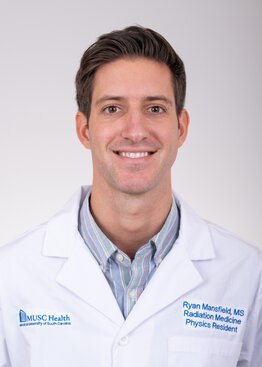
Ryan Mansfield, MS

Resident, Radiation Medicine Physics
Professional Portrait

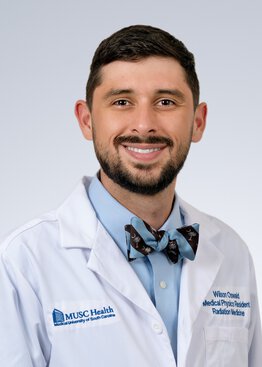
Wilson Oswald, MS

Resident, Radiation Medicine Physics

Program Outcomes

Graduates have moved directly into radiation physicist positions at leading public and private healthcare systems across the country.

See each graduate's immediate post-residency position, as well as their residency graduation year and where they completed graduate school before coming to MUSC.

Alyssa Gadsby, MS
After graduation: Medical University of South Carolina
Graduated: 2026
Graduate school: Columbia University

Stephanie Tan, MS
After graduation: Medical University of South Carolina
Graduated: 2025
Graduate school: University of Oklahoma

Austin Skinner, MS
After graduation: Medical University of South Carolina
Graduated: 2024
Graduate school: Hofstra University

Joseph Winiecki, MS
After graduation: Ohio State University
Graduated: 2023
Graduate school: Cleveland State University

Sean Roles, MS
After graduation: Medical University of South Carolina
Graduated: 2022
Graduate school: University of Rhode Island

Bethany Broekhoven, MS
After graduation: Willis-Knighton Cancer Center (Louisiana)
Graduated: 2021
Graduate school: Louisiana State University

Elizabeth Hilliard, MS
After graduation: The State University of News York - Upstate Medical University
Graduated: 2020
Graduate school: Louisiana State University

William Godwin, Ph.D.
After graduation: Medical University of South Carolina
Graduated: 2019
Graduate school: University of Florida

Joseph Dise, MS
After graduation: Washington University in St. Louis

Graduated: 2017
Graduated: University of Pennsylvania

Mario Fugal, MS
After graduation: Roper Hospital (South Carolina)
Graduated: 2016
Graduate school: University of Kentucky

Andrew Ellis, Ph.D.
After graduation: Aurora Health (Wisconsin)
Graduated: 2015
Graduate school: University of Wisconsin - Madison

Dustin Jacqmin, Ph.D.
After graduation: University of Wisconsin - Madison
Graduated: 2014
Graduate school: University of Wisconsin - Madison

Katherine Lyons, MS
Graduated: 2013
Vanderbilt University

Caroline Yount, MS
After graduation: Cone Health (North Carolina)
Graduated: 2011
Graduate school: Vanderbilt University

Daniel McDonald, MS
After graduation: Medical University of South Carolina
Graduated: 2010
Graduate school: University of Wisconsin - Madison


Admissions and Graduate Statistics

Frequently Asked Questions

Physics Faculty Structure

The Department of Radiation Medicine's medical physics section includes the chief of medical physics and eleven additional medical physics faculty members. All members of the physics faculty participate directly in resident education.

Residency Program Committee

The Radiation Medicine Physics Residency program is overseen by the Radiation Medicine Physics Residency Program Committee. The committee consists of radiation medicine physics faculty, a certified medical dosimetrist, and two radiation oncologists.

The committee:

  • Evaluates the residency program on a semiannual basis.
  • Approves significant changes in curriculum or program procedures.
  • Reviews resident performance and approves plans for remedial training if necessary.
  • Participates in the resident selection process.

The program matriculated its first physics resident in 2008.

Yes. Learn more about support for residents and fellows through the College of Medicine's networking and mentorship programs. 

Physics residents spend most of their time at our main campus in downtown Charleston.

They may also visit our site in Mount Pleasant, MUSC Health Radiology and Imaging at East Cooper Medical Pavilion, which is approximately a 20-minute drive from downtown.

Contact Us

William Godwin, Ph.D.
Director, Radiation Medicine Physics Residency Program
godwinwi@musc.edu

Sean Roles, MS
Associate Director, Radiation Medicine Physics Residency Program
roless@musc.edu

Melanie Pigott
Coordinator, Radiation Medicine Education Programs
pigott@musc.edu