
MUSC News + Department of Regenerative Medicine and Cell Biology
A woman on a mission
Experience transformative research in regenerative biology that advances cellular therapies and novel solutions to complex human disease.
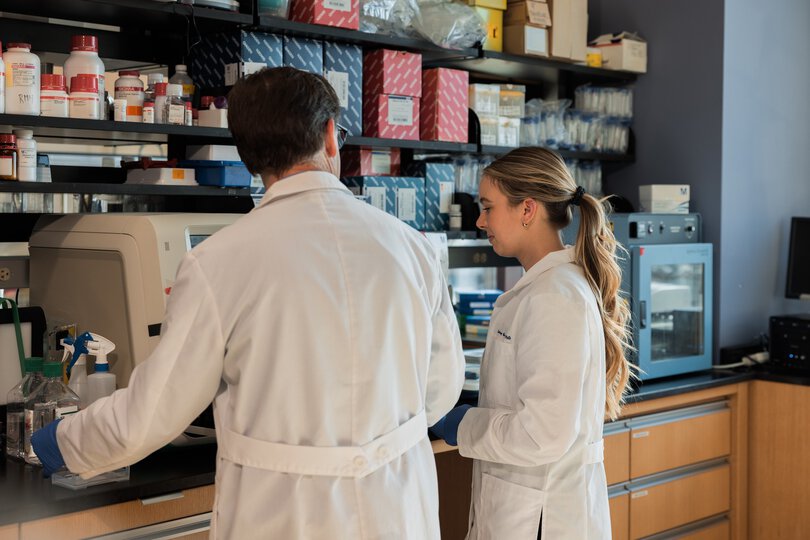
Welcome to the Department of Regenerative Medicine and Cell Biology. The goal of the department is to apply our knowledge of molecular and cellular biology to understand and reverse human disease.
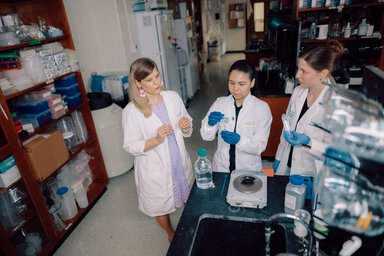
Regenerative medicine is an emerging field that aims to revolutionize the treatment of disease by providing cures rather than treating symptoms. It relies on multidisciplinary approaches that require expertise in a wide range of areas. Approaches include the use of stem cells to provide limitless supplies of cells for transplant therapy and disease modeling, bioengineering and tissue engineering to generate replacement tissues and organs, and the production of transgenic animals to study the fundamental molecular basis of organ formation and disease.
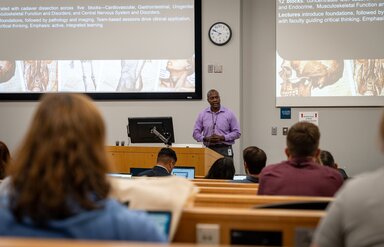
The department has active research programs in tissue fabrication and bioengineering, developmental biology, cardiovascular disease, digestive and liver disease, cancer biology, cell signaling, and drug development. The department is also heavily involved in biomedical education through the training of medical and graduate students.
Regenerative medicine is at a particularly exciting stage, with investigators being poised to make discipline-changing advances of high impact. The field is on the cusp of revolutionizing biomedical science, and as regenerative medicine researchers we are limited only by our imaginations.
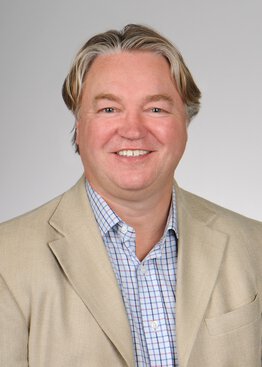
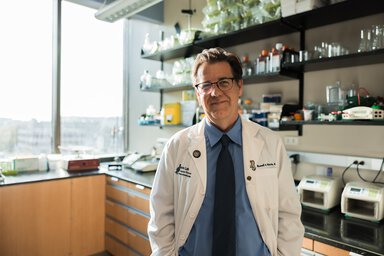
My research focuses on the use of mice and stem cells to understand the contribution of transcription factors toward embryonic development and function of the liver. Traditionally, my laboratory has relied on the use of mouse models including knockout mice and mouse embryonic stem cells. During this time, we have garnered a substantial understanding of the basic molecular pathways controlling liver function and hepatogenesis.
While the mouse has been a valuable model, we have introduced the use of induced human pluripotent stem cells (iPSCs) because we believe that they could offer a new and robust experimental model. We have shown that we can control differentiation of human pluripotent stem cells to hepatocytes with high efficiency, to the extent that >95% of cells in the culture dish express characteristic markers of differentiated hepatocytes. In addition, we have developed novel technologies to facilitate the efficient culture and reprogramming of human iPSCs. Such approaches have raised the possibility of using stem cell-derived cells for the study of hepatocyte differentiation and to potentially treat liver disease.
Your gift advances scientific discoveries — and supports the researchers behind them — that could help prevent or cure human diseases.
171 Ashley Ave, Rm BS601
MSC 508
Charleston, SC 29425
Main: 843-792-3521
Fax: 843-792-0664