Kourtidis Lab Team
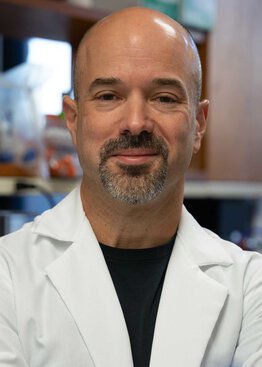
Antonis Kourtidis, Ph.D.
Associate Professor
kourtidi@musc.edu
I obtained my PhD in Molecular Biology and Evolution from the Aristotle University of Thessaloniki in Greece and then became specialized in RNAi and Epithelial Cancer Biology as a postdoctoral fellow at the Center for Excellence in Cancer Genomics, SUNY, and as a Research Associate and Instructor at the Mayo Clinic Cancer Center. I love all things cell-cell adhesion, RNA, epithelial and cancer biology - although barely limited to those. In my “free” time, I like to delve into astrophysics, cosmology, evolution, the origins of life (remnant bug from my PhD years) and learning about all things science. I also like running, biking, photography, chess, music, the ocean, and good wine. Oh, and strong coffee…lots of it!
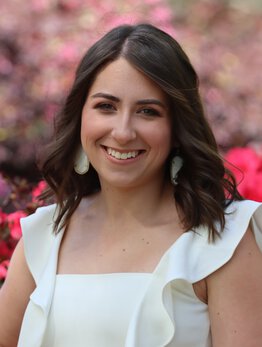
Joyce Nair-Menon, Ph.D.
Staff Scientist - Laboratory Manager
menonnj@musc.edu
During my post-doctoral fellowship at Johns Hopkins University, I investigated the molecular immunological aspects of rejection in Xeno transplantation. As a Research Associate at USC Columbia, I studied the effects of alkylphenols and polychlorinated biphenyls on immune function and reproductive capacity. I also worked on the effects of vitreous on the epithelial to mesenchymal like transformation of retinal epithelial cells leading to proliferative vitreoretinopathy, a major cause of vision loss in developed countries. More recently at MUSC, I was investigating how the malignant nature of lung cancer is driven by epithelial-mesenchymal transformation and cancer stem cells. My current work in the lab focuses on elucidating the role of adherens junctions in cancer progression.
Carlos Gomez, Ph.D.
Postdoctoral Fellow
gomezca@musc.edu
My research interests lie in understanding how biology is influenced by the physical aspects of life. Because of this, I have done research in trying to understand how wound healing is sped up through the use of electrical fields in planaria, investigated how yeast which are rigid cells with high internal turgor pressure divide without exploding, and measured how forces within tumors change as they begin to metastasize. By pursuing these stories, I have completed a post-doctoral contract at TU Dresden in Germany, obtained my Ph.D. in Molecular, Cellular, and Developmental Biology at the University of California – Santa Barbara, and obtained two B.S. in Bioengineering and Chemical Sciences at the University of California – Merced. My current project in this lab focuses on investigating how the mechanical properties of the microenvironment regulate RNAi machinery at the cell junctions of the colon. I also like to continue learning beyond the bench, usually random things that I find interesting like ceramics, boxing, photography, obstacle course running and currently gardening!

Christina Kingsley, B.S.
D.M.D./Ph.D. Graduate Student
kingslec@musc.edu
I graduated from Loyola University Maryland with a B.S. after completing a double major in Biology and Sociology. During my undergraduate studies, I conducted microbiology and immunology research looking at the influence of the Camellia sinensis plant, the source of green and black tea, on macrophage cell activity. I was selected as a Hauber Research Fellow for summer research at Loyola and I presented my research at the American Society for Microbiology national meeting in 2019. After graduating, I worked at the University of Maryland in the Department of Neurology as a Clinical Research Assistant looking at the influence of Multiple Sclerosis on cognitive function. Currently, I am a DMD/PhD student focusing my graduate research on the adherens junctions in the oral epithelium and looking at changes in the RNAi machinery due to oral pathologies.
Houda Mesnaoui, M.S.
Ph.D. Graduate Student
mesnaoui@musc.edu
After obtaining my Bachelor’s degree in Bioengineering, I proceeded to do my Master’s in Biotechnology. My thesis was focused on studying the correlation between C-kit variants in Gastrointestinal Stromal Tumors and the patients’ response to IMATINIB treatment. After graduating, I worked as a research assistant at the Oregon National Primate Research center, In the genetics core, where we investigated Neurobeachin as a target of alcohol use disorder treatment. Being always passionate about Cancer biology, I decided to pursue a PhD in Biomedical Sciences at MUSC. I aim to investigate the molecular mechanisms through which adherens junctions regulate the RNAi machinery and long non-coding RNAs (lncRNAs) in colorectal cancer cells.
Jordan Jarvis, B.S.
Ph.D. Graduate Student
jarvisjo@musc.edu
I graduated from the University of North Carolina at Chapel Hill with a Bachelor of Science in Biology. Upon completing my undergraduate studies, I joined the National Institute of Arthritis and Musculoskeletal and Skin Diseases (NIAMS) as a post-baccalaureate fellow. My research at NIAMS focused on developing novel therapeutics for rare and aggressive skin cancers. During my time at NIAMS, I placed second in the NIH-wide three-minute talk competition, published a first-author manuscript, and presented my work at the Society for Investigative Dermatology annual meeting in Texas. My current work as a Ph.D. student aims to evaluate the role of RNAi dysregulation in colon disease pathogenesis. In my spare time, I enjoy taking walks along the Battery, trying out new coffee shops, and spending time on the porch with my French Bulldog.
Tamara Alquza, B.S.
Graduate Assistant
I graduated from the College of Charleston with a double major in Chemistry and Communication, along with a minor in Environmental and Sustainability Studies. My academic focus has always centered on bridging the gap between science and people—highlighting the importance of interdisciplinary collaboration in both STEM research and social advocacy. At MUSC, I’m assisting research focused on studying the link between cell-cell junctions and cellular behavior through the junction RNAi machinery. Specifically looking at the role of lncRNA. My responsibilities have included assisting with lab protocols, conducting various analyses, and quantifying data (which basically means I’m a Fiji expert:) to understand lncRNA role in promoting colon cancer. This experience has deepened my interest in biochemistry research. I hope to build upon the work I’ve done at MUSC as I pursue graduate studies - continuing to integrate biochemistry with communication to make complex scientific findings more accessible and impactful.
Caolin Witherspoon
Undergraduate student (College of Charleston)
I graduated from the College of Charleston with a double major in Chemistry and Communication, along with a minor in Environmental and Sustainability Studies. My academic focus has always centered on bridging the gap between science and people—highlighting the importance of interdisciplinary collaboration in both STEM research and social advocacy. At MUSC, I’m assisting research focused on studying the link between cell-cell junctions and cellular behavior through the junction RNAi machinery. Specifically looking at the role of lncRNA. My responsibilities have included assisting with lab protocols, conducting various analyses, and quantifying data (which basically means I’m a Fiji expert:) to understand lncRNA role in promoting colon cancer. This experience has deepened my interest in biochemistry research. I hope to build upon the work I’ve done at MUSC as I pursue graduate studies - continuing to integrate biochemistry with communication to make complex scientific findings more accessible and impactful.
Peter Lin,
High School student ( Scarsdale High School, NY)
I am a senior at Scarsdale High School in NY. I am interested in all types of biology, having medaled several times at the NY state Science Olympiad (1st place Epidemiology, 4th place Microbiology); however, I am most interested in RNA biology. In addition, I am interested in coding and computer science. During my free time, I enjoy playing soccer and squash, as well as playing video games and spending time with my family