

How brain inflammation drives injury after IVH
Acute brain inflammation, white matter oxidativestress, and myelin deficiency in a model of neonatalintraventricular hemorrhage.
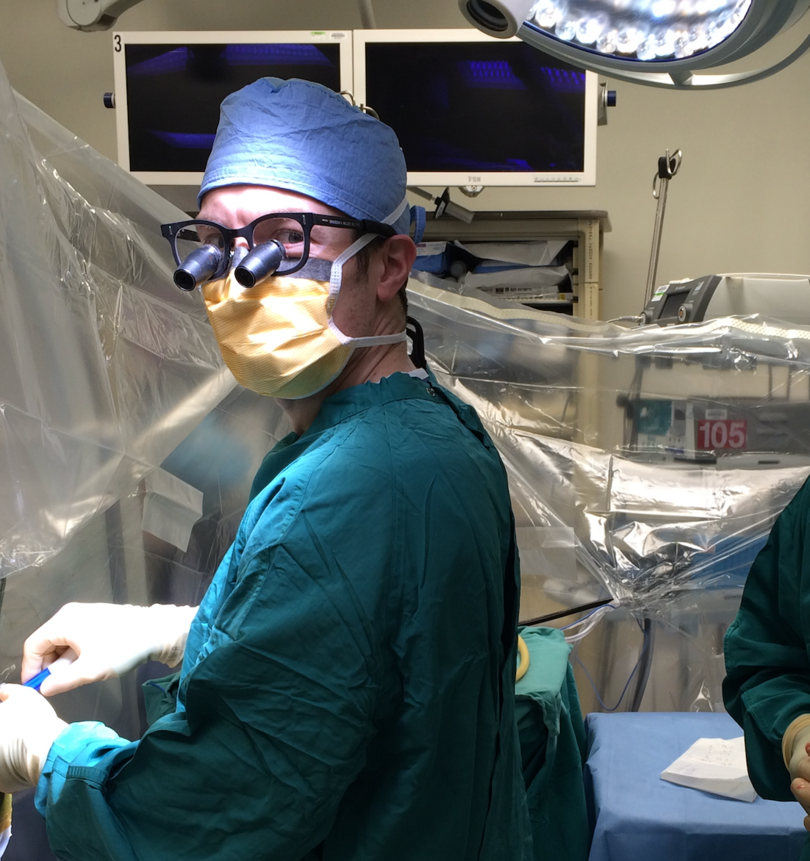

Dr. Brandon A. Miller is Associate Professor of Pediatric Neurosurgery at Medical University of South Carolina. His undergraduate research was focused on cerebral ischemia and preconditioning in the laboratory of Dr. Jeff Gidday and Dr. T.S. Park at Washington University in St. Louis. He obtained his MD and PhD at The Ohio State University where we worked with Dr. Jacqueline Bresnahan and Dr. Michael Beattie studying white matter injury in the context of spinal cord injury. During his residency at Emory University, Dr. Miller received an NIH fellowship to study inflammation after subarachnoid hemorrhage and then returned to Washington University for his pediatric neurosurgery fellowship where he developed an interest in intraventricular hemorrhage (IVH) and hydrocephalus. Dr. Miller’s independent research career has focused on the microglial response to IVH, and strategies to modify microglial activation state to improve IVH outcomes. Dr. Miller takes great pride in supporting the career development of students and junior faculty members.
Most pediatric brain injury, be it from complications of premature birth, trauma, or hydrocephalus (increased fluid in the brain) can only be treated with surgery. That surgery is generally reserved for the most severe cases, and does not restore brain function. We are dedicated to discovering new non-surgical treatments for pediatric brain injury that can be applied to all forms of injury.
The laboratory is part of the Pediatric Neuroscience Institute at Medical University of South Carolina. We are a team of physicians and scientists who use patient data and experimental systems to better understand and treat brain injury. The laboratory is funded by the Mission Connect Foundation and National Institutes of Health.
The Miller Pediatric Brain Injury Lab uses clinical data and models systems to better understand how the developing brain reacts to injury, and how new therapies can improve the resilience and recovery of the central nervous system.
Dr. Miller is a pediatric neurosurgeon at Medical University of South Carolina. He applies more than two decades of experience in neurosurgery and neuroscience to his research to advance understanding of brain injury. He and his colleagues partner with the CNS Biobank at MUSC to collect samples for clinical studies in oncology, hydrocephalus and neurotrauma. Dr. Miller and his team analyze clinical data and publish in collaboration with colleagues in neonatology, pediatrics, and intensive care medicine.
The Miller lab utilizes in vivo and cell culture systems to study neonatal intraventricular hemorrhage (IVH) and other brain diseases. The lab utilizes immunohistochemical, biochemical, imaging, bioinformatic and functional approaches as outcomes. We are eager to collaborate with other laboratories with similar research interests and complimentary expertise.
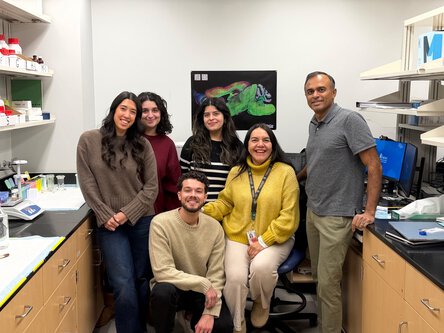
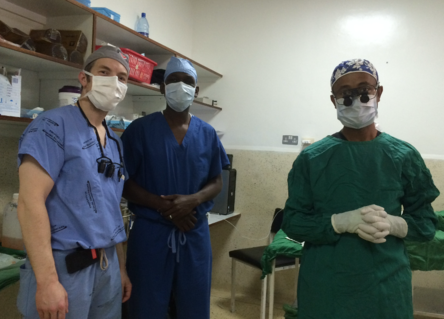
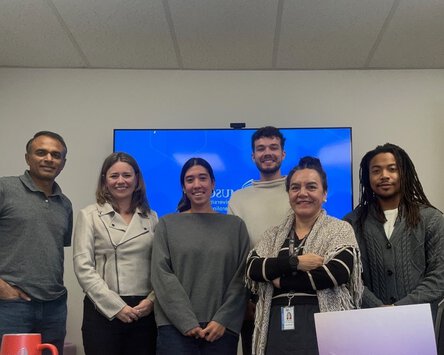
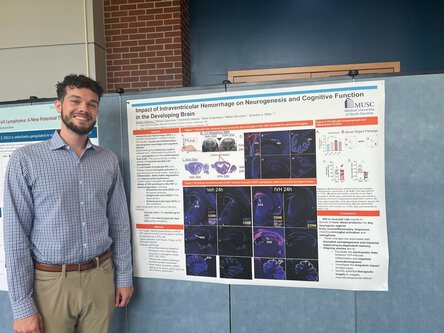
The lab’s current research is focused on how neonatal intraventricular hemorrhage (bleeding into the brain of premature infants) causes inflammation and impedes normal brain development. The lab studies how surgical and new medical interventions can protect the brain from injury.
Acute brain inflammation, white matter oxidativestress, and myelin deficiency in a model of neonatalintraventricular hemorrhage.
Safety of Indocyanine Green Microdosing for ClinicalImaging of CSF Ventricular Dynamics and Extracranial Outflow.
A Sublethal Dose of TNF Alpha Potentiates Kainate-Induced Excitotoxicity in Optic Nerve Oligodendrocytes.
Neonatal hydrocephalus leads to white matter neuroinflammation and injury in the corpus callosum of Ccdc39 hydrocephalic mice.
A lumbar arteriovenous fistula presenting with intraventricular hemorrhage and hydrocephalus.
Modeling brain injury: Neonatalintraventricular hemorrhage.
Applications of a robotic stereotactic arm for pediatricepilepsy and neurooncology surgery.
Azithromycin reduces hemoglobin-induced innate neuroimmune activation.
Innate immune activation and white matter injury in a rat model neonatal intraventricular hemorrhage are dependent on developmental stage.
Developmental stage of oligodendrocytes determines their response to activated microglia in vitro.
Modeling Neonatal Intraventricular Hemorrhage through Intraventricular Injection of Hemoglobin.
Developmental stage-dependent transcriptomic responses to neonatal intraventricular hemorrhage.