Diagnostic Radiology Medical Physics Residency

book_2 Learning Mode: Residential

The Department of Radiology and Radiological Science at the Medical University of South Carolina offers a residency in imaging medical physics. This two-year program received its initial accreditation from the Commission on Accreditation of Medical Physics Educational Programs on April 23, 2022. When successfully completed, this program satisfies education and training requirements for the part three exam in Diagnostic Radiological Physics of the American Board of Radiology.

This program focuses on all aspects of Diagnostic Radiologic Physics including the following rotations:

  • General Radiography (5 weeks/year)
  • Fluoroscopy (4 weeks/year)
  • Interventional Radiology/Cardiac Cath Imaging (4 weeks/year)
  • Mammography (4 weeks/year)
  • CT (5 weeks/year)
  • MRI (6 weeks/year)
  • Ultrasound (3 weeks/year)
  • Nuclear Medicine and PET (4 weeks/year)
  • Imaging Informatics (3 weeks)

As the only tertiary care, academic center along the NC, SC, and GA coast, our patient referral base is large. Most clinical services are provided in the MUSC Health University Medical Center. Facilities in Charleston include the Shawn Jenkins Children’s Hospital (SJCH) and MUSC Hollings Cancer Center. Most residency training will take place in the MUSC Health facilities, located in downtown Charleston, and three clinic sites in the Charleston area. Some opportunities to visit other hospitals in the Regional Health Network of MUSC throughout the state are also planned.

In addition to individually supervised medical physics rotations, Diagnostic Radiology Medical Physics residents will be able to participate in medical resident and fellow conferences and medical student education activities within the Department of Radiology and Radiological Sciences.

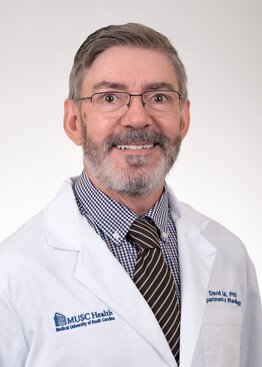
The Division of Medical Physics faculty and staff includes three ABR certified medical physicists. Two of the faculty are full professors of MUSC. Two additional hires are anticipated in the near future; one senior faculty position and one junior faculty/staff level position. 

Program inquiries may be addressed to:
E. Russell Ritenour, Ph.D. FAAPM, FACR, DABR
Director of the Diagnostic Radiology Medical Physics Residency Program
ritenoue@musc.edu

Application inquiries should be made to:
Charnette Roach-Drayton
Administrative Assistant
843-792-4033
draytcha@musc.edu


Frequently Asked Questions From Prospective Candidates

Residents training is organized into rotations that focus on the major modalities and concepts; Radiography, Fluoroscopy, Mammography, Computed Tomography, Magnetic Resonance Imaging, Nuclear Medicine and Ultrasound. Each rotation is visited twice, once in the first year and again in the second year.

Research is not a formalized requirement in the residency curriculum. All the program faculty participate in clinical projects, of which residents are welcome to participate, and some but not all lead to conference presentations or published manuscripts. As an example, our residents have participated in the AAPM’s Grand Challenge

Our 24 month program has two residents off-set by one year, one senior and one junior.

Our residents are expected to work alongside our faculty during normal working hours (~8-5pm). Most, if not all, of our physics survey evaluations take place during these hours. There are occasional exceptions for busy clinical areas such as OR suites or high-volume scanners. But many of these conflicts can be resolved by advanced scheduling. In addition, there may be a need to work on a University holiday, and in these cases residents are credited that time during their normal hours. There is no expectation for work on weekends.

Training is conducted primarily at our downtown Charleston campus, which consists of four hospital buildings. MUSC also has several outpatient and ambulatory centers within a 30-45min drive from downtown. Most of these are small sites with less than five systems except for our West Ashley location, which has about 19 systems. Residents are expected to have a valid US driver’s license and personal vehicle before entering the program.

At the discretion of the Program Director and rotation faculty mentors, a resident may work independently when they have demonstrated competency on a given system. All our residents co-sign annual physics surveys they are either leading or assisting.

Residents are given the same stipend and benefits package as our radiology medical residents. Residents start at PGY1 during their first year. Details of these benefits are available on MUSC’s GME website.

Yes, we expect our residents to meet the requirements for initial certification under the MQSA rules. That is typically achieved at the end of residency training.

Residents typically find housing either downtown or in one of the surrounding communities of West Ashley, James Island, Mt. Pleasant or North Charleston. Compared to larger metropolitan areas, traffic in Charleston is relatively low. To learn more about the Charleston area, please visit MUSC’s Living in Charleston webpage.

Our Department has provided sponsorship for H-1B and J1 visas but this changes from year to year. It is best to inquire directly with the residency program director about your application.

Our program provides training in imaging physics with the expectation that the graduating resident will qualify to take the ABR diagnostic medical physics qualifying exam. We offer a rotation in nuclear medicine but that training is not considered sufficient for board certification in nuclear medical physics.