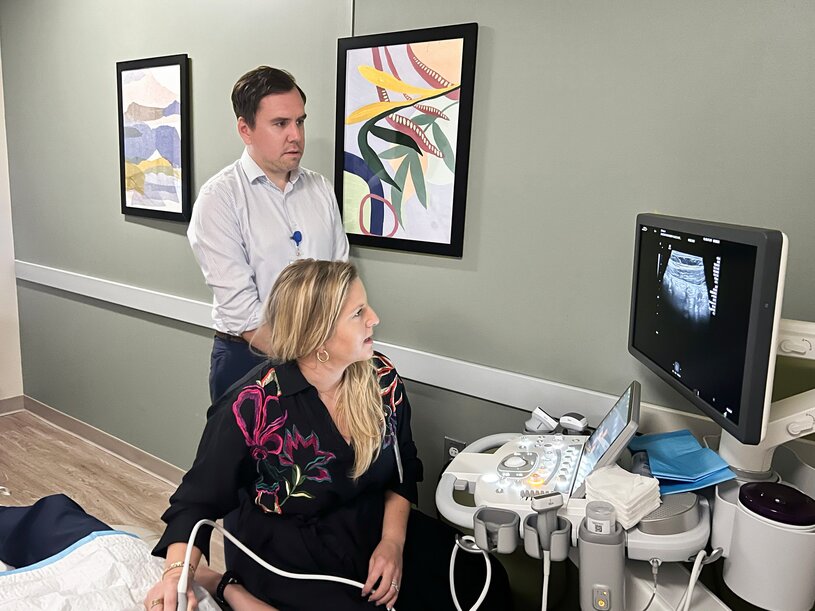

Annual Report
Read the message from the chair and learn more about advances in care in this year's annual report.
Learn more about new initiatives in clinical care, research and education in each division that has taken place in FY26.
The Department of Medicine has experienced remarkable growth, with every division advancing our tripartite mission of clinical care, research, and education. This collective progress translates into better patient care, meaningful scientific discovery, and the development of the next generation of outstanding leaders in medicine.
Led by Thomas Di Salvo, M.D., MPH, MBA, the Division of Cardiology continues to strengthen its clinical, research, and educational impact regionally and nationally. In FY26, the division welcomed five new faculty — Matthew Belanger, M.D. (General Cardiology); Swati Rao, M.D., and Rory Dowd, M.D. (Electrophysiology); Payton Kendsersky, M.D. (Interventional); and Kurt Prins, M.D., Ph.D. (General Cardiology) — with six more joining in FY27. Dr. Prins also became Director of the Gazes Cardiac Research Institute, one of the nation's leading heart failure research centers, where investigators bridge basic science and clinical practice using single-cell biology, proteomics, metabolomics, and genetic analysis. In his first year, Dr. Prins and the Gazes team increased research funding, published high-impact manuscripts, and forged new collaborations.
As one of the Southeast's top-rated cardiovascular centers, the MUSC Health Heart & Vascular Center delivers comprehensive, patient-centered care through nationally recognized physicians and advanced technology.
Advances in Clinical Care
Advances in Research
Advances in Education
Led by Marc-Andre Cornier, M.D., the Division of Endocrinology, Diabetes, and Metabolic Diseases is renowned for its patient-centered care, groundbreaking research, and commitment to education. Our multidisciplinary clinics provide comprehensive diagnostic and treatment services for a wide range of endocrine disorders, including diabetes, obesity, and thyroid, pituitary, adrenal and lipid disorder, reaching patients across South Carolina.
Focused on strategic growth, the division has welcomed new faculty and advanced practice providers, expanding clinics across the state and enhancing services in cardiometabolic health. For over five decades, our internationally recognized faculty have driven transformative research, setting new standards in endocrine, diabetes and metabolic care and continuing to lead advancements on a global scale.
Advances in Clinical Care
Additional highlights include:
Advances in Research
Advances in Education
Faculty Awards and Recognitions:
Under the leadership of Garth Swanson, M.D., the MUSC Division of Gastroenterology and Hepatology has achieved significant growth in clinical care, research, and education over the past three years. The division has expanded its faculty and staff to meet the needs of a rapidly growing community, driving increases in clinical volume and colorectal cancer screenings. The Liver Transplant Program has strengthened its national standing with a notable rise in transplant volume, while the motility program broadened diagnostic services for patients with complex gastrointestinal disorders.
In FY26, the division welcomed seven new faculty members across general gastroenterology, motility, transplant hepatology, and interventional endoscopy, with three additional recruits set to join in FY27. Research remains a central pillar of the division’s mission, anchored by the COBRE in Digestive and Liver Disease and the NIDDK P30-funded Digestive Disease Research Core Center.
The division also expanded fellowship training, including its advanced inflammatory bowel disease fellowship, to prepare the next generation of specialists.
Advances in Clinical Care
Advances in Research
Advances in Education
Under the leadership of Kimberly Davis, M.D., FACP, the Division of General Internal Medicine, Geriatrics, and Palliative Care continues to advance clinical excellence, education, and research across the Department of Medicine. With more than 40 clinical and research faculty, the division provides broad inpatient and outpatient training for residents and fellows while mentoring trainees in clinical care, quality, value-based care, and research.
Strategic recruitment continues to expand the division’s reach, with eight physicians joining in FY26 and two additional recruits scheduled for FY27. Through innovation in primary care, geriatrics, palliative medicine, and sickle cell care, the division remains committed to improving outcomes across South Carolina and beyond.
Advancing Clinical Care
General Internal Medicine:
This year, the division opened the first Hypertension Institute pilot clinic at University Internal Medicine and launched automated outreach to improve follow-up for adult patients with uncontrolled hypertension.
The division and the MUSC Center for Telehealth launched a remote patient monitoring (RPM) program that lets care teams spot and treat uncontrolled blood pressure sooner, with the goal of improving patient outcomes. Led by Thompson Barr, M.D., the program is now expanding RPM services to federally qualified health centers and free clinics statewide, supported by a grant from The Duke Endowment.
Geriatrics:
The division expanded its Comprehensive Geriatrics Assessment Program to include bone marrow transplant patients, piloted tablet-based digital cognitive assessment tools, and expanded participation in the GUIDE dementia care program with neurology.
Sickle Cell:
The Rena Grant Sickle Cell Center, led by Shantae Jenkins, M.D., became a member of the National Alliance of Sickle Cell Centers and expanded its multidisciplinary team with the addition of pain specialists and physical therapists, enhancing comprehensive disease management, chronic pain care, and coordinated inpatient-outpatient care.
Palliative Care:
The Palliative Section completed a quality improvement initiative embedding a palliative care provider in the NSICU, expanded inpatient hospice resources with improved workflow integration, and collaborated with the MUSC Cancer Integrated Center of Clinical Excellence to grow ambulatory palliative care. Palliative Section Head Harriet Mather, M.D., received the Department of Medicine's Ben Clyburn Clinician Educator Award for “Implementation of a Serious Illness Communication Program through VitalTalk Faculty Development Training”, with plans to extend the training to residents and frontline clinicians. The division continues to grow its Palliative Telehealth services across the MUSC regional health system.
Advancing Research
The division collaborates across departments and medical specialties to advance care and education through research, including studies examining interhospital transfers, inpatient tobacco treatment, delirium, mobility, MASLD, and surgical outcomes.
Andrew Schreiner, M.D., received a new NIH R01 grant to develop early detection methods for liver disease (MASLD) in primary care. The project integrates predictive modeling with EHR alerts to identify patients at risk for advanced liver fibrosis.
Sarah Ball, PharmD, and her team received a three-year extension from the South Carolina Department of Health and Human Services, continuing their statewide drug utilization work through 2027. The team provides academic detailing to clinicians on opioid and alcohol use disorders, ADHD, and metabolic dysfunction-associated steatotic liver disease (MASLD).
Advancing Education
The division launched a new, competency-based ACGME-approved geriatric medicine fellowship through the Advancing Innovation in Residency Education pathway and matched its inaugural fellow.
The division's two ACGME-accredited fellowships — Hospice and Palliative Medicine, and Geriatric Medicine — train four fellows each year.
GIM faculty are heavily involved in educating and training Internal Medicine, Med-Peds, and Med-Psych residents, both on inpatient services and in their ongoing Internal Medicine continuity panels.
Under the leadership of Craig Lockhart, M.D., MHS, the Division of Hematology and Oncology continued to earn national and international recognition in FY26 for its contributions to clinical care, research, and education. As an integral part of Hollings Cancer Center, South Carolina's only National Cancer Institute-designated cancer center, the division grew its faculty and expanded the scope of its clinical and research initiatives. Russell Jenkins, M.D., Ph.D.; Mohammad Alhousani, M.D.; and Priyal Agarwal, M.D., joined the division in FY26, following eight faculty recruits in FY25. Four additional faculty members are scheduled to join in FY27. The division also leads the state's only combined hematology and oncology fellowship and advances new treatments through clinical trials and laboratory discoveries.
Advances in Clinical Care
New Cutaneous T-Cell Lymphoma (CTCL) Clinic: MUSC opened a new multidisciplinary CTCL clinic bringing dermatologists and oncologists together to treat CTCL with specialized therapies not available elsewhere in the state.
Bringing Advanced Melanoma Therapy to South Carolina: MUSC Health became the state's only hospital system to offer tumor-infiltrating lymphocyte (TIL) therapy, a personalized treatment that uses a patient's own immune cells to fight advanced melanoma. Led by Russell Jenkins, M.D., Ph.D., the multidisciplinary team completed its first tumor collection in spring 2026.
Expanding Capacity: The MUSC Health Hematology & Oncology North Charleston clinic doubled its capacity in FY26, adding eight exam rooms and 10 infusion chairs, enabling new and urgent patients to be seen within two business days of referral. MUSC Health and Hollings also broke ground on MUSC Health Nexton Medical Center, which will include a 30,000-square-foot ambulatory cancer facility, and began planning a new comprehensive cancer hospital following the MUSC Board of Trustees' April 2026 announcement.
Advances in Research
Advances in Education
Fellowship Program Growth: The division celebrated the graduation of its first two APP fellows from MUSC's one-year Hematology/Oncology APP Fellowship track and will welcome two new fellows in FY27. Led by newly appointed Fellowship Program Director Abi Siva, M.D., the division also expanded its Hematology and Oncology Fellowship with an additional allotment, now supporting five fellows per year.
Under the leadership of Marc Heincelman, M.D., MPH, SFHM, the Division of Hospital Medicine's 56 physicians and 11 APPs provide care to patients on 14 inpatient services, one orthopedic co-management service, one consult service, and a robust preoperative medicine clinic, while providing tele-hospitalist support to four small rural hospitals in South Carolina. The division leads innovation in patient care, education, and research to meet the needs of patients across South Carolina and beyond. In FY26, the division welcomed eight new faculty members, with three more recruits set to join in FY27.
Advances in Clinical Care
Complex Intervention Unit (CIU): Under the leadership of Benjamin Kalivas, M.D., the division opened one of 14 Complex Intervention Units in the United States in September 2025. In the CIU, hospitalists with combined training in internal medicine and psychiatry care for patients admitted with complex medical needs alongside significant psychiatric comorbidities.
Expansion of Tele-Hospitalist Care: Under the leadership of Yotam Papo, M.D., MPH, MUSC's tele-hospitalist program expanded to four rural hospitals in South Carolina. The program enables tertiary-care hospitalists to provide remote clinical oversight and support, helping ensure high-quality inpatient care within local rural communities.
Research and Education Innovation
Division faculty are advancing research that improves clinical care and expands educational opportunities.
Excellence in Education
Division faculty play a central role in undergraduate and graduate medical education at MUSC, leading key initiatives in point-of-care ultrasound training, patient mobility, and clinical competency evaluation. This year, several were recognized for education leadership at the division, MUSC College of Medicine, and national levels:
Under the leadership of Cassandra Salgado, M.D., MS, the Division of Infectious Diseases excels in patient care, research, and education. Faculty provide consultative and ambulatory care across South Carolina and lead key MUSC programs in global health, infection prevention, antimicrobial stewardship, outpatient antimicrobial therapy (OPAT), telehealth, and transplant infectious diseases. In FY26, the division welcomed Nikko Tabliago, M.D., with Sean Tyler, M.D., and Zach Gruss, PharmD., joining in FY27.
For more than 30 years, the division has delivered comprehensive HIV care through the HRSA and SC DHEC Ryan White Program, with research spanning HIV/AIDS, tuberculosis, nontuberculous mycobacteria (NTM), antimicrobial resistance, hepatitis, OPAT, and transplant infectious diseases. Faculty also lead educational programs locally and nationally while serving in major institutional leadership roles that strengthen MUSC’s clinical, research, and public health impact.
Advances in Clinical Care
Advances in Research
Faculty Recognition:
Advances in Education
Fellowship Program Growth: The division graduated two infectious diseases fellows in FY26, with both entering academic infectious diseases positions. The program currently trains five fellows — four in general ID and one in transplant ID. Led by Courtney Harris, M.D., the Transplant ID Fellowship celebrated the graduation of South Carolina's second Transplant ID fellow this year.
The Division of Nephrology advances the understanding and treatment of kidney disease through excellence in clinical care, research, and education. Under the guidance of Division Director Josh Lipschutz, M.D., and Clinical Director Ruth Campbell, M.D., the past year has been marked by significant accomplishments across all three missions. Strategic recruitment continues to expand the division's reach, with two physicians joining in FY26 and four additional recruits — three in nephrology transplant and one in general nephrology — scheduled for FY27. With 29 faculty members recognized for their national prominence, the division continues to excel in providing top-tier patient care, groundbreaking research, and comprehensive training for future nephrologists.
Advances in Clinical Care
Advances in Research
Faculty Recognition
Advances in Education
Under the leadership of Dee Ford, M.D., MSCR, the Division of Pulmonary, Critical Care, Allergy and Sleep Medicine expanded access to specialized care, strengthened its research portfolio and increased fellowship training in FY26. Clinical teams introduced a new treatment for chronic blood clots in the lungs, improved access to sleep care and broadened lung cancer screening across South Carolina. Faculty also led national and international research in critical care, thoracic oncology, sarcoidosis and bronchiectasis. Strategic recruitment continues to expand the division's reach, with four physicians joining in FY26 and five additional recruits scheduled for FY27. Growth in pulmonary and critical care, sleep medicine and interventional pulmonology fellowships further reinforced the division's commitment to preparing the next generation of specialists while improving care for patients with complex respiratory conditions.
Advances in Clinical Care
First-in-state pulmonary hypertension treatment. MUSC became the first health system in South Carolina to offer balloon pulmonary angioplasty for chronic thromboembolic pulmonary hypertension (CTEPH), a form of high blood pressure in the lungs caused by persistent blood clots. The program is led by Denise Sese, M.D., with interventional cardiologist Thomas Todoran, M.D., performing the specialized procedure
Faster access to sleep care. From December 2024 to March 2026, wait times for new appointments fell 67% for in-person care and 62% for virtual care. Completed visits increased 51%, from 713 to 1,074.
Statewide lung cancer screening. The program expanded screening across 13 locations in the Charleston, Midlands, Pee Dee and Orangeburg regions, bringing earlier detection services closer to communities throughout South Carolina.
Advances in Research
Faculty Recognitions:
Advances in Education
Under the leadership of Jim Oates, M.D., the Division of Rheumatology and Immunology expanded its clinical, research and education programs in FY26. Over the past two years, Sean Carter, M.D.; Jessica English, M.D., MSCR; Anne Maitland, M.D.; Priyanka Ballal, M.D.; and Silera Holguin Balbuena, M.D., joined the division, adding expertise in clinical ultrasound, lupus, reproductive rheumatology, Ehlers-Danlos syndrome and mast cell disorders. Faculty continued to advance care and research in lupus, systemic sclerosis, vasculitis and other complex autoimmune diseases while collaborating with Pediatric Rheumatology. The National Scleroderma Foundation also designated MUSC as South Carolina's only Scleroderma Research and Treatment Center.
Advances in Clinical Care
Advances in Research
In FY26, faculty secured nearly $2 million in new research funding, published 57 original manuscripts, one book and one book chapter, and funded five pilot projects through the P30 Core Center for Clinical Research program.
Faculty secured multiple competitive awards this year, including:
Faculty and Staff Recognitions:
Advances in Education
Under the leadership of Faye Hant, M.D., and Jennifer Schmidt, M.D., the Rheumatology Fellowship Program provides comprehensive training in clinical care and research. The program currently includes five clinical fellows and two research fellows.
MUSC Department of Medicine 2026 Annual Report
Read the message from the chair and learn more about advances in care in this year's annual report.
This was a year of substantial growth and expansion.
This year has been one of remarkable growth and continued excellence in medical education.
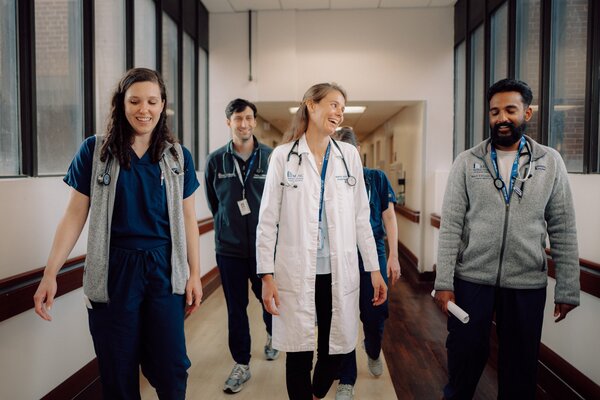
The Department of Medicine is fostering a culture where every team member feels valued, respected, and empowered to contribute.
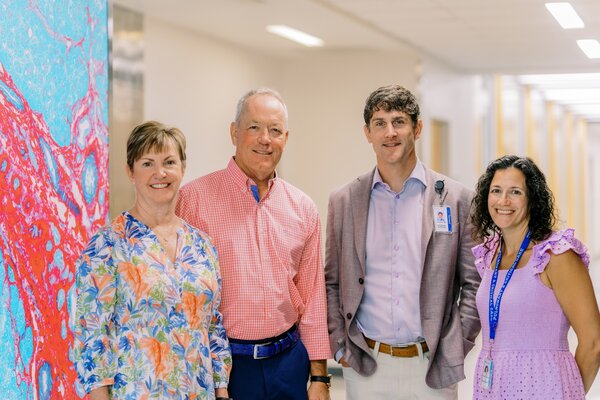
Philanthropy transforms gratitude into progress, empowering groundbreaking research, advancing discoveries and care, and bringing hope for better outcomes to patients and families.
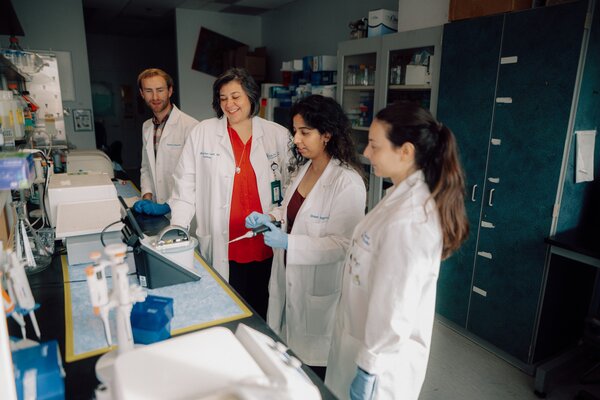
Learn more about the recent advances in basic, clinical and translational research.

This year, several faculty members assumed key leadership roles across the broader university and health system.